Translate

segunda-feira, 29 de janeiro de 2024

5 Melhores Filmes de 2023 (e 5 Filmes para Ficar de Olho em 2024) (Bilíngue)

E não se esqueçam de curtir e seguir o blog nas redes sociais:

(And don't forget to like and follow the blog in social medias:)

Facebook: https://www.facebook.com/NoCinemaComJoaoPedroBlog/

Twitter: @nocinemacomjp2

Instagram: @nocinemacomjpblog

YouTube: https://www.youtube.com/@nocinemacomjp


        Demorou, mas finalmente chegou. Já em 2024, porém, em uma época anterior à cerimônia do Oscar, venho aqui trazer os cinco melhores filmes lançados em 2023, na minha opinião. 2023 foi um ano bem interessante, em termos de cinema, seja por movimentos responsáveis por trazerem mais força à experiência de ver um filme na telona, como “Barbenheimer”, ou pela originalidade, ousadia e precisão de realizadores celebrados, tanto estreantes como veteranos. Mesmo que não vá atender às expectativas de todos, estes são os filmes que eu achei que foram mais plenamente executados, atendendo à visão de cada diretor. Mais à frente, falarei um pouco sobre cinco filmes para ficar de olho em 2024. Vamos começar!

(It took long enough, but it's finally here. We're already in 2024, however, at a time before the Oscar ceremony, therefore, I'm here to talk about the five best films released in 2023, in my opinion. 2023 was a really interesting year when it comes to cinema, whether because of movements responsible for bringing more strength to the moviegoing experience, such as “Barbenheimer”, or the originality, boldness and precision of celebrated filmmakers, both newcomers and veterans. Even if it doesn't serve to all people's expectations, these are the films I thought were the most fully executed ones, matching each director's vision. Further on, I'll be talking a little bit about five films to keep an eye on in 2024. Let's begin!)


  1. SALTBURN”, dirigido por Emerald Fennell – Disponível na Prime Video

    (“SALTBURN”, directed by Emerald Fennell – Streaming on Prime Video)

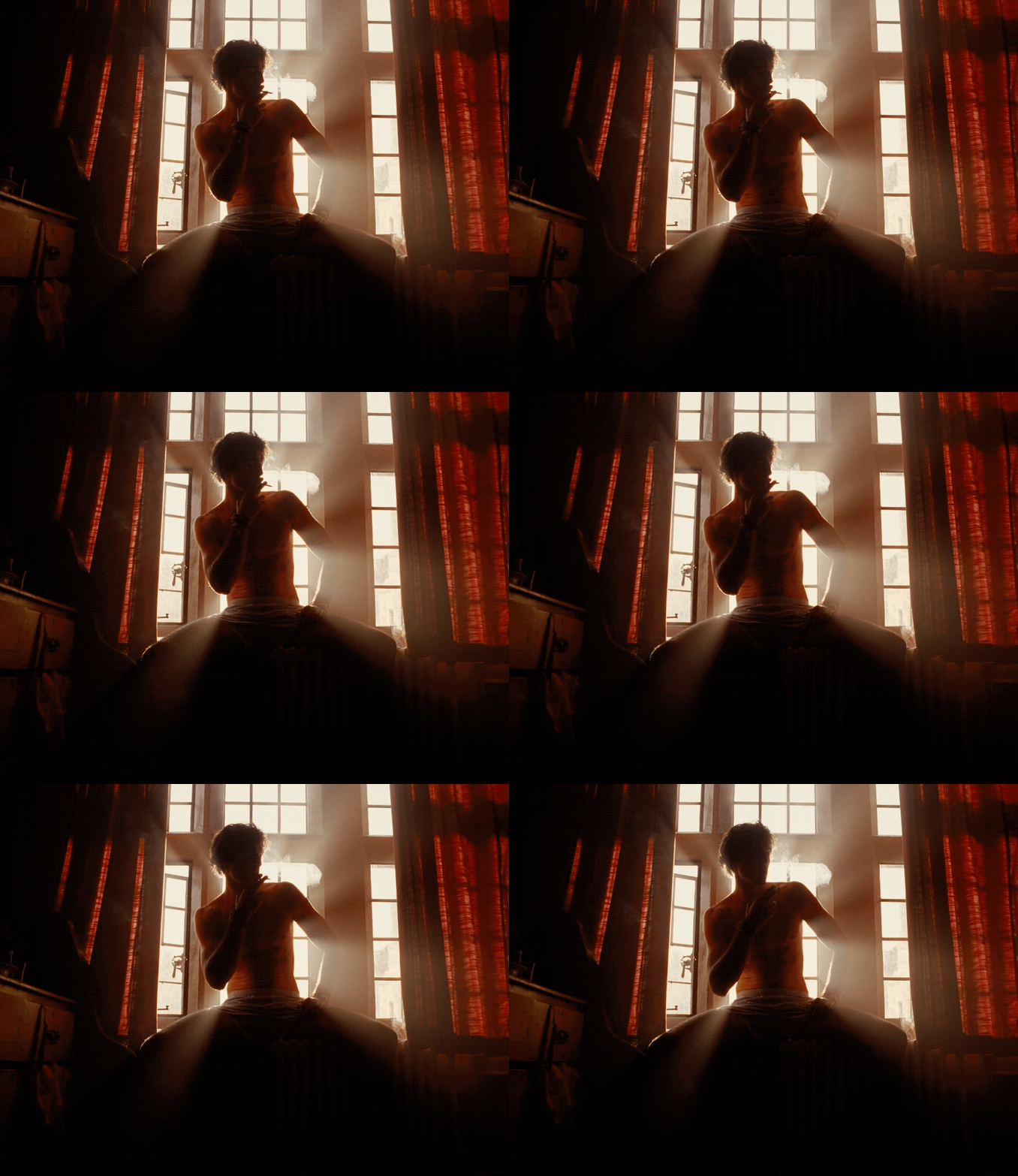
Indo em uma direção mais ousada do que a de sua estreia em “Bela Vingança”, a diretora e roteirista vencedora do Oscar Emerald Fennell constrói uma trama de suspense com várias reviravoltas sobre ambição, desejo e privilégio de classes em “Saltburn”. A mistura eficaz de comédia com suspense resulta em um nível altíssimo de entretenimento, que felizmente se mantém até a já icônica cena final. Atuações dedicadas de Barry Keoghan e Rosamund Pike, uma estética pop contagiante e uma imersão completa na atmosfera inglesa dos anos 2000 colaboram como fatores-chave que tornam a experiência ainda mais memorável. Se quiserem, podem ver minha resenha completa do filme neste link.

(Going towards a more bold direction than in her debut in “Promising Young Woman”, Oscar-winning writer-director Emerald Fennell weaves a suspenseful plot riddled with plot twists, approaching ambition, desire and class privilege in “Saltburn”. Its effective mix of comedy and suspense results in a high level of entertainment, which fortunately sustains itself all the way to its already iconic final scene. Dedicated performances by Barry Keoghan and Rosamund Pike, a contagious pop aesthetic and a full-on immersion in the British 2000s atmosphere collaborate as key factors that make the experience all the more memorable. If you'd like, you can read my full review on the film in this link.)


  1. OPPENHEIMER”, dirigido por Christopher Nolan – Em cartaz nos cinemas, e disponível para compra e aluguel digital

    (“OPPENHEIMER”, directed by Christopher Nolan – Now playing in theaters, and available on VOD)

O atual principal candidato ao Oscar de Melhor Filme, “Oppenheimer” combina a complexidade narrativa característica de Christopher Nolan com uma história biográfica centrada na realidade, resultando em um épico de 3 horas de duração que é extremamente preciso em seu roteiro e também o melhor trabalho de seu diretor até o momento. Explorando a ambígua moralidade por trás da construção da bomba atômica, o filme tem a melhor atuação da carreira de Cillian Murphy como o personagem-título, contraposta pelo desempenho coadjuvante impecável de Robert Downey Jr. Como o assunto é Christopher Nolan, tecnicamente, o longa simplesmente não tem falhas. Fotografia, design de som, trilha sonora, montagem, efeitos visuais... Tudo aponta para uma vitória grandiosa para Nolan e cia. em março! Resenha completa neste link.

(The current main contender to win the Oscar for Best Picture, “Oppenheimer” combines Christopher Nolan's trademark narrative complexity with a biographical story grounded in reality, resulting in a 3-hour epic that is extremely precise in its screenplay and is also its director's best work to date. Exploring the ambiguous morality behind the construction of the atomic bomb, the film lies on the best performance of Cillian Murphy's career as the title character, which is counterattacked by Robert Downey Jr.'s flawless supporting turn. As we're talking about Christopher Nolan, technically, it is simply flawless. Cinematography, sound design, score, editing, visual effects... Everything points out to a big win for Nolan and co. in March! Full review on this link.)


  1. ANATOMIA DE UMA QUEDA”, dirigido por Justine Triet – Em cartaz nos cinemas

    (“ANATOMY OF A FALL”, directed by Justine Triet – Available on VOD)

Seguindo a máxima iniciada por “Parasita” em 2019, de que todo vencedor da Palma de Ouro em Cannes é automaticamente um indicado ao Oscar de Melhor Filme (algo, infelizmente, interrompido pelo injustiçado “Titane”, de Julia Ducournau), “Anatomia de uma Queda” conta com a direção milimetricamente precisa (e indicada ao Oscar) de Justine Triet para compor um suspense de tribunal essencialmente ambíguo. Potencializado por uma ambientação tão misteriosa quanto sua protagonista, vivida pela magistral indicada ao Oscar Sandra Hüller, Triet não se preocupa em oferecer respostas concretas, entregando, ao invés disto, as peças para que o próprio espectador faça sua interpretação do desfecho. A diretora consegue realizar isso através de um roteiro tão minucioso e detalhado que expõe argumentos válidos para a inocência e a culpabilidade de sua personagem principal, abordando os dois lados da moeda de uma maneira completa e absurdamente satisfatória.

(Following the rule initiated by “Parasite” in 2019, in which every Palme d'Or winner in Cannes is automatically an Oscar nominee for Best Picture (a streak that was, unfortunately, broken by Julia Ducournau's snubbed “Titane”), “Anatomy of a Fall” relies on Justine Triet's extremely precise (and Oscar-nominated) direction to put together an essentially ambiguous courtroom thriller. Heightened by a setting as mysterious as its protagonist, portrayed in a masterful way by Oscar-nominee Sandra Hüller, Triet doesn't worry in providing concrete answers, handing all the pieces for the viewer themselves to make their interpretation of the outcome instead. The director manages to succeed in this thanks to a thorough and detailed screenplay that exposes valid points towards the innocence and guilt of its main character, approaching both sides of the coin in a complete and absurdly satisfying way.)


  1. VIDAS PASSADAS”, dirigido por Celine Song – Em cartaz nos cinemas

    (“PAST LIVES”, directed by Celine Song – Available on VOD)

Filmes de estreia sempre me despertam uma curiosidade, especialmente se houver algo de autobiográfico na trama (como, por exemplo, “Aftersun”, de Charlotte Wells). Hoje em dia, cineastas estreantes têm mostrado uma visão tão clara daquilo que desejam colocar em tela, que seus trabalhos podem muito bem estar equiparados com o desempenho dos melhores veteranos do ramo, e Celine Song não é uma exceção. Em “Vidas Passadas”, Song elabora uma história de romance dolorosamente realista, reminiscente às de Richard Linklater na Trilogia do Antes, se inspirando em seu próprio passado para abordar temas de identidade, pertencimento e conexões tão fortes que não desaparecem com o tempo. Oferecendo uma vertente original à um gênero taxado por clichês, “Vidas Passadas” é tanto um cartão de visitas impecável para sua diretora quanto uma das melhores histórias de amor trazidas para a tela no séc. XXI. Isso não é um exagero.

(Directorial debuts always tickle my curiosity, especially if there's something autobiographical in the plot (as, for instance, Charlotte Wells's “Aftersun”). Nowadays, first-time directors have displayed such a clear vision on what they want to put on screen, that their work can very well fit among the best veterans in the biz, and Celine Song is no exception. In “Past Lives”, Song elaborates a painfully realistic romance story, similar to the ones by Richard Linklater in his Before trilogy, taking inspiration on her own past to approach themes of identity, belonging and connections so strong, they don't fade away over time. Offering an original touch to a genre riddled with clichés, “Past Lives” is both one hell of a flawless calling card for its director and one of the best love stories brought to the screen on the 21st century. This is not an exaggeration.)


  1. ASSASSINOS DA LUA DAS FLORES”, dirigido por Martin Scorsese – Disponível na Apple TV+

    (“KILLERS OF THE FLOWER MOON”, directed by Martin Scorsese – Streaming on Apple TV+)

Quatro anos após “O Irlandês”, indicado a 10 Oscars, Martin Scorsese retornou com outro épico de 3 horas e meia de duração que extrai o melhor de seu trio de protagonistas: Leonardo DiCaprio, Robert De Niro e a verdadeira estrela do filme, Lily Gladstone. Baseado no impecável livro de não-ficção de David Grann, Scorsese realiza todas as escolhas certas para conduzir a narrativa, desenterrando uma parte suja da história dos EUA, dando voz ao povo que foi injustiçado e condenando as ações dos criminosos através de cenas de assassinato e tortura chocantes. Assim como em “Oppenheimer”, “Assassinos da Lua das Flores” aproveita seu robusto tempo de duração de maneira perfeita, desenvolvendo sua intrigante história com uma série de nuances que culminam em um dos melhores finais de 2023. Resenha completa neste link.

(Four years after “The Irishman”, a nominee for 10 Oscars, Martin Scorsese has returned with another epic that's 3-and-a-half hours long that extracts the best out of its trio of protagonists: Leonardo DiCaprio, Robert De Niro and the real star of the film, Lily Gladstone. Based on the flawless non-fiction book by David Grann, Scorsese makes all the right choices to conduct the narrative, unearthing an ugly part in the history of the United States, giving voice to the people that were prejudiced during that period and condemning the criminals' actions through shocking murder and torture scenes. Just like “Oppenheimer”, “Killers of the Flower Moon” uses its robust runtime in a perfect way, developing its intriguing story with a series of nuances that culminate in one of the best endings in 2023. Full review (in video, in Portuguese) in this link.)


E agora, o que esperar de 2024?

(And now, what can we expect from 2024?)


  • HORIZON: AN AMERICAN SAGA – CAPÍTULOS 1 E 2”, dirigidos por Kevin Costner – Estreia em junho e agosto de 2024 nos cinemas

    (“HORIZON: AN AMERICAN SAGA – CHAPTERS 1 AND 2”, directed by Kevin Costner – Releases in June 28 and August 16 in theaters)

Eu simplesmente amo o gênero do faroeste, paixão que herdei do meu avô paterno. Vivemos em uma época em que se tornou mais popular o subgênero do neo-faroeste, que subverte os padrões estabelecidos e injeta um teor contemporâneo. Então, o fato de não só termos um faroeste clássico como também contarmos com a direção de um veterano no gênero (Kevin Costner, responsável por “Dança com Lobos”, um dos únicos faroestes a vencerem o Oscar de Melhor Filme) me anima bastante. Abordando o cenário violento do Oeste dos EUA antes, durante e depois da Guerra Civil, “Horizon: An American Saga” será dividido em quatro partes, com as duas primeiras estreando em 2024. Contando com nomes como Sienna Miller, Sam Worthington, Michael Rooker, Ella Hunt e Jamie Campbell Bower no elenco, o primeiro longa de Kevin Costner na direção em 21 anos promete, e não é pouco.

(I simply love the Western genre, a passion I inherited from my paternal grandfather. We live in a time where the subgenre of the neo-Western became more popular, with its subversion of established patterns and contemporary setting. So, the fact we're not only getting an old-fashioned Western but also the direction of a genre veteran (Kevin Costner, who directed “Dances with Wolves”, one of the only Westerns to win the Oscar for Best Picture) on it brings a smile to my face. Approaching the violent scenario of the American West before, during and after the Civil War, “Horizon: An American Saga” will be split into four parts, with its first two coming out in 2024. With names like Sienna Miller, Sam Worthington, Michael Rooker, Ella Hunt and Jamie Campbell Bower rounding out the cast, Kevin Costner's first directorial effort in 21 years makes promises. A whole lot of them.)


  • MEGALOPOLIS”, dirigido por Francis Ford Coppola – Estreia em 2024 nos cinemas, data a ser anunciada

    (“MEGALOPOLIS”, directed by Francis Ford Coppola – Releases in 2024 in theaters, date TBA)

Se o cinema de 2024 tivesse um dicionário, haveria uma foto do pôster de “Megalopolis” ao lado da palavra “ambição”. O primeiro projeto original de Francis Ford Coppola desde “Virgínia”, de 2011, massacrado pela crítica, a trama acompanhará um arquiteto com a ambição (olha só, a palavra de novo) de reerguer a cidade de Nova York como uma utopia após um desastre destruí-la por completo. Se a direção de Coppola e o teor absurdo do enredo não forem o suficiente, o elenco certamente será: Adam Driver, Forest Whitaker, Jon Voight, Laurence Fishburne, Aubrey Plaza, Shia LaBeouf, Jason Schwartzman, Dustin Hoffman e Giancarlo Esposito. O diretor tem desenvolvido o filme a longo prazo desde os anos 1980, e a hora de revelá-lo ao público está finalmente chegando. Financiado do próprio bolso de Coppola em US$120 milhões, “Megalopolis” será uma oferta irrecusável de um dos maiores mestres da sétima arte.

(If 2024's filmmaking had a dictionary, there would be a photo of the poster for “Megalopolis” next to the word “ambition”. Francis Ford Coppola's first original project since 2011's “Twixt”, maligned by critics, the plot will follow an architect with the ambition (look, there's that word again) of rebuilding New York City as an utopia after a disastrous event destroys it completely. If Coppola's direction and the plot's absurdity aren't enough to draw you in, the cast will certainly do the trick: Adam Driver, Forest Whitaker, Jon Voight, Laurence Fishburne, Aubrey Plaza, Shia LaBeouf, Jason Schwartzman, Dustin Hoffman and Giancarlo Esposito. The director has been working on the film ever since the 1980s, and the time to unveil it to the public is finally near. Funded from Coppola's own money in US$120 million, “Megalopolis” will be an offer you can't refuse from one of cinema's greatest masters.)


  • ME”, dirigido por Don Hertzfeldt – Estreia em 2024, data a ser anunciada

    (“ME”, directed by Don Hertzfeldt – Releases in 2024, date TBA)

Se você ainda não conhece o trabalho de Don Hertzfeldt na animação, saiba que não é nada parecido com os padrões estabelecidos pelos grandes estúdios. Abordando temas como memória e existencialismo através de métodos de animação experimentais, o diretor já foi indicado duas vezes ao Oscar por seus curtas repletos de imaginação, originalidade e humor nonsense. (Inclusive, fiz uma matéria sobre o trabalho dele, que você pode ler aqui.) Como de praxe, Hertzfeldt revelou pouco de seu novo projeto, anunciando apenas o título no final de 2023. Porém, considerando a qualidade consistente de seu trabalho, já é o suficiente para criar expectativas e especulações. É um filme ou um curta-metragem? Vai ser algo autobiográfico, pelo título (“Me” = Eu)? De qualquer forma, tenho certeza que a espera vai valer a pena.

(If you don't know Don Hertzfeldt's work on animation yet, just know that it's nothing like the patterns established by the big studios. Approaching themes like memory and existencialism through experimental methods of animation, the director has been nominated twice for an Oscar because of his short films, which are filled with imagination, originality and nonsense humor. (BTW, I wrote a post about his work, which you can read here.) As usual, Hertzfeldt has revealed little on his latest project, announcing only the title in late 2023. However, considering the consistent quality of his work, it's already enough to create expectations and speculation. Is it a feature-length film or a short film? Will it be autobiographical, given the title (“Me”)? Anyway, I'm 100% positive it will be worth the wait.)


  • MAXXXINE”, dirigido por Ti West – Estreia em 2024 nos cinemas, data a ser anunciada

    (“MAXXXINE”, directed by Ti West – Releases in 2024 in theaters, date TBA)

Ti West finalmente traz a trilogia “X” para um desfecho com “MaXXXine”, uma sequência de “X: A Marca da Morte”, acompanhando a única sobrevivente do massacre na fazenda, Maxine Minx (Mia Goth), que se muda para Hollywood para se tornar uma estrela no cenário cinematográfico restrito para adultos. Além da mudança de ambientação, a parte final da trilogia adiciona nomes como Elizabeth Debicki, Michelle Monaghan, Bobby Canavale, Lily Collins, Giancarlo Esposito e Kevin Bacon no elenco. Baseado em reações de uma sessão teste do longa, “MaXXXine” terá inspiração tanto em “Pânico”, com um assassino em série perseguindo a protagonista e todos ao seu redor, quanto nos clássicos giallo de Dario Argento, como “Suspiria”, prometendo fechar esta saga eclética de terror com chave de ouro.

(Ti West finally brings the “X” trilogy to a close with “MaXXXine”, a sequel to “X”, following the only survivor of the farm massacre, Maxine Minx (Mia Goth), who moves to Hollywood in order to become a star in the adult film business. Besides the change of setting, the final part in the trilogy adds names like Elizabeth Debicki, Michelle Monaghan, Bobby Canavale, Lily Collins, Giancarlo Esposito and Kevin Bacon to the cast. Based on reactions to a test screening of it, “MaXXXine” will be inspired by both whodunits like “Scream”, with a serial killer stalking the protagonist and everyone around her, and Dario Argento's giallo classics, such as “Suspiria”, promising to cap off this eclectic horror saga on one hell of a high note.)


  • MICKEY17”, dirigido por Bong Joon-ho – Estreia em 2024 nos cinemas, data a ser anunciada

    (“MICKEY17”, directed by Bong Joon-ho – Releases in 2024 in theaters, date TBA)

O primeiro filme do sul-coreano Bong Joon-ho após vencer quatro Oscars por “Parasita”, “Mickey17” vem cheio de expectativas. Baseado no romance “Mickey7”, de Edward Ashton, a trama acompanha Mickey Barnes (Robert Pattinson), um explorador espacial cujo décimo-sétimo clone é enviado em uma missão para colonizar o planeta gelado de Niflheim. Durante a missão, ele é gravemente ferido e deixado como morto, gerando um décimo-oitavo clone para substituí-lo. Porém, Mickey17 sobrevive e retorna à sua base, ameaçando dizimar a linhagem de clones de Barnes e revelar segredos chocantes referentes à colônia recém-formada. Bong se reúne com seus colaboradores de “Parasita”, o editor Yang Jin-mo e o compositor Jung Jae-il, e adiciona novos nomes ao seu repertório, como Pattinson, Steven Yeun, Toni Collette, Mark Ruffalo e Naomi Ackie, tentando evocar a mesma vibe de seus filmes de ficção-científica “Expresso do Amanhã” e “Okja”, contando com efeitos visuais práticos ao invés de CGI.

(South-Korean filmmaker Bong Joon-ho's first film after winning 4 Oscars for “Parasite”, “Mickey17” comes full of expectations. Based on the novel “Mickey7”, by Edward Ashton, the plot follows Mickey Barnes (Robert Pattinson), a space explorer whose 17th clone is sent on a mission to colonize the ice planet of Niflheim. During the mission, he is badly wounded and left for dead, generating an 18th clone to replace him. However, Mickey17 survives and returns to his base, threatening to decimate Barnes' clone lineage and reveal shocking secrets about the recently-formed colony. Bong reunites with his “Parasite” collaborators, editor Yang Jin-mo and composer Jung Jae-il, and adds new names to his resumé, such as Pattinson, Steven Yeun, Toni Collette, Mark Ruffalo and Naomi Ackie, attempting to evoke the same vibe as his sci-fi movies “Snowpiercer” and “Okja”, relying on practical visual effects instead of CGI.)


É isso, pessoal! Espero que tenham gostado! Até a próxima,

João Pedro

(That's it, guys! I hope you liked it! See you next time,

João Pedro)

sábado, 23 de dezembro de 2023

"Saltburn": a sátira social afiada e provocante de Emerald Fennell (Bilíngue)

E não se esqueçam de curtir e seguir o blog nas redes sociais:

(And don't forget to like and follow the blog in social medias:)

Facebook: https://www.facebook.com/NoCinemaComJoaoPedroBlog/

Twitter: @nocinemacomjp2

Instagram: @nocinemacomjpblog

YouTube: https://www.youtube.com/@nocinemacomjp


Os melhores filmes considerados “extremos” são aqueles que usam seus aspectos mais explícitos como um véu que esconde uma tremenda história por trás. Um exemplo recente é o subestimado “Babilônia”, o épico de 3 horas de Damien Chazelle que se inicia com um elefante defecando monstruosamente e uma orgia, para depois desenvolver uma verdadeira odisseia sobre as mudanças que ocorreram na transição entre o cinema mudo e o falado. Em “Saltburn”, novo filme de Emerald Fennell disponível para streaming na Prime Video, cenas de devassidão e uma sequência envolvendo uma banheira que vai dar o que falar são simplesmente um chamariz para um suspense psicológico de primeira categoria que se disfarça de sátira social.

A primeira obra de Fennell após sua vitória no Oscar na categoria de Melhor Roteiro Original por sua estreia “Bela Vingança”, “Saltburn” reforça a capacidade da diretora e roteirista de misturar perfeitamente o gênero do suspense com um senso de humor negro e satírico, algo que já era presente desde seu trabalho na segunda aclamada temporada da série de espionagem “Killing Eve”. Intensificando o tom da narrativa no decorrer da trama, a cineasta nunca falha em surpreender o espectador com seu novo filme, seja pelas voltas que o roteiro dá, pelas atuações dignas de prêmios de seu elenco, ou pela imersão completa na atmosfera britânica do início dos anos 2000.

(The best films considered “extreme” are those that use their most explicit aspects as a veil that conceals one hell of a story behind it. A recent example is the underrated “Babylon”, Damien Chazelle's 3-hour epic that opens with an elephant defecating monstruously and an orgy, only to then develop a true odyssey on the changes that occurred during the transition between silent films and talkies. In “Saltburn”, the new film by Emerald Fennell that's now streaming on Prime Video, scenes of debauchery and a sequence involving a bathtub that's bound to spark some discussion are merely a decoy for a first-rate psychological thriller that disguises itself as a social satire.

Fennell's first work after her Oscar win in the Best Original Screenplay category for her directorial debut “Promising Young Woman”, “Saltburn” reinforces the writer-director's ability to perfectly blend the thriller genre with a dark, satirical sense of humor, something that was already there ever since her work on the acclaimed second season of the espionage TV show “Killing Eve”. Intensifying the narrative's tone as the plot moves forward, the filmmaker never fails to surprise the viewer with her new film, whether it's because of the screenplay's twists and turns, the cast's award-worthy performances, or its complete immersion in the British atmosphere of the early 2000s.)


Trama

Saltburn” é um filme que tem seu impacto máximo no espectador com o mínimo de conhecimento prévio possível, então vou reduzir a sinopse às seguintes palavras: Oliver Quick (Barry Keoghan, “Os Banshees de Inisherin”) é um universitário de Oxford que se encontra obcecado pela família aristocrática de seu colega Felix (Jacob Elordi, “Euphoria”). Conforme os dois vão se conhecendo melhor, Felix convida Oliver para passar um verão inesquecível na mansão de sua família, um castelo imponente conhecido como Saltburn.

(Plot

Saltburn” is a film that leaves maximum impact on the viewer with as little prior knowledge as they can gather, so I'll reduce the plot synopsis to the following words: Oliver Quick (Barry Keoghan, “The Banshees of Inisherin”) is an Oxford undergraduate student who finds himself obsessed with the aristocratic family of his colleague Felix (Jacob Elordi, “Euphoria”). As the two get to know each other better, Felix invites Oliver to spend an unforgettable summer in his family's mansion, a majestic castle known as Saltburn.)


Suspense e humor negro no “Talentoso Ripley” do séc. XXI

O primeiro destaque a fazer sobre o roteiro de “Saltburn” é o quão bem ele mistura os gêneros geralmente opostos de suspense e comédia, reforçando o trabalho vencedor do Oscar de Fennell em “Bela Vingança”. O filme se inicia como uma sátira social, explorando as diferenças entre classes diferentes dentro do cenário universitário. A partir do momento em que Oliver entra em Saltburn, a trama vai lentamente se direcionando para uma vibe mais séria e intrigante, conseguindo reter o senso de humor através dos familiares ricos de Felix. De forma similar aos momentos-chave de suspense em sua estreia, a diretora e roteirista frequentemente pega o espectador desprevenido com as doses sombrias cada vez mais intensas espalhadas pelas partes cômicas, injetando no longa-metragem um altíssimo teor de entretenimento.

Outro destaque é a abordagem essencialmente psicológica no desenvolvimento de seu protagonista. O material promocional, focando nas partes mais provocantes, fez parecer que o filme seria um romance gay entre os personagens de Keoghan e Elordi. E, ao mesmo tempo que foi uma propaganda falsa para quem esperava algo parecido, foi uma maneira brilhante de manter a verdadeira mensagem do longa em segredo: é uma história sobre as distâncias que uma pessoa é capaz de percorrer para pertencer à um lugar que não é seu habitat natural. Fennell lida com essa trajetória através das partes provocantes supracitadas, que revelam novas camadas em seu personagem principal de maneira surpreendente e, muitas vezes, bizarra, resultando em sequências e reviravoltas de cair o queixo.

Muitos críticos compararam “Saltburn” à “O Talentoso Ripley”, romance icônico de Patricia Highsmith que ganhou uma impecável adaptação para o cinema em 1999 protagonizada por Matt Damon, e é uma comparação extremamente válida, pela abordagem psicológica de temas similares. Indo além do roteiro, Fennell faz questão de refletir a verdadeira mensagem do longa através da direção de fotografia sublime de Linus Sandgren, rodada na proporção de tela 1.33:1, com uma imagem mais estreita, para dar a impressão de alguém estar bisbilhotando nos eventos da trama pelas frestas de uma porta entreaberta. É uma escolha visual criativa por parte da diretora, que promete ser uma das vozes mais potentes da nossa geração.

(Suspense and dark humor in the 21st century's “Talented Mr. Ripley”

The first highlight to make on the screenplay for “Saltburn” is how well it mixes the generally opposing genres of thriller and comedy, reinforcing Fennell's Oscar-winning work in “Promising Young Woman”. The film starts off as a social satire, exploring the differences between different classes inside the college scenario. Starting from the moment Oliver enters Saltburn, the plot slowly directs itself towards a more serious, intriguing vibe, managing to retain the sense of humor through Felix's wealthy family members. In a similar way to the key moments of suspense in her debut, the writer-director frequently catches the viewer off guard with its dark doses that grow more and more intense, being sprinkled inbetween its more comical parts, injecting the feature with a high level of entertainment.

Another highlight is the essentially psychological approach to the development of its protagonist. The promotional material, focusing in the more provocative parts, made it look like the film was going to be a gay romance between Keoghan and Elordi's characters. And, at the same time it was false advertising for those that expected something like that, it was also a brilliant way of keeping the movie's true message a secret: it's a story about the lengths that a person can go in order to belong in a place that's not their natural habitat. Fennell deals with this trajectory through the aforementioned provocative parts, which reveal new layers to its main character in a surprising and, many times, bizarre way, resulting in jaw-dropping sequences and plot twists.

Many critics have compared “Saltburn” to “The Talented Mr. Ripley”, the iconic novel by Patricia Highsmith that was flawlessly adapted in 1999 into a movie starring Matt Damon, and it's an extremely valid comparison, because of both films' psychological approach towards similar themes. Going beyond the screenplay, Fennell makes a point to reflect the feature's true message through Linus Sandgren's sublime cinematography, shot in an aspect ratio of 1.33:1, with a more narrow image, in order to give the impression that someone is eavesdropping on the plot's events through the gap in an almost closed door. It's a creative visual choice in the director's behalf, as she promises to be one of the most potent voices in our generation.)


Muitos jovens, poucos veteranos (e isso é bom)

É interessante ver como o foco no elenco de “Saltburn” é no elenco mais jovem, mesmo tendo nomes veteranos como Rosamund Pike, Richard E. Grant e Carey Mulligan, mas é inegável que foi a escolha criativa certa a se fazer, brilhando um holofote para uma geração mais nova e tão talentosa quanto a anterior. Desde a primeira vez em que vi Barry Keoghan em tela, em “O Sacrifício do Cervo Sagrado”, ele causou uma impressão enorme em mim, que somente foi intensificada pelo seu papel indicado ao Oscar em “Os Banshees de Inisherin”. Aqui, ele testa e, muitas vezes, ultrapassa seus limites como ator, transitando entre inocência e frieza de maneira sensacional. Não é à toa que ele foi indicado ao Globo de Ouro de Melhor Ator – Drama por seu papel aqui. Keoghan tem uma química palpável com o ótimo Jacob Elordi, cujo personagem consegue emanar uma atitude despreocupada contagiante, sendo mais parecido com o protagonista do que sua própria família.

Como dois familiares de Felix na mesma faixa etária da dupla, temos performances roubadoras de cena de Alison Oliver e Archie Madekwe. Os personagens deles servem como um constante lembrete para o protagonista de seu não pertencimento no círculo familiar de Saltburn, e as cenas onde Keoghan confronta tanto Oliver quanto Madekwe são salpicadas por um sarcasmo e cinismo capazes de fazer o queixo do espectador cair. A troca de farpas com o primo rico acostumado de Madekwe são particularmente divertidas de assistir, sendo o mais próximo de uma relação protagonista-antagonista que o roteiro estabelece.

No lado dos veteranos, temos o trio supracitado composto por Rosamund Pike, Richard E. Grant e Carey Mulligan, através dos quais Fennell expõe o egoísmo e a antipatia presentes nas classes aristocráticas. Pike e Grant, em particular, são alívios cômicos eficientes ao longo do tempo de duração de 2 horas e 15 minutos como os pais de Felix, mas conseguem mostrar outras camadas em seus personagens, em especial perto da conclusão do filme, evitando que eles sejam unidimensionais, o que é muito bem-vindo. Gostaria de ter visto mais da Carey Mulligan, mas já pelo seu curto tempo de tela, ela causa uma impressão bem forte, mesmo com sua personagem sendo drasticamente diferente da que interpretou no filme “Maestro”, de Bradley Cooper, no bom sentido.

(Many youngsters, few veterans (and that's very good)

It's interesting to see how the focus in the cast of “Saltburn” is on the younger cast, even with seasoned names like Rosamund Pike, Richard E. Grant and Carey Mulligan, but it's undeniable that that was the right creative choice to make, shining a spotlight on a newer generation that's as talented as the previous one. Ever since the first time I saw Barry Keoghan onscreen, in “The Killing of a Sacred Deer”, he made an enormous impression on me, which just became more intense with his Oscar-nominated turn in “The Banshees of Inisherin”. Here, he tests and, often, surpasses his limits as an actor, traveling between innocence and coldness in a sensational way. It's not surprising that he got nominated for the Golden Globe for Best Actor in a Leading Role – Drama for his role here. Keoghan has a palpable chemistry with the great Jacob Elordi, whose character manages to exhale a contagious careless attitude, acting more like the protagonist than his own family.

As two of Felix's relatives in the same age as the main duo, we have scene-stealing performances by Alison Oliver and Archie Madekwe. Their characters serve as a constant reminder of the protagonist's not belonging in Saltburn's family circle, and the scenes where Keoghan confronts both Oliver and Madekwe are drizzled with a dose of sarcasm and cynicism that are fully able to make the viewer's jaw drop in awe. His squabbling with Madekwe's rich accostumed cousin is particularly fun to watch, being the closest the script gets to a protagonist-antagonist dynamic.

In the veterans' side, we have the aforementioned trio composed by Rosamund Pike, Richard E. Grant and Carey Mulligan, through which Fennell exposes the selfishness and antipathy in aristocratic classes. Pike and Grant, in particular, are efficient comic reliefs throughout the 2-hour-and-15-minute runtime as Felix's parents, but they manage to show other layers to their characters, especially towards the plot's conclusion, avoiding a position for them as one-dimensional characters, which is a very welcome decision. I wish I could've seen more of Carey Mulligan, but through her short screentime, she causes a very strong impression, even if her character here is wildly different from her turn in Bradley Cooper's “Maestro”, in a good way.)


A atmosfera perfeita

A escolha da ambientação no início dos anos 2000 foi outro grande acerto para “Saltburn”, menos pela nostalgia, que também é bem presente, e mais pelo fato de não ter sido uma época essencialmente digital. Por ser uma década onde a tecnologia que possibilita a rapidez na transmissão de informação ainda não havia alcançado a abrangência e o imediatismo dos dias atuais, isso permite com que Emerald Fennell elabore uma trama mais “analógica”, no melhor sentido possível, limitando a ação no roteiro aos arredores das ambientações. Além disso, é muito legal ver os personagens se divertindo com qualquer coisa exceto seus dispositivos móveis, seja andando de Jeep ao som de The Killers ou revezando na leitura do último livro de “Harry Potter”.

Outro destaque fica com a direção de arte, que faz um ótimo trabalho em estabelecer um contraste visual entre a identidade festeira e despreocupada da juventude e a classe e a aristocracia dos adultos na sociedade britânica. O castelo de Saltburn, localizado ao leste do centro da Inglaterra, parece ser um personagem em si, com toda a sua grandiosidade e infinidade de cômodos. É tudo muito cuidadosamente decorado, para refletir a sofisticação inerente de seus moradores. Porém, é um lugar igualmente atraente quando invadido pelas cores neon e pop que caracterizam os personagens mais jovens, com a direção de fotografia de Linus Sandgren fazendo uso de uma paleta vibrante e colorida.

Como a cereja no bolo, temos a trilha sonora, que funciona tanto no quesito instrumental, através do trabalho incrível de Anthony Willis, quanto no aspecto diegético, onde somos presenteados com hits de bandas e cantores do movimento Britpop, popularizado na época retratada. Nas faixas originais de Willis, o caráter psicológico da trama e o prestígio da ambientação em Oxford são refletidas por meio de uma presença forte de orquestras, que tornam a atmosfera ainda mais intensa. Entre os hits do início dos anos 2000, temos artistas como The Cheeky Girls, Arcade Fire, Bloc Party, Benny Benassi, Arctic Monkeys, MGMT, Blur e Sophie Ellis-Bextor, com algumas das canções sendo o foco de certas cenas-chave, aumentando o impacto delas como resultado.

(The perfect atmosphere

The choice of setting in the early 2000s was another home run for “Saltburn”, less for its nostalgia, which is also pretty present, but more for the fact that it wasn't an essentially digital time. Because it's a decade where technology that allows fastness in transmitting information hadn't yet reached today's wide range and immediateness, it allows Emerald Fennell to elaborate a more “analog” plot, in the best way possible, limiting the screenplay's action to the setting's surroundings. Besides, it's really nice to see the characters having fun with anything but their mobile devices, whether it's riding a Jeep listening to the Killers, or taking turns reading the last “Harry Potter” book.

Another highlight stays with the production design, that does a great job in establishing a visual contrast between the youth's partying and careless identity with the adults' class and aristocracy in British society. The Saltburn castle, located in the East Midlands of England, feels like a character in itself, with all its greatness and infinity of rooms. It's all very carefully decorated, in order to reflect its inhabitants' inherent sophistication. However, it ends up as an equally appealing place when it's invaded by the neon, pop colors that symbolize the younger characters, with Linus Sandgren's cinematography using a vibrant, colorful palette.

As the cherry on top, we have the music, which works both as a score, through Anthony Willis's incredible work, and as a soundtrack, where we're gifted with hits by bands and singers from the Britpop movement, which was made popular in the film's timeframe. In Willis's original tracks, the plot's psychological vein and the prestige of Oxford as a setting are reflected through a strong presence of orchestras, which make the atmosphere all the more intense. Among the hits of the early 2000s, we have music by artists such as The Cheeky Girls, Arcade Fire, Bloc Party, Benny Benassi, Arctic Monkeys, MGMT, Blur and Sophie Ellis-Bextor, with some of the songs playing a major part in some of the film's key scenes, enhancing their impact as a result.)


Resumindo, “Saltburn” reforça o incrível talento de Emerald Fennell como roteirista e diretora, graças à uma trama que perfeitamente mistura suspense e humor negro, um elenco maravilhoso que entrega atuações dignas de prêmios, e uma imersão completa na atmosfera da Inglaterra do início dos anos 2000. Como uma das vozes mais promissoras da nossa geração, a cineasta faz uma série de acertos criativos consecutivos que transformam essa obra provocante e essencialmente satírica em um dos melhores filmes de 2023.

Nota: 10 de 10!!

É isso, pessoal! Espero que tenham gostado! Até a próxima,

João Pedro

(In a nutshell, “Saltburn” reinforces Emerald Fennell's incredible talent as a writer and director, thanks to a plot that perfectly blends suspense and dark humor, a wonderful cast that delivers award-worthy performances, and a full-on immersion into the atmosphere of England in the early 2000s. As one of the most promising voices in our generation, the filmmaker makes a series of consecutive creative home runs that transform this provocative and essentially satirical piece of work into one of the best films of 2023.

I give it a 10 out of 10!!

That's it, guys! I hope you liked it! See you next time,

João Pedro)


domingo, 1 de outubro de 2023

Curtas de Wes Anderson na Netflix: tamanho menor, mesma excentricidade (Bilíngue)

E não se esqueçam de curtir e seguir o blog nas redes sociais:

(And don't forget to like and follow the blog in social medias:)

Facebook: https://www.facebook.com/NoCinemaComJoaoPedroBlog/

Twitter: @nocinemacomjp2

Instagram: @nocinemacomjpblog

YouTube: https://www.youtube.com/@nocinemacomjp


Poucos diretores atualmente possuem um estilo de fazer cinema tão singular e facilmente identificável como o norte-americano Wes Anderson. Ao longo de sua carreira, através de filmes como “O Grande Hotel Budapeste” e “Os Excêntricos Tenenbaums”, o cineasta estabeleceu uma série de recursos visuais e narrativos que se tornaram recorrentes em sua filmografia, inspirando tendências nas redes sociais e paródias simulando sua estética inconfundível, composta de enquadramentos simétricos, paletas de cor em tons pastel, e ambientes detalhados e cuidadosamente decorados. Então, com esta fama entre os cinéfilos, era só questão de tempo até que Wes adentrasse no cenário dos serviços de streaming. E, com seus quatro curtas lançados na Netflix a partir da última quarta-feira (27 de setembro), Anderson realiza seu trabalho mais acessível desde “O Grande Hotel Budapeste”, revisitando a escrita do britânico Roald Dahl de maneira ousada, teatral e inventiva, com tempos de duração de 20 a 40 minutos.

14 anos após sua adaptação animada em stop-motion e indicada ao Oscar de “O Fantástico Sr. Raposo”, obra infantil de Dahl, Wes foi contratado pela gigante do streaming para comandar quatro curtas-metragens baseados em contos mais adultos do autor: “A Incrível História de Henry Sugar”, “O Cisne”, “O Caçador de Ratos” e “Veneno”. Contando com uma trupe mais compacta de atores, em comparação com os grandes elencos costumeiros do diretor (em seu longa mais recente, “Asteroid City”, também lançado em 2023, nomes como Tom Hanks, Scarlett Johansson e Margot Robbie marcaram presença), Anderson realiza adaptações extremamente fiéis ao material original enquanto mantém seu estilo inconfundível intacto, servindo como uma porta de entrada perfeita para aqueles que desejam explorar sua filmografia mais a fundo.

(Very few directors nowadays have a filmmaking style as singular and easily identifiable as American-born Wes Anderson. Throughout his career, through films such as “The Grand Budapest Hotel” and “The Royal Tenenbaums”, the filmmaker established a series of visual and narrative resources that became recurring features in his filmography, inspiring social media trends and parodies simulating his unmistakable aesthetic, composed by symmetrical framing, pastel-coloured palettes, and detailed, carefully decorated environments. So, with this fame amongst cinephiles, it was only a matter of time until Wes entered the streaming service scenario. And, with his four short films released on Netflix from last Wednesday (Sep. 27th), Anderson makes his most accessible work since “The Grand Budapest Hotel”, revisiting the writings of British author Roald Dahl in a bold, theatrical and inventive way, with runtimes that vary from 20 to 40 minutes.

14 years after his stop-motion animated, Oscar-nominated adaptation of “Fantastic Mr. Fox”, a children's work by Dahl, Wes was hired by the streaming giant to helm four short films based on more mature stories from the author: “The Wonderful Story of Henry Sugar”, “The Swan”, “The Rat Catcher” and “Poison”. Relying on a more compact troupe of actors, in comparison with the director's usual ensemble casts (in his most recent film, “Asteroid City”, also released in 2023, names like Tom Hanks, Scarlett Johansson and Margot Robbie were present), Anderson accomplishes extremely faithful adaptations to the original material while maintains his unmistakable style intact, serving as a perfect starting point for those who wish to explore his filmography a little deeper.)


Trama

Ao contrário de antologias, compostas por histórias aparentemente independentes conectadas por um fio condutor em comum, gênero que o próprio Wes experimentou com “A Crônica Francesa” (2021), os quatro curtas disponíveis na Netflix são promovidos como pequenos filmes completamente separados um do outro, não possuindo nenhuma conexão narrativa. O carro-chefe da coleção, “A Incrível História de Henry Sugar”, acompanha um homem ambicioso que se dispõe a aprender técnicas extraordinárias para ganhar dinheiro em jogos de azar. “O Cisne”, inspirado em um fato real, segue um jovem prodígio que é atormentado por dois valentões.

O Caçador de Ratos”, parte de uma coleção de quatro histórias de Dahl chamada “Claud's Dog”, segue um exterminador profissional de roedores, que expõe suas técnicas pouco convencionais para capturar suas presas ao dono de um posto de gasolina e a um repórter. Por fim, “Veneno”, o único conto não ambientado no Reino Unido, acompanha um jovem militar britânico que, ao chegar em seu bangalô na Índia, encontra seu colega de quarto paralisado na cama, alegando que uma cobra venenosa está sob as cobertas.

(Plot

Unlike anthology films, composed by apparently independent stories connected by a common thread, a genre that Wes himself experimented with 2021's “The French Dispatch”, the four short films available on Netflix are promoted as little films that are completely separate from each other, not possessing any narrative connection. The main one in the collection, “The Wonderful Story of Henry Sugar”, follows an ambitious man who learns extraordinary abilities to make money playing cards. “The Swan”, inspired by a true story, consists of a prodigious young man who is tormented by two bullies.

The Rat Catcher”, a standalone tale which is part of a four-story collection by Dahl named “Claud's Dog”, follows a professional rodent exterminator, who exposes his unconventional techniques to capture his prey to the owner of a gas station and a reporter. Lastly, “Poison”, the only story not set in the United Kingdom, accompanies a young British soldier who, by arriving at his bungalow in India, finds his roommate paralyzed in bed, claiming that a venomous snake is under his covers.)


Fidelidade ao extremo

É difícil chamar os quatro curtas-metragens de Wes Anderson na Netflix de “adaptações”, porque, ao contrário de muitas obras inspiradas em livros que omitem partes e segmentos de seus materiais originais, o diretor faz a escolha inusitada de se ater às palavras exatas escritas por Roald Dahl. Ou seja, todas as narrações, descrições de cenários e diálogos presentes nos curtas fazem parte do texto integral dos contos nos quais eles foram baseados. Isto não só permite que os pequenos filmes sejam extremamente fiéis às histórias adaptadas, como também desperta uma espécie de companheirismo entre a escrita de Dahl e o cinema de Anderson, devido ao caráter excêntrico que os dois compartilham, especialmente através dos personagens. O personagem-título de “Henry Sugar”, por exemplo, não é tão distante, em termos de personalidade, do concierge Gustave H., de “O Grande Hotel Budapeste”.

Outro detalhe que é importante ressaltar é que o meio cinematográfico não é o único utilizado pelo diretor para adaptar os contos de Dahl. Vários recursos do teatro são amplamente replicados aqui: a recorrente quebra da quarta parede pelos personagens principais, que se direcionam ao público nas partes de narração; a aparição rápida de técnicos nos bastidores, que aplicam maquiagem nos atores em tempo real e providenciam os adereços; a mudança quase instantânea de cenários, simbolizando a troca de cenas; a iluminação, que muitas vezes foca, como que um holofote, no olhar dos personagens. Essa proximidade com a maneira teatral de contar histórias faz com que os curtas sejam o trabalho mais experimental de Wes até o momento, com o cineasta encontrando maneiras criativas e inventivas de homenagear o legado deixado pelo autor britânico, que faleceu em 1990.

A abordagem extremamente fiel de Anderson é especialmente ousada, nos dias de hoje, pela recente revisão e reedição que as obras infantis de Roald Dahl sofreram no Reino Unido, este ano. Com o autor sendo detentor de uma linguagem essencialmente ácida e sarcástica, mesmo para o público infantil, a editora britânica de clássicos como “Matilda”, “A Fantástica Fábrica de Chocolate”, “James e o Pêssego Gigante” e “A Convenção das Bruxas” ou removeu ou modificou radicalmente palavras e sentenças consideradas “ofensivas” ou “problemáticas” para a atualidade. A decisão foi recebida com críticas de autores como Margaret Atwood e Salman Rushdie, condenando a revisão como uma espécie de censura. O fato de que Wes fez questão de adaptar a linguagem original de Dahl faz com que os curtas sejam a resposta perfeita para toda esta controvérsia, mostrando reverência, honestidade e, principalmente, respeito às escritas que cativaram (e ainda cativam) gerações de leitores.

(Faithfulness to the extreme

It's hard to call Wes Anderson's four Netflix shorts “adaptations”, because, unlike many works inspired by books that omit parts and segments from their original material, the director makes an unexpected choice of translating the exact same words written by Roald Dahl to the screen. Meaning that, every narration, description of setting and line of dialogue in these shorts is directly taken from the text in which they were based on. That not only allows these small films to be extremely faithful to the adapted stories, as it also awakens some sort of fellowship between Dahl's writing and Anderson's filmmaking, due to the quirky, eccentric tone they share, especially through their characters. The title character of “Henry Sugar”, for example, isn't that far away, when it comes to personality, from “The Grand Budapest Hotel”'s concierge Gustave H.

Another detail that's important to reinforce is that the cinematic medium isn't the only one the director uses to adapt Dahl's tales. Several resources from the theatre are widely replicated here: the recurring fourth-wall break, where the main character speaks to the audience through narration; quick appearances by backstage technicians, who apply make-up on the actors in real time and provide them with props; the almost instant change in settings, as a symbol of a change of scenery; the lighting, that focuses extensively, almost like a spotlight, on the characters' gaze. This proximity with the theatrical way of storytelling makes the shorts stand out as Wes's most experimental work yet, as the filmmaker finds creative and inventive ways to pay homage to the legacy left by the British author, who passed away in 1990.

Anderson's extremely faithful approach is especially bold, nowadays, due to the recent revision and re-editing that Roald Dahl's work for children suffered in the United Kingdom, earlier this year. With the author donning an essentially acid and sarcastic language, even when it comes to children's books, the British publishing company of classics such as “Matilda”, “Charlie and the Chocolate Factory”, “James and the Giant Peach” and “The Witches” either removed or radically changed words and sentences that could be considered “offensive” or “problematic” for today's audience. The decision was met with backlash from authors like Margaret Atwood and Salman Rushdie, who condemned the revision as an act of censorship. The fact that Wes stood his ground using Dahl's original language allows these shorts to be the perfect answer to all this controversy, as it displays reverence, honesty, and, mainly, respect to the writings that won over (and still win over) generations of readers.)


Papéis diferentes, mesmo elenco

Tecnicamente, Wes Anderson dispõe de apenas seis atores que interpretam papéis diferentes ao longo dos quatro curtas: Benedict Cumberbatch, Ralph Fiennes, Ben Kingsley, Dev Patel, Rupert Friend e Richard Ayoade. Felizmente, todos têm seu momento para brilhar aqui. Cumberbatch e Kingsley têm seus melhores desempenhos em “A Incrível História de Henry Sugar”, com o ator de “Doutor Estranho” em especial fazendo uso de um padrão de fala essencialmente acelerado, lembrando muito o seu trabalho em “Sherlock”. Friend, por contrapartida, domina “O Cisne”, sendo o único personagem e narrador da trama, modificando a voz e os trejeitos físicos de uma maneira muito divertida para adequar todas as figuras que ele interpreta ao longo dos concisos 17 minutos de duração.

Fiennes, em sua segunda colaboração com Anderson após “O Grande Hotel Budapeste”, interpreta tanto Roald Dahl, em uma escalação perfeita, aparecendo nos quatro curtas como narrador, quanto o personagem-título de “O Caçador de Ratos”, de longe uma das figuras mais excêntricas e aterrorizantes a povoar tanto um conto de Dahl quanto um filme de Wes Anderson. Patel e Ayoade, novatos na família cinematográfica do diretor, são um verdadeiro deleite. Em “Veneno”, Patel se destaca pela jovialidade, dedicação e rapidez demonstrada nos diálogos. Já Ayoade possui um papel mais central em “O Caçador de Ratos”, como um exemplo perfeito do senso de humor inexpressivo que é quase onipresente no cinema de Wes, arrancando boas risadas.

(Different roles, same cast

Technically, Wes Anderson relies on only six actors who portray different roles throughout the four short films: Benedict Cumberbatch, Ralph Fiennes, Ben Kingsley, Dev Patel, Rupert Friend and Richard Ayoade. Fortunately, they all have their moments to shine here. Cumberbatch and Kingsley have their best development in “The Wonderful Story of Henry Sugar”, with the “Doctor Strange” actor in particular making use of an essentially accelerated speech pattern, which calls back to his incredible work in “Sherlock”. Friend, on the other hand, dominates the screen in “The Swan”, as the plot's only on-screen character and narrator, modifying his voice and body language in a very fun way to adequate all the figures he plays throughout the concise 17-minute runtime.

Fiennes, in his second collaboration with Anderson after “The Grand Budapest Hotel”, plays both Roald Dahl, in a perfect casting, appearing on all four shorts as their narrator, and the title character of “The Rat Catcher”, easily one of the most eccentric and terrifying figures to ever appear on either a Dahl story or a Wes Anderson film. Patel and Ayoade, new arrivals on the director's cinematic family, are a true delight. In “Poison”, Patel stands out for his youthfulness, dedication and fast-paced dialogue delivery. Ayoade has a more central role in “The Rat Catcher”, being the perfect example of the deadpan sense of humor that's almost omnipresent in Wes's cinema, getting good laughs out of the viewer.)


Estilo intacto, com alguns complementos (e ressalvas)

Tudo que alguém poderia esperar visualmente de um filme de Wes Anderson se encontra 100% presente nestes quatro curtas. Enquadramentos simétricos, experimentos com vários formatos de tela, paletas de cor em tons pastéis, ambientações cuidadosamente decoradas, animação em stop-motion, o uso assertivo de iluminação para criar um contraste entre luz e sombra. Anderson abraça completamente o estilo que ele mesmo construiu ao longo de sua carreira com resultados maravilhosos, reforçando o caráter artístico de sua estética e sua visão como diretor como uma das mais singulares e facilmente identificáveis da nossa geração.

Algo admirável que a direção de arte chefiada pelo colaborador recorrente Adam Stockhausen faz aqui é a tentativa de, pela abordagem teatral, fazer o que é fantástico (ou seja, fora da realidade) parecer minimalista. Um exemplo criativo disto é um segmento de “Henry Sugar”, onde o personagem-título, após ter aprendido as técnicas extraordinárias supracitadas, começa a meditar, com a composição visual da cena fazendo parecer que Sugar está flutuando. Porém, através das mudanças de cenário em tempo real, é possível ver que o ator está sentado em um banco cuja pintura se camufla com o fundo da ambientação, criando a ilusão que Dahl transmite no conto.

Porém, um curta em especial peca por não ter alcançado o potencial completo que poderia colocá-lo no mesmo patamar dos outros três, que é “O Caçador de Ratos”. Embora seja uma boa adaptação do conto de Dahl, ao meu ver, Anderson desperdiçou a oportunidade de fazer com que o curta-metragem fosse inteiramente animado em stop-motion, o que iria misturar perfeitamente o cartunesco da história com o realismo dos fantoches. Um exemplo claro disso é o retrato do próprio personagem-título, que é descrito pelo autor como um rato humano, mesclando as feições particulares do rato com a personalidade selvagem do exterminador. Fiennes interpreta o personagem com dedicação, mas o caráter violento, inesperado e aterrorizante da história original perde um pouco o seu brilho na adaptação, pela abordagem majoritariamente em live-action, na minha opinião.

(Intact style, with a few complements (and setbacks)

Everything that someone would come to visually expect of a Wes Anderson film is 100% present in these four shorts. Symmetrical framing, experiments with different aspect ratios, pastel color palettes, carefully decorated settings, stop-motion animation, the assertive use of lighting to create a contrast between light and shadow. Anderson fully embraces the style he built for himself throughout his career with wonderful results, reinforcing the artistic vein in his aesthetic and his filmmaking vision as one of the most singular and easily identifiable ones in our generation, currently.

Something admirable that the production design led by recurring collaborator Adam Stockhausen does here is the attempt of, because of its theatrical approach, making the fantastic (meaning, that which is not real) seem minimalistic. A creative example of this is a segment from “Henry Sugar”, where the title character, after learning the aforementioned extraordinary abilities, starts to meditate, with the scene's visual composition making it look like Sugar is levitating. However, through the real-time change of scenarios, it's possible to see that the actor is sitting on a stool where the painting blends in with the background of the setting, thus creating the illusion Dahl conveys in the story.

However, one particular short does not reach the full potential that could've put it on the same level as the other three, which is “The Rat Catcher”. Although it's a good adaptation of Dahl's story, in my opinion, Anderson wasted the opportunity of animating the entire short in stop-motion, which would perfectly blend the story's cartoonish parts with the puppets' realism. A clear example of that is the portrayal of the title character, who the author describes as a human rat, mixing the rat's particular features with the exterminator's wild personality. Fiennes plays the character with gusto, but the violent, unexpected and terrifying tone of the original story loses some of its sparkle in the adaptation, mostly because of its live-action approach, to me.)


Resumindo, os quatro curtas de Wes Anderson feitos para a Netflix encontram o diretor em uma abordagem narrativamente ousada e visualmente inventiva dos contos excêntricos de Roald Dahl, sendo o trabalho mais acessível do cineasta desde “O Grande Hotel Budapeste”, de 2014. Usando recursos do teatro para traduzir fielmente a linguagem de Dahl para a tela, os curtas também são o projeto mais experimental de Anderson até o momento, contando com atuações completamente dedicadas de uma trupe de seis atores para que as adaptações surtam o maior efeito possível no espectador.

A Incrível História de Henry Sugar: 10 de 10!

O Cisne: 10 de 10!

O Caçador de Ratos: 8,5 de 10!

Veneno: 10 de 10!

É isso, pessoal! Espero que tenham gostado! Até a próxima,

João Pedro

(In a nutshell, Wes Anderson's four short films made for Netflix find the director in a narratively bold and visually inventive approach to Roald Dahl's eccentric stories, being the filmmaker's most accessible work since 2014's “The Grand Budapest Hotel”. Using theatrical resources to faithfully translate Dahl's language to the screen, the shorts are also Anderson's most experimental project to date, relying on fully committed performances from a six-actor troupe to leave the strongest effect possible on audiences.

The Wonderful Story of Henry Sugar: 10 out of 10!

The Swan: 10 out of 10!

The Rat Catcher: 8,5 out of 10!

Poison: 10 out of 10!

That's it, guys! I hope you liked it! See you next time,

João Pedro)