Translate

segunda-feira, 17 de agosto de 2020

Animações Diferentes - "Ernest e Célestine": um antídoto para 2020 em forma de filme (Bilíngue)

 E não se esqueçam de curtir e seguir o blog nas redes sociais:

(And don't forget to like and follow the blog in social medias:)

Facebook: https://www.facebook.com/NoCinemaComJoaoPedroBlog/

Twitter: @nocinemacomjp2

Instagram: @nocinemacomjp


E aí, meus caros cinéfilos! Tudo bem com vocês? Estou de volta, para trazer a próxima parte da nossa postagem especial sobre animações diferentes. Na resenha de hoje, falarei sobre uma animação francesa belíssima adequada para todas as idades. Ela conta uma história cativante sobre amizades, ao mesmo tempo que aborda temas importantes de uma maneira leve, comovente e reflexiva. Então, sem mais delongas, vamos falar sobre “Ernest e Célestine”. Vamos lá!

(What's up, my dear film buffs! How are you guys doing? I'm back, in order to bring the next part in our special post on different animated films. In today's review, I'll talk about a very beautifully made French animated film, that's adequate for all ages. It tells a captivating story about friendship, at the same time it deals with important themes in a light, moving, and thought-provoking way. So, without further ado, let's talk about “Ernest and Célestine”. Let's go!)


O filme é ambientado em uma cidade cujo território é dividido por animais antropomórficos: enquanto na superfície, ursos comerciantes grandes e imponentes dominam; no subterrâneo, pequenos e espertos ratos esgueiram pelo esgoto, servindo como “fadas do dente” para os ursos. Tal cidade vê suas convicções morais entrarem em conflito quando uma amizade improvável floresce entre o urso Ernest (voz original de Lambert Wilson) e a ratinha Célestine (voz original de Pauline Brunner).

(The film is set in a city which territory is divided between anthropomorphic animals: while on the surface, big and imposing merchant bears dominate; on the undergrounds, small and clever mice crawl through the sewers, working as a sort of “tooth fairies” for the bears. The city sees its moral convictions clash into conflict when an unlikely friendship blossoms between the bear Ernest (originally voiced by Lambert Wilson) and the little mouse Célestine (originally voiced by Pauline Brunner).)


É o seguinte: tenho certeza que já tinha feito uma resenha desse filme há alguns anos (lá pra 2014, quando foi indicado ao Oscar), mas venho, através dessa resenha reforçar a qualidade inegável dessa animação e analisá-la com uma nova e mais madura mentalidade, capaz de detectar subtextos escondidos que provavelmente não percebi na época que assisti-o pela primeira vez. Começarei dizendo que animações francesas feitas para crianças dão uma surra bem dada nas animações mais recentes da Disney, em termos de qualidade. “Ernest e Célestine” é dirigido por Stéphane Aubier, Vincent Patar e Benjamin Renner, baseado em uma série de livros infantis escritos e ilustrados pela belga Gabrielle Vincent. Segundo, é esse tipo de filme que a Disney deveria estar fazendo: animado de forma tradicional (só pra vocês terem uma ideia, o filme mais recente animado tradicionalmente pela Disney foi lançado em 2011); contando uma história que todo e qualquer público poderá se sentir emocionado; e tratando de temas importantes e relevantes de forma leve e com propósito, ao invés de só jogar alguma coisa em cima da hora em algo planejado completamente há um tempo atrás, só pra dizer que teve tal coisa. Terceiro: eu ainda estou indignado desse filme ter perdido para “Frozen” no Oscar de Melhor Filme de Animação, em 2014. Eu simplesmente pergunto para a Academia: como vocês indicam esse filme e a produção mais recente do Hayao Miyazaki ao prêmio, e escolhem “Frozen” como o vencedor? Eu simplesmente não entendo. Com esse desabafo, vamos ao roteiro. Se 2020 precisasse de um antídoto em forma de filme, seria “Ernest e Célestine”. Pensem naquele filme leve e divertido que você vê em um dia chuvoso com uma xícara de chocolate quente e um cobertor aconchegante. É esse filme. Quando o assisti novamente ontem, minha avó falou uma coisa que eu acho a pura verdade: filmes como esse deveriam ser exibidos na Sessão da Tarde. “Ernest e Célestine” tem um roteiro simples, cativante e tão leve que, ao final da sessão, o espectador vai sentir um quentinho no coração. Eu geralmente não uso essa palavra em uma resenha, mas é perfeitamente adequada para descrever esse filme: é MUITO fofo. Acho praticamente impossível uma pessoa em sã consciência não se sentir comovida pela trama. A universalidade do tema de amizade que permeia o enredo está presente em todo o curto tempo de duração de 1h20min, contando com momentos engraçados, divertidos e, novamente, muito fofos para manter o espectador atento à tela e investido emocionalmente em seus personagens, que são muito bem desenvolvidos. Mas o que fez de “Ernest e Célestine” uma animação mais profunda, no meu ponto de vista, é a maneira que o roteiro lida com temas pesados de abordar, como xenofobia e preconceito. E o roteiro faz isso de uma forma tão leve em 2012, o que adiciona uma profundidade que a Disney só iria atingir em 2016 com “Zootopia”. É o filme perfeito para introduzir os pequenos à esses temas, de maneira que eles venham a entender que a amizade simplesmente não tem barreiras, e supera todo e qualquer tipo de preconceito. E é esse lindo, tocante e leve tipo de mensagem que o mundo precisa hoje.

(Here's the thing: I'm sure I made a review of this film some years ago (way back in 2014, when it was Oscar-nominated), but I come here, through this review, to reinforce its undeniable quality and to analyze it with a newer and more mature mentality, capable to detect possible subtexts I didn't notice the first time around. I'll start off by saying that French animated films made for children beat the living crap out of Disney films, in terms of quality. “Ernest and Célestine” is directed by Stéphane Aubier, Vincent Patar and Benjamin Renner, based on a series of children's books written and illustrated by Belgian author Gabrielle Vincent. Second, this is the kind of film that Disney should be doing: traditionally animated (just so you know, the most recent traditionally animated Disney film was released in 2011); storytelling that will captivate and move each and every type of audience; and dealing with important and relevant themes in a light and meaningful way, instead of just throwing something on top of something that has been done long ago, just so they can say they added it. Third: I am still infuriated that this film lost the Oscar for Best Animated Feature in 2014 to “Frozen”. I simply ask the Academy: you choose this film and Hayao Miyazaki's latest to be contenders, and end up choosing “Frozen” as the winner? I just don't understand. With that out of my head, let's talk about the script. If 2020 needed an antidote in the form of a film, that would be “Ernest and Célestine”. Think about that light, fun film you watch on a rainy day, with a cup of hot chocolate and a cozy blanket. This is that film. When I watched it again yesterday, my grandmother said something that I couldn't agree more: films like this should be shown in TV channels. “Ernest and Célestine” has a simple and captivating script that's so light that, as the credits begin to roll, the viewer can't help but feel a warmth in his heart. I generally don't use this word frequently in a review, but it's perfect for describing this film: it's REALLY cute. I think it's practically impossible that a perfectly sane person doesn't feel moved by the story. The universality of the friendship theme which goes through the plot is 100% there during its short 80-minute running time, relying on funny, amusing, and once again, really cute moments to keep the viewer focused on the screen and emotionally involved with its characters, which are really well developed. But what made “Ernest and Célestine” a deeper animated film, in my point of view, is the way it deals with heavy-handed themes, like xenophobia and prejudice. And the script does it in such a light way in 2012, reaching a depth Disney would only achieve in 2016 with “Zootopia”. It is the perfect film to introduce the little ones to these themes, in a way they understand that friendship has no boundaries, and can overcome each and every obstacle on its way. And it's that beautiful, touching and light kind of message the world needs today.)


Como dito anteriormente, os personagens são muito bem desenvolvidos, tanto individualmente quanto em conjunto. O Ernest é a perfeita descrição do gigante gentil: ele é grande e imponente, mas no fundo, tem um bom coração. A Célestine captura de forma sensacional a inocência de uma criança perante um tema tão importante como o preconceito. A dinâmica entre os dois é o fio condutor da trama, tanto que as melhores cenas são as que eles compartilham. Através do humor, de sensações, e da manipulação das emoções do espectador, a dupla consegue cativar o público com seu carisma em seus primeiros momentos em tela. Os outros personagens não são tão importantes assim para que o roteiro se movimente, mas eles são os instrumentos ideais para ambientar o espectador no universo fictício da história, e cruciais para que os dois protagonistas entendam a situação que eles estão passando. E a forma que o roteiro usa para fazer com que os outros personagens desistam de seus preconceitos é simplesmente linda.

(As previously said, the characters are really well-developed, both individually and together. Ernest is the perfect description of the gentle giant: he is big and powerful, but deep down, he's got a good heart. Célestine stunningly captures the innocence of a child towards an important theme like prejudice. The dynamics between the two of them is the main conductive force of the plot, in a way that the best scenes are the ones they're together on-screen. Through humor, feelings, and the manipulation of the viewer's emotions, the duo manages to move its audience due to their charisma in their first moments on-screen. The other characters aren't that important for the plot to move forward, but they're the ideal instruments to set the viewer in the story's fictional universe, and they're essential for the two protagonists to understand the situation they're going through. And the way the script uses to make the other characters give up on their prejudices is simply beautiful.)


Outra razão que me deixou indignado pela vitória de “Frozen” sobre “Ernest e Célestine” no Oscar foi a clara superioridade e a originalidade do visual desse filme sobre o CGI usado com bastante frequência na atualidade. Sabe aqueles livros infantis que têm uma pintura enorme em aquarela em formato oval em uma página, com um pouco de texto embaixo? É assim que é o visual de “Ernest e Célestine”. Cada quadro parece uma pintura individual em aquarela, e mesmo que não esteja em três dimensões, a animação tem muitos detalhes e profundidade. Há algumas partes onde a animação parece incompleta, mas isso faz parte do charme desse estilo em particular, o que adiciona até uma camada mais rústica ao visual perante o dominante CGI no mercado. O design dos personagens e dos cenários em animação tradicional é um verdadeiro sopro de ar fresco, se comparado às animações lançadas na mesma época. A trilha sonora do Vincent Courtois me lembrou bastante das trilhas sonoras do Studio Ghibli. Aliás, esse filme inteiro cairia como uma luva nos conceitos do famoso estúdio japonês. Os aspectos técnicos de “Ernest e Célestine” provam que o CGI pode até impressionar com sua ambição, mas no final das contas, não há nada igual à um filme tradicionalmente animado, feito de forma simples.

(Another reason that left me infuriated for “Frozen”'s victory over “Ernest and Célestine” at the Oscars was the clear superiority and originality of this film's visuals over the frequently used CGI in today's times. You know those children's books with a huge oval-shaped watercolor painting on a page, and a little bit of text at the bottom? That's how “Ernest and Célestine” looks like. Each frame looks like an individual watercolor painting, and even though it's not three-dimensional, it has plenty of details and depth. There are a few parts where the animation seems incomplete, but that's part of the charm of this particular style, which adds a more rustic layer to its visuals towards the dominant CGI in the market. The traditionally-animated character and set design is a real breath of fresh air, if compared to the animated films released at the same time. Vincent Courtois's score reminded me a lot of Studio Ghibli's soundtracks. By the way, this whole film would've fit like a glove in the famous Japanese studio's concepts. The technical aspects of “Ernest and Célestine” prove that CGI might even impress with its ambition, but at the end of it, there's nothing like a traditionally animated film, made in a simple way.)


Resumindo, “Ernest e Célestine” é uma pérola escondida em um mar de animações. Ela faz uso de um roteiro leve e divertido, personagens muito bem desenvolvidos e cativantes, e aspectos técnicos belíssimos para lidar com os temas cada vez mais relevantes da xenofobia e do preconceito. Se você estiver procurando um filme leve para ver com toda a família, é uma excelente pedida.

Nota: 10 de 10!!

É isso, pessoal! Espero que tenham gostado! Até a próxima,

João Pedro

(In a nutshell, “Ernest and Célestine” is a hidden gem in an ocean of animated films. It makes use of a fun and light script, well-developed and captivating characters, and stunning technical aspects to deal with the incredibly relevant themes of xenophobia and prejudice. If you're looking for a light film to watch with the whole family, this is an excellent call.

I give it a 10 out of 10!!

That's it, guys! I hope you liked it! See you next time,

João Pedro)


sábado, 15 de agosto de 2020

Animações Diferentes - "O Tempo com Você": mais um triunfo de Makoto Shinkai (Bilíngue)

 E não se esqueçam de curtir e seguir o blog nas redes sociais:

(And don't forget to like and follow the blog in social medias:)

Facebook: https://www.facebook.com/NoCinemaComJoaoPedroBlog/

Twitter: @nocinemacomjp2

Instagram: @nocinemacomjp


E aí, meus caros cinéfilos! Tudo bem com vocês? Estou de volta, para dar continuidade com a nossa postagem especial sobre animações diferentes. Na resenha de hoje, falarei sobre uma animação japonesa muito aguardada pelos fãs do já icônico “Your Name.”. Dirigida por um dos animadores mais promissores dos últimos tempos, a animação em questão deveria ter sido ao menos indicada ao Oscar de Melhor Filme de Animação desse ano. Então, sem mais delongas, vamos falar sobre “O Tempo com Você”. Vamos lá!

(What's up, my dear film buffs! How are you guys doing? I'm back, in order to continue with our special post on different animated films. In today's review, I'll be talking about a Japanese animated film much anticipated by fans of the already iconic “Your Name.”. Directed by one of the most promising animation directors in our times, the film I'm about to review should've been at least nominated for the Oscar for Best Animated Feature this year. So, without further ado, let's talk about “Weathering with You”. Let's go!)


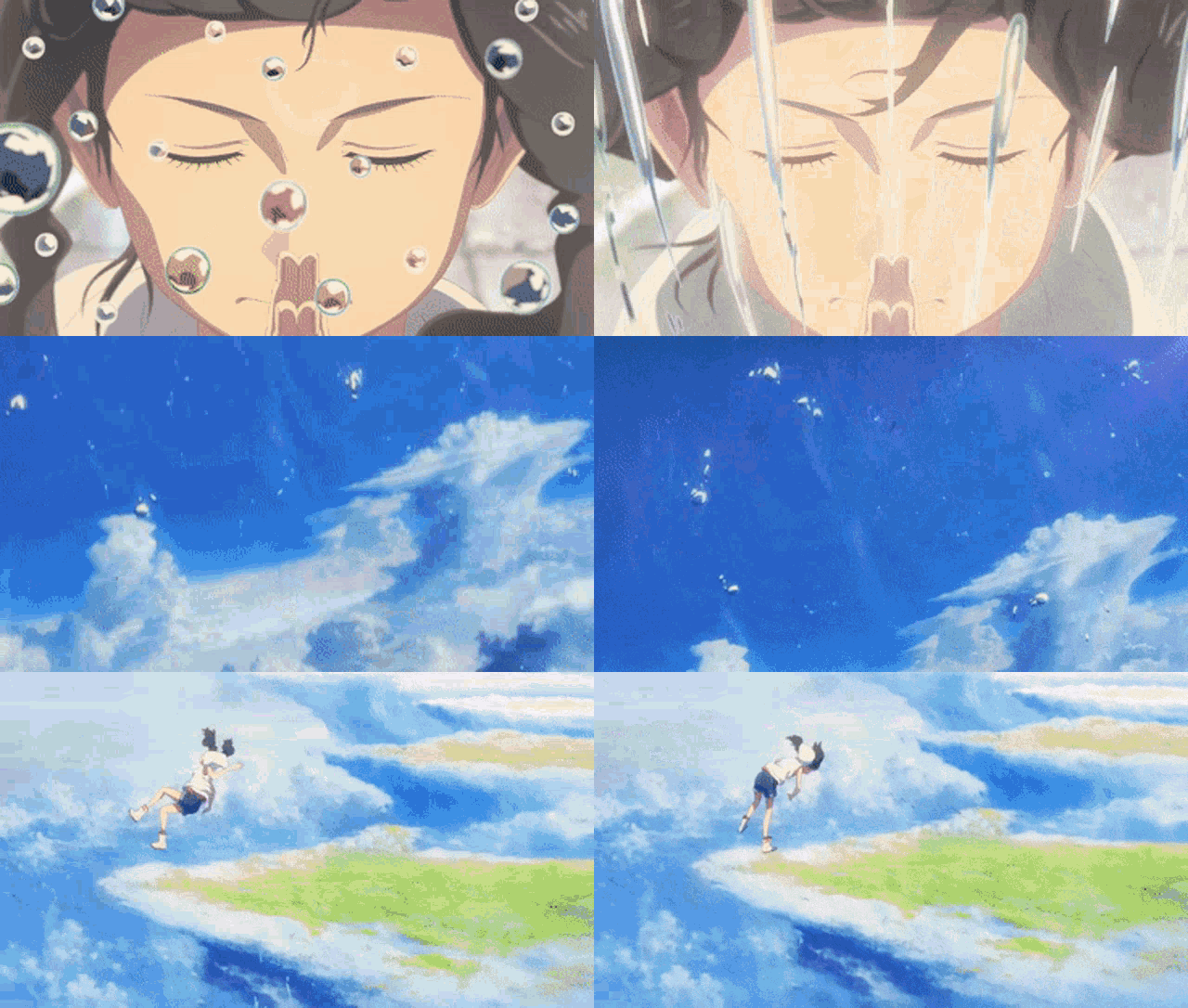
Durante o verão, Hodaka (voz original de Kotaro Daigo) foge de sua casa em uma ilha periférica para chegar à Tóquio. Depois de muitos dias difíceis, ele consegue um trabalho como freelancer para uma revista duvidosa. Certo dia, porém, Hodaka conhece Hina (voz original de Nana Mori), uma garota alegre que vive sozinha com seu irmão mais novo. Não leva muito tempo para Hodaka descobrir que Hina possui poderes de manipulação do tempo, que trazem sol à uma Tóquio cinzenta e chuvosa.

(During the summer, Hodaka (originally voiced by Kotaro Daigo) runs away from his home on a faraway island to get to Tokyo. After many struggling days, he manages to get a job as a freelancer to an occult magazine. One day, however, Hodaka meets Hina (originally voiced by Nana Mori), a cheerful young girl who lives alone with her younger brother. It doesn't take long for Hodaka to find out that Hina is able to manipulate the weather, which brings lots of sunshine to a grey, rainy Tokyo.)


Acho que nem é preciso dizer a razão pela qual estava bastante animado para ver esse filme: “O Tempo com Você” é escrito e dirigido por Makoto Shinkai, responsável por “Your Name.”, uma animação de 2016 que juntou uma legião de fãs ao redor do mundo, incluindo este que vos fala. Para aqueles que não estão familiarizados com o trabalho de Shinkai, pode-se dizer que ele faz filmes que inserem subtextos fantasiosos em nossa realidade. E o diretor faz isso de maneira tão fluida, que a separação entre fantasia e realidade se torna algo quase impossível de fazer. Essa mistura resulta em um universo fictício onde esses dois extremos coexistem, contendo personagens e situações que chamarão a atenção do espectador pelo seu realismo, e a adição de elementos fantasiosos que tornarão esse universo cada vez mais fascinante. Com isso dito, vamos falar sobre o roteiro. É possível dizer que “O Tempo com Você” repete a fórmula que fez de “Your Name.” um sucesso. A espinha dorsal do enredo é basicamente a mesma, mas as particularidades são o que fazem o novo filme de Shinkai se diferenciar de seu antecessor. A história é bem mais fácil de entender: enquanto “Your Name.” inclui elementos de viagem no tempo, troca de corpos e uma exploração complexa da mitologia japonesa; “O Tempo com Você” só possui um elemento fantasioso para movimentar a trama, o que colabora para uma história mais realista. Como parte da fórmula de seu antecessor, o enredo depende completamente da química entre os dois protagonistas, a qual funciona perfeitamente. Os personagens são extremamente bem desenvolvidos em um tempo de duração muito bem aproveitado de 2 horas, ganhando a simpatia do espectador em seus primeiros momentos em tela. O tom de “O Tempo com Você” é menos profundo do que “Your Name.”, pela falta de uma maior complexidade nos elementos fantásticos, mas o roteiro compensa com vários momentos comoventes, românticos e surpreendentemente engraçados. Diga-se de passagem, é um filme bem emocionante. A relação entre os dois protagonistas é muito cativante, de modo que o espectador está sempre na torcida para que eles fiquem juntos. Perto da conclusão, há um momento surpreendentemente reflexivo que coloca o espectador para pensar sobre os efeitos da constante e crescente urbanização das cidades. E o final é simplesmente maravilhoso. Resumindo, se você viu “Your Name.”, não há nada de relativamente novo ou complexo aqui, mas o roteiro certamente compensa com uma história cativante, movida pela explosiva química entre os dois protagonistas.

(I think I don't even have to say the reason why I was so excited to watch this film: “Weathering with You” is written and directed by Makoto Shinkai, who was responsible for “Your Name.”, a 2016 animated film that gathered a legion of fans around the world, with yours truly among those fans. For those who aren't familiar with Shinkai's work, it can be said that he makes films that insert fantasy subtexts in our reality. And he does that in such a fluid way, that it becomes impossible to separate fantasy from reality. That mix results in an universe where the two extremes co-exist, with characters and situations that will catch the viewer's attention for their realism, and the addition of fantastic elements that make this universe much more fascinating. With that said, let's talk about the script. It's possible to say that “Weathering with You” shares the same formula that made “Your Name.” a success. The spine of the plot is basically the same, but its particularities are what makes Shinkai's new film different from its predecessor. The story is much easier to understand: while “Your Name.” includes elements of time travel, body switching, and a complex exploration of Japanese mythology; “Weathering with You” uses only one fantasy element to move the story forward, which collaborates for a more realistic story. As part of its predecessor's formula, the plot depends entirely on the chemistry between the two protagonists, which works perfectly. The characters are extremely well developed in a much enjoyable running time of two hours, winning the viewer's sympathy at their first moments on-screen. The tone of “Weathering with You” is less deep than “Your Name.”, for the lack of a major complexity on the fantasy elements, but the script compensates with several heartfelt, romantic and surprisingly funny moments. By the way, this is a very emotional film. The relationship between the two main characters is very captivating, in a way that the viewer is always expecting them to be together. Near to its conclusion, there is a surprisingly thought-provoking moment that leads the viewer into thinking about the effects of constant and growing urbanization in cities. And the ending is simply wonderful. In a nutshell, if you've seen “Your Name.”, there's nothing relatively new or complex here, but the script certainly compensates with a captivating story, propelled forward by the explosive chemistry between its protagonists.)


Como dito anteriormente, a história de tanto “Your Name.” quanto “O Tempo com Você” tem como fio condutor a química entre os dois protagonistas, que são extremamente bem desenvolvidos. O Hodaka se sente bem deslocado na cidade grande, e passa por vários momentos difíceis que realmente poderiam acontecer com alguém na vida real, os quais levarão o espectador a se importar com o arco narrativo do personagem. A Hina, pelo contrário, é alegre, animada e carinhosa, e o carisma dela cativa o espectador. Juntando os dois extremos, representados pelas personalidades do Hodaka e da Hina, encontramos uma improvável relação que, mesmo com os elementos fantásticos, parece extremamente realista. Como personagens coadjuvantes, temos: o chefe de Hodaka, que tem um desenvolvimento surpreendentemente profundo, o qual eu realmente não esperava; a colega de trabalho dele, que rende alguns dos momentos mais engraçados do longa; e o irmão mais novo de Hina, que é um dos melhores personagens do filme, se não for o melhor. Resumindo, mesmo repetindo a mesma fórmula de “Your Name.”, Makoto Shinkai mostra que não perdeu seu talento inegável de desenvolver personagens bem cativantes e identificáveis.

(As previously said, the stories of both “Your Name.” and “Weathering with You” have the chemistry between the two main characters as the main conductive force, and said characters are extremely well developed. Hodaka feels pretty out of place in the big city, and goes through several difficult moments that really could happen to anyone in real life, which will lead the viewer into caring with the character's narrative arc. Hina, on the other hand, is cheerful, high-spirited, and caring, and her charisma moves the viewer in such a great way. Putting those two extremes together, represented by Hodaka and Hina's personalities, we find an unlikely relationship that, even with the fantastic elements, looks and sounds extremely realistic. As supporting characters, we have: Hodaka's boss, who has a surprisingly deep development, which I didn't expect at all; his work colleague, who's responsible for some of the film's funniest moments; and Hina's younger brother, who is one of the best characters here, if not the best. In a nutshell, even though it repeats the formula of “Your Name.”, Makoto Shinkai shows that he didn't lose his undeniable talent of developing very captivating and relatable characters.)


Pra quem já viu “Your Name.”, vocês sabem o quanto o visual daquele filme é incrível. Agora elevem o potencial desse visual à enésima potência. É assim que é a animação usada em “O Tempo com Você”. Há uma mistura bem fluida entre uma animação tradicional muito bem feita e um CGI que não polui o visual do filme. Eu estaria mentindo se dissesse que esse não é o visual mais lindo que eu já vi em uma animação japonesa desde “A Viagem de Chihiro”. Se alguém não se sentir atraído pela história ou pelos personagens (o que eu acho praticamente impossível), essa pessoa provavelmente chegará até o final do filme pelo visual. É um filme tão esteticamente perfeito que eu simplesmente não entendo a decisão da Academia de não indicá-lo à Melhor Filme de Animação (talvez seja porque ele foi lançado em 2020 nos EUA, fazendo dele não elegível para concorrer na cerimônia desse ano. Porém, há uma maior chance de ser indicado nas premiações do ano que vem, então, dedos cruzados.). É um filme muito bem montado. Ele possui alguns momentos onde a tela fica preta por um período de tempo, o que seria favorável para uma adaptação episódica do longa, e esse tipo de edição também ajuda o espectador a digerir a história com uma maior compreensão. A trilha sonora conta com tanto faixas instrumentais quanto canções originais do grupo Radwimps, que também trabalhou com Shinkai em “Your Name.”. A trilha instrumental parece MUITO com algo que o Joe Hisaishi faria para um filme do Studio Ghibli, com melodias de piano simplesmente fantásticas. E as canções originais são bem pegajosas, e contêm letras que revelam os sentimentos de alguns dos personagens, algo bem parecido com o que aconteceu no filme anterior de Shinkai.

(For those who have watched “Your Name.”, you know how incredible that film's visuals are. Now elevate that visual's potential up to 11. That's how the animation's used in “Weathering with You”. There's a really fluid mix between a really well-done traditional animation and a small use of CGI that doesn't pollute the film's stunning visuals. I would be lying if I said this isn't the most beautifully animated Japanese film I've seen since “Spirited Away”. If someone doesn't feel attracted to the story or its characters (which I find to be practically impossible), that person would probably go through the ending because of the visuals. It's such an aesthetically perfect film that I simply don't understand the Academy's decision to not nominate it for Best Animated Feature (maybe it's because it was only released in 2020 in the US, making it ineligible to be in this year's ceremony. However, it may have a bigger chance of being nominated at next year's award season, so, fingers crossed.). It's a very well edited film. It has a few moments where the screen goes black for a small period of time, which would be favorable for an episodic adaptation of it, and that type of editing also helps the viewer to digest the story with a bigger comprehension. The soundtrack relies on both instrumental tracks and original songs by the group Radwimps, which also worked with Shinkai in “Your Name.”. The instrumental score sounds A LOT like something Joe Hisaishi would do for a Studio Ghibli film, with simply fantastic piano melodies. And the original songs are very addictive, and have lyrics that reveal the feelings of some of the characters, something very much alike what happened in Shinkai's previous film.)


Resumindo, “O Tempo com Você” é mais um triunfo de Makoto Shinkai. Repetindo a fórmula que fez de “Your Name.” um sucesso, mas de uma forma mais simples, o roteirista e diretor reforça seu talento inegável em criar histórias cativantes, personagens identificáveis, e visuais de tirar o fôlego. Se não for melhor do que “Your Name.”, pelo menos é tão bom quanto.

Nota: 10 de 10!!

É isso, pessoal! Espero que tenham gostado! Até a próxima,

João Pedro

(In a nutshell, “Weathering with You” is another triumph by Makoto Shinkai. Repeating the formula that made “Your Name.” a success, only in a more simple way, the writer-director reinforces his undeniable talent in creating captivating stories, relatable characters, and breathtaking visuals. If it isn't better that “Your Name.”, at least it's as good as its predecessor.

I give it a 10 out of 10!!

That's it, guys! I hope you liked it! See you next time,

João Pedro)


quinta-feira, 13 de agosto de 2020

"Twin Peaks": uma obra-prima à frente de seu tempo (Bilíngue)

E não se esqueçam de curtir e seguir o blog nas redes sociais:

(And don't forget to like and follow the blog in social medias:)

Facebook: https://www.facebook.com/NoCinemaComJoaoPedroBlog/

Twitter: @nocinemacomjp2

Instagram: @nocinemacomjp


E aí, meus caros cinéfilos! Tudo bem com vocês? Estou de volta, mas não para dar continuidade à nossa postagem especial sobre animações diferentes. Estou aqui para falar de uma série que era BEM à frente de seu tempo, e ao mesmo tempo que ela intriga (e talvez confunde) o espectador, ela foi algo único e indubitavelmente revolucionário para sua época. Então, sem mais delongas, vamos falar sobre “Twin Peaks”. Vamos lá!

(What's up, my dear film buffs! How are you guys doing? I'm back, but not to continue with our special post on different animated films. I'm here to talk about a show that was WAY ahead of its time, and at the same time it intrigues (and maybe baffles) the viewer, it was something unique and undoubtedly revolutionary at the time it was released. So, without further ado, let's talk about “Twin Peaks”. Let's go!)


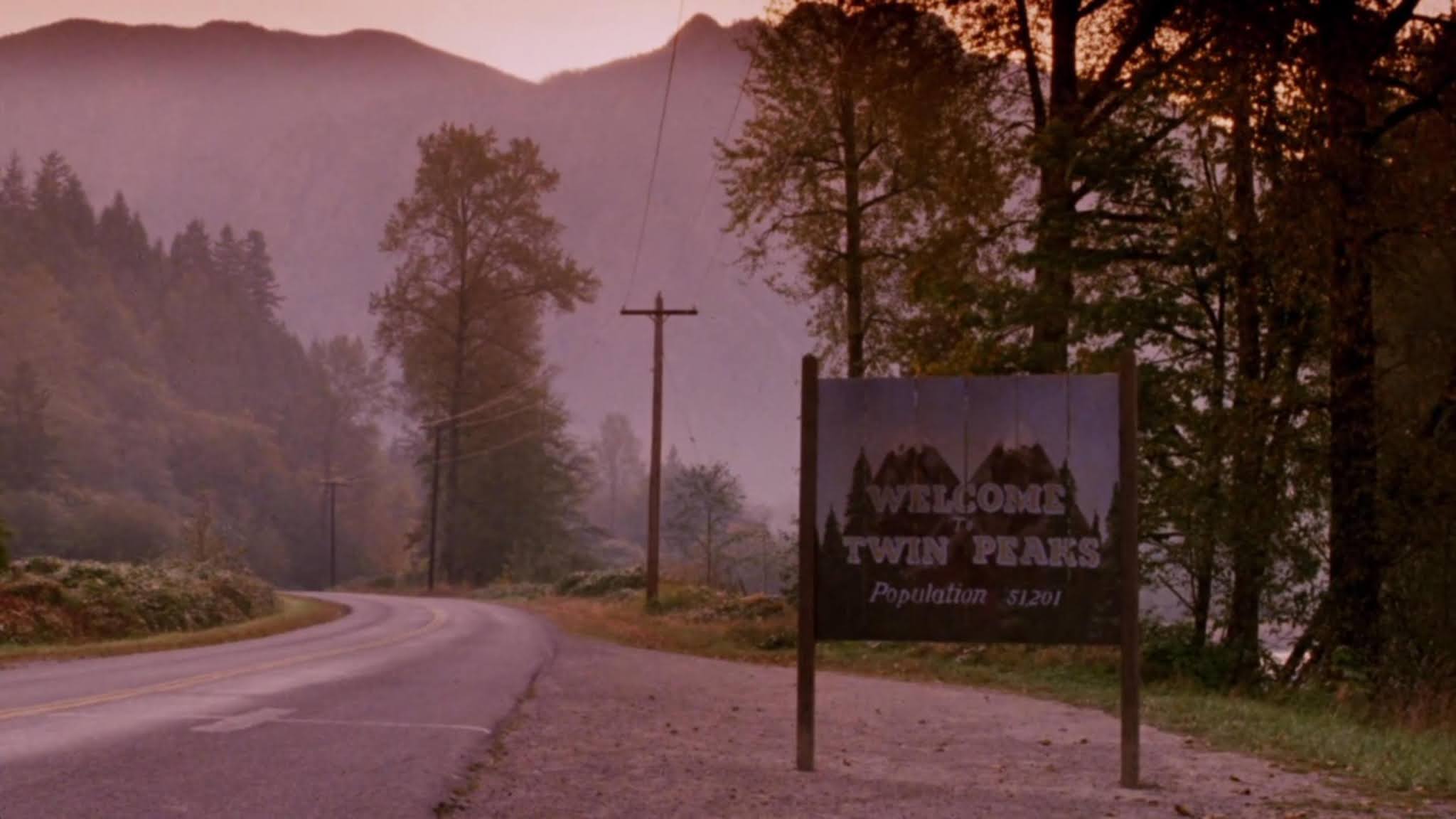
A série é ambientada na cidadezinha fictícia de Twin Peaks, que se vê abalada perante a morte chocante de Laura Palmer (Sheryl Lee), uma adolescente de 17 anos. Depois da população encontrar outra garota traumatizada, que supostamente estava com Laura no dia da sua morte, o FBI envia o Agente Especial Dale Cooper (Kyle MacLachlan) à Twin Peaks para investigar o caso, o que o leva a abrir portas para desvendar os mistérios sinistros que a cidade esconde em seu interior.

(The show is set in the fictional little town of Twin Peaks, which is shaken due to the shocking death of Laura Palmer (Sheryl Lee), a 17-year-old teenager. After the population finds another traumatized girl, who supposedly was with Laura at the day of her death, FBI sends Special Agent Dale Cooper (Kyle MacLachlan) to Twin Peaks to investigate the case, which leads him into opening doors to unravel the town's sinister mysteries, hidden in unexpected places.)


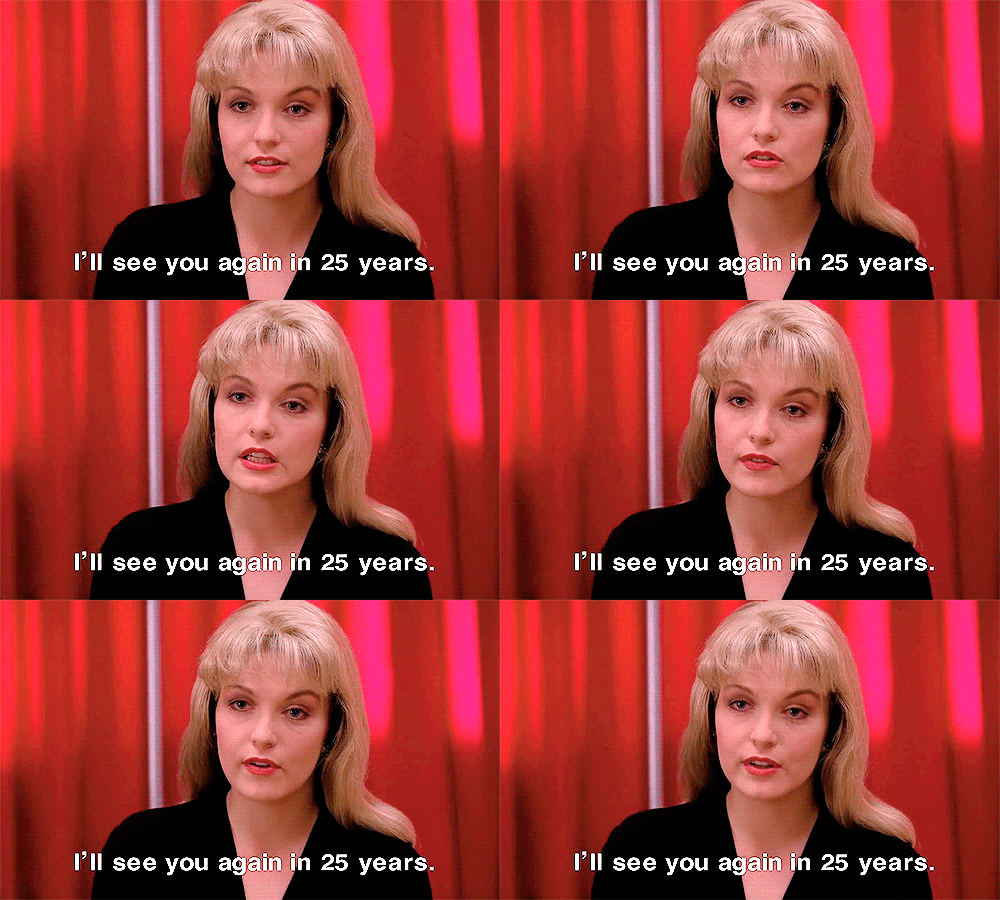
Antes de começar a falar sobre a série em si, devo ressaltar o fato que eu tentei assisti-la 3 vezes. Não conhecia o trabalho de David Lynch, diretor responsável pela co-criação de “Twin Peaks” com Mark Frost, e não estava acostumado com o estilo de cinema dele, que é bem peculiar, para não usar outras palavras. Depois de assistir aos seus filmes “Veludo Azul” (que é, provavelmente, um dos filmes mais acessíveis dele) e “Cidade dos Sonhos” (que foi considerado o melhor filme do séc. XXI até agora), finalmente consegui pegar o jeito da série, a qual eu assisti com os meus pais. Diferente da terceira temporada (lançada 26 anos depois da leva original da série), que foi inteiramente escrita por seus criadores e dirigida por Lynch, as primeiras duas temporadas contaram com o auxílio de vários outros roteiristas e diretores, resultando em um tom que transita entre vários gêneros, como drama, mistério, romance, terror e até comédia. A série, inicialmente, segue uma linha de pensamento muito parecida com a grande maioria de séries policiais da atualidade. Tem um assassinato, e aí, policiais e agentes são enviados pra investigar, tudo isso e mais um pouco. Mas ao longo da primeira temporada, somos apresentados ao estilo surreal de David Lynch, com direito à cenas de sonho completamente viajadas, e visuais vibrantes e hipnotizantes. E esses tipos de cenas, por mais que venham a confundir o espectador, o persuadem a continuar assistindo. Os personagens são muito bem desenvolvidos, cada uma das figuras principais tem muita personalidade, especialmente o protagonista, que nos faz sorrir em cada cena que ele aparece. A primeira temporada termina em um suspense perfeito para a segunda, e é aí que as coisas começam a complicar. A partir de sua segunda metade, várias subtramas que são quase que totalmente desconexas do foco principal da história são apresentadas, a ponto delas ficarem até melodramáticas quando levadas mais à fundo. Mas não foram essas coisas que fizeram de “Twin Peaks” um marco absoluto na história da televisão. A razão de eu ter falado que essa série era à frente de seu tempo era porque ela apresentava aspectos da sétima arte que só iriam se popularizar muito tempo depois. Nos anos 1990, o gênero de terror slasher (Pânico, Halloween, Sexta-Feira 13), que faz uso das situações mais grotescas para despertar o medo do espectador, estava sendo ressuscitado. Mas esse tipo de terror não é presente na obra de Lynch e Frost. Os roteiristas criam a sensação de medo por meio da atmosfera e do incômodo psicológico (algo que a A24 só iria fazer 20 anos depois, com filmes como “Hereditário”, “Midsommar” e “A Bruxa”), e eles fazem isso de forma perfeita através de um de seus antagonistas principais (uma das cenas assustadoras mais icônicas da série é essencialmente construída pela atmosfera e aperfeiçoada pelo jeito que ela é montada, a qual vocês podem assistir aqui: https://www.youtube.com/watch?v=R3tIgaJ1j7w). Outro aspecto que marcou “Twin Peaks”, e por consequência, serviu de influência para várias outras obras, é a complexidade de seu enredo. Se vocês pensam que “Dark” foi complexo, cheguem ao final da leva original de 29 episódios de “Twin Peaks” e tentem me explicar. Lynch e Frost criaram uma mitologia complexa e tão elaborada 30 anos atrás que, até os dias de hoje, existem vários vídeos no YouTube explicando cada simbolismo e cada mistério não-resolvido da série, com o auxílio de materiais oficiais lançados após o final da transmissão da mesma. Uma coisa que causou muita divisão por parte do público e da crítica foi o final, o infame vigésimo-nono episódio, dirigido por Lynch. Não vou negar, os 15 minutos finais desse episódio são confusos, do tipo que te fazem gritar “MAS O QUE DIABOS EU ACABEI DE ASSISTIR?” quando os créditos começam. Se a terceira temporada, lançada em 2017, não existisse, eu ficaria mais perplexo do que satisfeito com o final da leva original de “Twin Peaks”. Mas, já que existe, é um final complexo, surreal, único e perfeito que deixa um baita suspense e algumas pontas soltas para serem amarradas na próxima temporada.

(Before I start talking about the show itself, I must say that I tried watching it 3 times. I wasn't familiar with the work of David Lynch, who is responsible for co-creating “Twin Peaks” with Mark Frost, nor was I used to his cinematic style, which is very peculiar, to not say other words. After watching his films “Blue Velvet” (which is likely one of his most accessible movies) and “Mulholland Drive” (which was considered the best film of the 21st century), I finally got along with its plot, watching it with my parents. Unlike its third season (released 26 years after its original run), which was entirely written by its creators and directed by Lynch, its first two seasons had the help of several other writers and directors, resulting in a tone that borrows from several genres, like drama, mystery, romance, horror and even comedy. It initially follows the same train of thought of most police procedural-serial killer shows nowadays. There's a murder, and then, cops and government agents investigate, all that and then some. But throughout the first season, we are introduced to David Lynch's surreal style, with utterly nonsensical dream sequences, and vibrant, hypnotic visuals. And those types of scenes, as much as they may baffle the viewer, they persuade him to continue watching it. The characters are very well developed, each one of the main characters has loads of personality, especially its protagonist, who makes us smile in every scene he's in. The first season ends on a perfect cliffhanger to the second one, and that's where things start to get a little more complicated. In its second half, several subplots that seem almost entirely disconnected to the main focus of the story are presented to the viewer, and they can get very melodramatic when they are explored on a deeper level. But that's not what made “Twin Peaks” an absolute turning point in the history of television. The reason why I stated it was ahead of its time is because it introduced cinematic aspects that would only get popular at a later point in time. In the 1990s, the slasher horror genre (Scream, Halloween, Friday the 13th), which makes use of gory situations to awaken the viewer's fear, was on the rise again. But that kind of horror isn't in Frost and Lynch's work. The screenwriters create the feeling of fear through the atmosphere and psychological unsettlement (something A24 would only do 20 years later, with films like “Hereditary”, “Midsommar” and “The Witch”), and they do that perfectly through one of its main antagonists (one of the show's most iconic scary scenes is essentially built through the atmosphere and perfected by the way it was put together, and you can watch it here: https://www.youtube.com/watch?v=R3tIgaJ1j7w). Another aspect that cemented “Twin Peaks” as a television landmark, and consequently, served as an influence to later works, was the complexity of its plot. If you think “Dark” was complex, try getting all the way through the end of “Twin Peaks”'s original 29-episode run and try to explain it to me. Lynch and Frost created a mythology that's so rich and elaborated 30 years ago, that, to this day, there are several videos on YouTube explaining its symbolisms and unsolved mysteries, with the aid of official media released after its original run. One thing that polarized viewers and critics was its ending, the infamous twenty-ninth episode, which was directed by Lynch. I won't deny it, the final 15 minutes are confusing, to the point where you scream “WHAT THE HELL DID I JUST WATCH?” when the credits start rolling. If the third season, released in 2017, didn't exist, the finale would've left me more perplexed than satisfied. But as it exists, it is a complex, surreal, unique and perfect ending that leaves one hell of a cliffhanger and a few loose points to be clarified in the following batch of episodes.)


O elenco dessa série tem várias pessoas que brilham, e outras que nem tanto. Começando pelo Kyle MacLachlan, que interpreta o icônico Dale Cooper. Ele é simplesmente perfeito no papel, de modo que eu não vejo absolutamente mais ninguém interpretando esse personagem do que MacLachlan. Ele é carismático, engraçado, mas também consegue ter uma profundidade emocional bem impressionante. Ele tem muita química com os personagens do Michael Ontkean e da Sherilyn Fenn, que também estão fantásticos em seus papéis. Para não deixar a série muito sombria, ela conta com vários alívios cômicos: Harry Goaz, Kimmy Robertson, David Duchovny, Ian Buchanan, Wendy Robie, o próprio David Lynch, entre outros. Há papéis coadjuvantes memoráveis nas performances de Mädchen Amick, Dana Ashbrook, Sheryl Lee, Michael Horse, Richard Beymer, Lara Flynn Boyle, Piper Laurie, Jack Nance, Ray Wise, Miguel Ferrer e um enorme elenco. E o programa acha vilões ameaçadores e personagens sobrenaturais através de Eric Da Re, Frank Silva, Carel Struycken, Michael J. Anderson, Catherine E. Coulson e Kenneth Welsh. Eu sinceramente não gostei da performance nem da personagem da Joan Chen. Achei ela bem sem sal, e em vez de ser um personagem crucial pra trama, ela só parece um instrumento para levar os arcos de outros personagens para frente.

(This show's cast has several shining stars, and some that don't shine as much. Starting off with Kyle MacLachlan, who plays the iconic Dale Cooper. He's simply perfect in the role, in a way that I can't see anybody else playing him other than MacLachlan. He's charismatic, funny, but also manages to have a very impressive emotional depth. He has plenty of chemistry with Michael Ontkean and Sherilyn Fenn's characters, who are also fantastic. To lighten up the tone of the show, it relies on several comic reliefs: Harry Goaz, Kimmy Robertson, David Duchovny, Ian Buchanan, Wendy Robie, David Lynch himself, among others. There are memorable supporting roles in the performances by Mädchen Amick, Dana Ashbrook, Sheryl Lee, Michael Horse, Richard Beymer, Lara Flynn Boyle, Piper Laurie, Jack Nance, Ray Wise, Miguel Ferrer and one hell of a cast. And the show finds threatening villains and supernatural characters through Eric Da Re, Frank Silva, Carel Struycken, Michael J. Anderson, Catherine E. Coulson and Kenneth Welsh. I honestly didn't like Joan Chen's performance or her character. I found her to be pretty insipid, and instead of being a crucial character to the plot, she just seems like an instrument to move other character arcs forward.)


Outra coisa que marcou “Twin Peaks” foram os aspectos técnicos, mais notavelmente a direção de arte e a montagem, que foram altamente cruciais para a construção da atmosfera da série. Por fora, Twin Peaks é mostrada como uma cidade pacata e aconchegante, com tons mais apagados, onde quase nada de importante acontece; aí aparecem alguns tons mais vibrantes e chamativos em lugares onde literalmente tudo pode acontecer. A montagem é friamente calculada para não diminuir ou banalizar o impacto que algumas cenas querem causar no espectador, e funciona perfeitamente. A fotografia é muito linda, com várias sequências enfatizando a natureza do local, com cachoeiras e nevoeiros. E como a cereja no topo desse bolo esteticamente perfeito, temos a trilha sonora do Angelo Badalamenti, que é simplesmente sublime. A música de abertura é icônica, o tema da Laura Palmer é melancólico e lindo, e as faixas realmente ajudam a reforçar a atmosfera ou o impacto de algumas cenas, o que é sempre bom, no meu ponto de vista.

(Another thing that marked “Twin Peaks” were the technical aspects, most notably its art direction and editing, which were highly essential for its construction of atmosphere. Outside, Twin Peaks is shown as a quiet, cozy little town, with toned down tones, where almost nothing important happens; then some more vibrant, attractive tones show up in places where literally anything can happen. The editing is coldly calculated to not diminish or banalize the impact some scenes want to create on the viewer, and it works perfectly. The cinematography is really beautiful, with several sequences focusing on the nature of the setting, with waterfalls and mists. And as the cherry on the top of this aesthetically perfect cake, there's Angelo Badalamenti's score, which is simply sublime. The opening theme is iconic, Laura Palmer's theme is melancholic and beautiful, and the tracks really help reinforcing the atmosphere or the impact of a few scenes, which is always good, in my point of view.)


Resumindo, “Twin Peaks” é uma obra-prima à frente de seu tempo. Com um enredo complexo, um elenco estelar, e aspectos técnicos de primeira linha, David Lynch e Mark Frost criam um quebra-cabeça surreal em 29 episódios, estreando aspectos cinematográficos que ficariam populares atualmente, e deixando o espectador boquiaberto em sua conclusão, seja por fascínio ou confusão. Ou os dois.

Nota: 9,5 de 10!!

É isso, pessoal! Espero que tenham gostado! Até a próxima,

João Pedro

(In a nutshell, “Twin Peaks” is a masterpiece ahead of its time. With a complex plot, a stellar cast, and top-notch technical aspects, David Lynch and Mark Frost create a surreal puzzle in 29 episodes, introducing cinematic aspects which would get popular nowadays, and leaving the viewer's jaw dropped by its conclusion, either because of fascination or confusion. Or both.

I give it a 9,5 out of 10!!

That's it, guys! I hope you liked it! See you next time,

João Pedro)


domingo, 9 de agosto de 2020

Animações Diferentes - Trilogia Contos da Arcadia: a obra-prima animada da Netflix (Bilíngue)

E não se esqueçam de curtir e seguir o blog nas redes sociais:

(And don't forget to like and follow the blog in social medias:)

Facebook: https://www.facebook.com/NoCinemaComJoaoPedroBlog/

Twitter: @nocinemacomjp2

Instagram: @nocinemacomjp


E aí, meus caros cinéfilos! Tudo bem com vocês? Estou de volta, para falar sobre uma das maiores joias escondidas no catálogo da Netflix, como a próxima parte da nossa postagem especial sobre animações diferentes. Criada e idealizada por um dos diretores mais criativos e talentosos dos nossos tempos, essa trilogia de séries consegue criar uma mitologia muito rica ao contar histórias fantásticas com valores universais. Então, sem mais delongas, vamos falar sobre a trilogia Contos da Arcadia. Vamos lá!

(What's up, my dear film buffs! How are you guys doing? I'm back, in order to talk about one of the biggest hidden gems on your Netflix catalog, as the next part in our special post on different animated media. Created and idealized by one of the most creative and talented filmmakers of our time, this trilogy of TV shows manages to create a very rich mythology while telling fantastic stories with universal values. So, without further ado, let's talk about the Tales of Arcadia trilogy. Let's go!)

Composta pelas séries “Caçadores de Trolls”, “Os 3 Lá Embaixo” e “Magos”, a trilogia Contos da Arcadia acompanha os habitantes da cidadezinha pacata de Arcadia Oaks, que secretamente abriga várias criaturas sobrenaturais, como trolls e alienígenas, assim como os jovens heróis que lutam contra as forças do mal que se escondem nas sombras.

(Composed by the shows “Trollhunters”, “3Below” and “Wizards”, the Tales of Arcadia trilogy follows the inhabitants of the small suburban town of Arcadia Oaks, which is secretly home to various supernatural creatures, such as trolls and aliens, and the young heroes who fight against the forces of evil that lurk in the shadows.)

Pela sinopse, parece que essa trilogia segue a fórmula de qualquer obra de fantasia com protagonistas mirins. O diferencial que ela tem, comparado à essas outras obras, é o envolvimento de Guillermo del Toro, responsável por alguns dos melhores filmes de fantasia dos últimos tempos, tais como “O Labirinto do Fauno”, “A Forma da Água” e “A Espinha do Diabo”. Quem me conhece sabe o quanto eu AMO o trabalho do del Toro, tanto que farei uma analogia: suponhamos que um filme seja um pedaço de carvão. Se esse filme tiver o nome “Guillermo del Toro” envolvido de alguma forma, esse pedaço de carvão já vira uma pedra preciosa, no meu ponto de vista. A melhor coisa sobre os trabalhos de fantasia de del Toro é que ele não só conta histórias, mas também insere valores e lições morais em seus roteiros, por mais surreais que pareçam ser. Nessa trilogia, o diretor mexicano cria três universos separados que, ao longo da trama como um todo, vão se tornando um único universo. Eu amo de coração todos os longas que ele fez, mas sinceramente não tenho medo em dizer que essa trilogia pode muito bem ser o seu melhor trabalho. É uma prova infalível da versatilidade do diretor com gêneros e com públicos, e as séries conseguem manter a essência de seus trabalhos mais adultos, servindo como uma introdução perfeita ao trabalho dele para um público mais jovem. Começando com “Caçadores de Trolls”, del Toro cria personagens altamente simpáticos e deslocados, que são apresentados à situações improváveis, as quais resultam em uma total transformação de seus caráteres. É a única das três séries que funciona independente das outras, tanto que “Os 3 Lá Embaixo” e “Magos” supõem que o espectador já tenha visto “Caçadores de Trolls”. Mas mesmo que ela funcione muito bem por si só, ela se torna algo muito mais rico junto às duas outras séries. A ambientação fantástica é absolutamente cativante, os personagens são muito bem desenvolvidos, os vilões são bem ameaçadores, e a melhor coisa: a fórmula não é repetida nas temporadas seguintes, com os roteiristas sempre inovando e expandindo esse universo fictício, colocando seus protagonistas em situações cada vez mais arriscadas e sombrias, o que vai atrair um público mais adulto, ao mesmo tempo que entretém os pequenos. Aí, temos a segunda série, “Os 3 Lá Embaixo”, que flerta mais com o gênero de ficção-científica. Não chega a ser tão sombria quanto “Caçadores de Trolls”, mas das três séries, “Os 3 Lá Embaixo” é aquela que mais se conecta à realidade: mesmo com um pano de fundo sobre alienígenas e coisas sobrenaturais, a história lida com o tópico cada vez mais relevante da xenofobia de uma maneira leve, altamente divertida e recomendada para todas as idades. E depois, temos a terceira série, “Magos”, que era para ser a conclusão dessa história (“era”, do verbo “não vai mais”, porque um filme será lançado no primeiro trimestre de 2021, que irá juntar todos os personagens para fechar essa maravilhosa história com chave de ouro). Eu gostei bastante do aspecto mais medieval que “Magos” tem em relação às outras séries. É uma releitura muito criativa da lenda do Rei Arthur, contando com a presença de personagens icônicos, como Lancelot, Galahad, Morgana e Merlin. É nessa “semi-conclusão” da trilogia que várias peças que pareciam soltas em “Caçadores de Trolls” e “Os 3 Lá Embaixo” começam a se encaixar, o que leva o espectador a montar esse quebra-cabeça em sua mente e pensar: “CARAMBA, ESSE DEL TORO É UM GÊNIO!”. A trama da trilogia como um todo é tão engajante que, ao final de cada temporada, há um suspense absurdo para a próxima leva de episódios, o que certamente irá persuadir o espectador a continuar assistindo. Não sei exatamente se o Guillermo del Toro tinha essa saga inteira em mente ao bolar o enredo de “Caçadores de Trolls” (que é baseado em um livro dele, diferente das duas outras séries, que são histórias originais), mas fiquei extremamente feliz e impressionado com o resultado desse projeto grandioso, e mal posso esperar pela verdadeira conclusão ano que vem.

(By its synopsis, it may seem that this trilogy will follow the formula of every other work of fantasy with child protagonist. The difference it has, comparing to these other works, is the involvement of Guillermo del Toro, who's responsible for some of the best fantasy films in recent times, such as “Pan's Labyrinth”, “The Shape of Water” and “The Devil's Backbone”. Those who really know me know that I LOVE del Toro's work so much, that I'll make an analogy: let's suppose a movie is a lump of coal. If that movie has the name “Guillermo del Toro” involved in it somehow, that lump of coal turns into a gem, in my point of view. The best thing about del Toro's fantasy works is that he doesn't just tell stories, but he also deals with values and moral lessons in his scripts, as surreal as they may seem. In this trilogy, the Mexican director creates three separate universes that, throughout the overall plot, merge into one single universe. I love every film he made with all my heart, but honestly, I'm not afraid of saying that this trilogy might as well be his finest work yet. It's an infallible proof of his versatility with genres and audiences, and the shows manage to contain the essence of his more adult works, serving as a perfect introduction to his craft for a younger audience. Starting off with “Trollhunters”, del Toro creates highly relatable outcasts, who are presented with unlikely situations, which result in a total transformation of their character. It's the only one out of the three that works independently from the others, as “3Below” and “Wizards” suppose the viewer has already seen “Trollhunters”. But even though it works beautifully on its own, it becomes something much richer with the other shows. The fantasy setting is absolutely captivating, the characters are very well-developed, the villains are really threatening, and the best thing about it: the formula isn't recycled in the following seasons, with the screenwriters always innovating and expanding this fictional universe, putting their protagonist into riskier and darker situations, which will likely attract a more adult audience, while also entertaining the young ones. Then, we have the second show, “3Below”, which found a bigger influence in the science fiction genre. It doesn't get as dark as “Trollhunters” but, out of all 3 shows, “3Below” is the one that gets closer to reality: even though it has a sci-fi fantasy background with aliens, the story deals with the timely relevant topic of xenophobia in a light, extremely fun way, and because of that, I definitely recommend it to the whole family. And at last, we have the third show, “Wizards”, which was supposed to be the conclusion to this story (in a way that it won't be anymore, as a full-length feature film to be released in the first quarter of 2021, which will reunite every character in the trilogy to bring this awesome story to an epic closure). I really liked the more medieval feel “Wizards” has, in comparison to the other shows. It's a really creative turn on the King Arthur legend, relying on the presence of iconic characters, such as Lancelot, Galahad, Morgana and Merlin. It's during this “semi-conclusion” to the trilogy that every piece that might have felt left loose in “Trollhunters” and “3Below” starts to fit, which leads the viewer into putting a puzzle together in his head and thinking “WOW, THIS DEL TORO GUY'S A GENIUS!”. The overall plot of the trilogy is highly engaging, to the point that, at the end of each season, there's a tense, tempting cliffhanger which will persuade viewers to continue watching. I don't know exactly if Guillermo del Toro had this whole saga in mind while elaborating the plot for “Trollhunters” (which is based on his book, unlike the other two shows' original storylines), but I was extremely happy and impressed with the final result of this juggernaut of a project, and I just can't wait for the release of its true conclusion in 2021.)

O elenco de vozes dessa trilogia é absolutamente monstruoso. Nas duas primeiras temporadas de “Caçadores de Trolls”, temos um dos últimos trabalhos de Anton Yelchin, que morreu de forma trágica aos 27 anos em 2016, como o protagonista, sendo substituído por Emile Hirsch no restante das séries. Os dois atores dão muita alma e personalidade ao personagem, automaticamente atraindo a simpatia do espectador. O desenvolvimento dele é o mais elaborado, para não dizer drástico. Ele sempre está em constante transformação, encontrando âncoras emocionais em seus amigos e família, interpretados por Lexi Medrano, Charlie Saxton, Kelsey Grammer, Fred Tatasciore, Amy Landecker e Jonathan Hyde. O elenco de “Os 3 Lá Embaixo” adiciona os talentos inegáveis de Diego Luna, Tatiana Maslany, Nick Offerman, Glenn Close, Hayley Atwell e Tom Kenny; e “Magos” traz David Bradley, Colin O'Donoghue, Alfred Molina e Stephanie Beatriz nos papéis principais. Quase todos os personagens aparecem nas três séries, já que “Os 3 Lá Embaixo” e “Magos” supõem que o espectador já tenha visto “Caçadores de Trolls”, então vários personagens que apareceram em uma série aparecem na outra, como os interpretados pelo Steven Yeun e pelo Cole Sand (que representam a melhor dupla rouba-cenas da trilogia). Além dos citados, vale mencionar os trabalhos de Clancy Brown, Mark Hamill, Ron Perlman e Lena Headey (que interpretam alguns dos melhores vilões). Todos os personagens são muito bem desenvolvidos, e não são superficiais de maneira alguma. Até os vilões possuem algumas camadas que podem ser até inesperadas para o espectador, o que adiciona uma profundidade não vista muito frequentemente em produções infantis.

(The cast voice for this trilogy is absolutely monstruous. In the first two seasons of “Trollhunters”, we have one of the final roles of Anton Yelchin, who tragically died at age 27 in 2016, as the main character, being replaced by Emile Hirsch for the remaining series. Both actors give plenty of soul and personality to the character, who instantly earns the viewer's sympathy. His development is the most elaborate, if not drastic one. He's always in a constant sense of transformation, finding emotional anchors in his friends and family, voiced by Lexi Medrano, Charlie Saxton, Kelsey Grammer, Fred Tatasciore, Amy Landecker and Jonathan Hyde. The cast of “3Below” adds the undeniable talents of Diego Luna, Tatiana Maslany, Nick Offerman, Glenn Close, Hayley Atwell and Tom Kenny; and “Wizards” has David Bradley, Colin O'Donoghue, Alfred Molina and Stephanie Beatriz in the main roles. Almost every character appear in all 3 shows, as “3Below” and “Wizards” suppose the viewer has already watched “Trollhunters”, so, many characters that appeared in one show made an appearance in another one, such as the ones portrayed by Steven Yeun and Cole Sand (who play the best scene-stealing duo in the trilogy). Besides the already mentioned, it's worth highlighting the works of Clancy Brown, Mark Hamill, Ron Perlman and Lena Headey (who portray some of the best villains). Every character is very well developed, and they're not one-dimensional at all. Even the villains have some layers that may feel unexpected to the viewer, which adds a depth rarely seen in productions targeted at children.)

Se tem uma coisa que é impecável em qualquer trabalho do Guillermo del Toro, é o visual. E a trilogia Contos da Arcadia não é uma exceção. A animação não chega a ter a atenção mínima aos detalhes que as produções mais recentes da Pixar têm dado, mas isso não é um problema. Produzidas pela DreamWorks (responsável por Shrek), as séries investem inteiramente em um visual vibrante atraente para os olhos de seu público-alvo, e familiar para os que já conhecem o trabalho do diretor que está por trás de tudo. O design dos personagens é muito bem feito. Os trolls tem muita textura, o design dos alienígenas foi algo bastante original e até inesperado, na minha opinião. Os efeitos visuais têm uma constante evolução com o passar da trilogia. Eles já são bons no início de “Caçadores de Trolls”, mas eles encontram o pico de sua capacidade e eficiência em “Magos”. São séries muito bem montadas, de modo que nenhum episódio é desperdiçado, contando com um passo friamente calculado para contar a história de cada obra separada, para depois juntá-la ao universo fictício da trilogia como um todo. As trilhas sonoras do Alexandre Desplat (“Caçadores de Trolls”), The Crystal Method (“Os 3 Lá Embaixo”) e Jeff Danna (“Magos”) encaixam direitinho no gênero que cada série pertence, com as trilhas de Desplat e Danna tendo um teor mais épico, enquanto a trilha de The Crystal Method tem uma pegada mais eletrônica, o que é perfeito para a abordagem de ficção-científica presente na segunda série da trilogia.

(If there's one thing that's flawless in any of the works by Guillermo del Toro, it's the visuals. And the Tales of Arcadia trilogy is not an exception. The animation is not as detailed as Pixar's most recent productions, but that's not a problem at all. Produced by DreamWorks (who was responsible for Shrek), the shows invest entirely in a vibrant look that will attract its target audience, and seem familiar for those who already know the work of the director behind it all. The character design is very well-made. The trolls have plenty of texture, the design of the aliens was something pretty original and even unexpected, in my opinion. The visual effects have a constant evolution throughout the trilogy. They're already good in the beginning of “Trollhunters”, but they find the peak of their capacity and efficiency in “Wizards”. These are very well edited shows, in a way that no episode is wasted, relying in a coldly calculated pace to tell the story of each show separately, to then unite it into the trilogy's fictional universe as a whole. The scores by Alexandre Desplat (“Trollhunters”), The Crystal Method (“3Below”) and Jeff Danna (“Wizards”) fit like a glove in the genre that every show belongs to, with Desplat and Danna's score having a more epic tone to it, while The Crystal Method's score has a more eletronic vibe, which is perfect for the second show's sci-fi approach.)

Resumindo, a trilogia Contos da Arcadia é uma das melhores obras originais da Netflix. É mais uma prova da versatilidade de Guillermo del Toro em respeito a gêneros e públicos, e é uma introdução perfeita para os jovens cinéfilos ao trabalho de um dos diretores mais criativos e talentosos dos nossos tempos. É o melhor trabalho coletivo de del Toro até agora, e o melhor trabalho da DreamWorks desde “Shrek”. Assistam com toda a família, vale muito a pena!

Nota: 10 de 10!!

É isso, pessoal! Espero que tenham gostado! Até a próxima,

João Pedro

(In a nutshell, the Tales of Arcadia trilogy is one of Netflix's best original content available in its catalog. It is yet another proof of Guillermo del Toro's versatility regarding genres and audiences, and it's a perfect introduction for younger film buffs to the work of one of the most creative and talented directors of our time. It's the best collective work by del Toro so far, and DreamWorks's finest work since “Shrek”. Watch with the whole family, it'll be so worth it!

I give it a 10 out of 10!!

That's it, guys! I hope you liked it! See you next time,

João Pedro)

domingo, 2 de agosto de 2020

Animações Diferentes - "A Viagem de Chihiro": a obra-prima do Studio Ghibli (Bilíngue)

E não se esqueçam de curtir e seguir o blog nas redes sociais:

(And don't forget to like and follow the blog in social medias:)

Facebook: https://www.facebook.com/NoCinemaComJoaoPedroBlog/

Twitter: @nocinemacomjp2

Instagram: @nocinemacomjp


E aí, meus caros cinéfilos! Tudo bem com vocês? Estou de volta, com a próxima parte da nossa postagem especial sobre animações diferentes. Na resenha de hoje, falarei sobre uma das animações mais aclamadas de todos os tempos (se não for A animação mais aclamada de todos os tempos). Sendo a única animação japonesa a vencer o Oscar de Melhor Filme de Animação, o filme em questão é uma mistura perfeita do realismo fantástico que permeia o trabalho do estúdio que o produziu. Então, sem mais delongas, vamos falar sobre “A Viagem de Chihiro”. Vamos lá!

(What's up, my dear film buffs! How are you guys doing? I'm back, with the next part in our special post on different animated films. In today's review, I'll talk about one of the most acclaimed animated films of all time (it may also be THE most acclaimed animated film of all time). As the only Japanese animated film to have won the Oscar for Best Animated Feature Film, the movie I'm about to analyze is a perfect mix of the fantastic realism that dominates the body of work of the studio that produced it. So, without further ado, let's talk about “Spirited Away”. Let's go!)


O filme conta a história de Chihiro (voz original de Rumi Hiiragi), uma menina de 10 anos que viaja para um mundo repleto de espíritos, o que a leva a trabalhar em uma casa de banho administrada pela bruxa Yubaba (voz original de Mari Natsuki), com o objetivo de liberar seus pais de um feitiço que os transformou em porcos.

(The film tells the story of Chihiro (originally voiced by Rumi Hiiragi), a 10-year-old girl who travels to a world full of spirits, which leads her into working at a bathhouse run by the witch Yubaba (originally voiced by Mari Natsuki), with the objective of releasing her parents from a spell that turned them into pigs.)


Antes de falar sobre o filme em si (que, diga-se de passagem, é uma obra-prima), já começo dizendo que esse não é o tipo de animação que a Disney e a Pixar são conhecidos por terem feito. Na verdade, posso até dizer que a grande maioria dos filmes do Studio Ghibli, fundado pelos parceiros Hayao Miyazaki, Isao Takahata, Toshio Suzuki e Yasuyoshi Tokuma, podem ser considerados “anti-Disney”: ao invés de terem uma duração curta de 90 minutos, alguns dos filmes mais famosos do Ghibli têm mais de 2 horas de duração; os personagens são desenvolvidos de uma forma bem realista com o uso de elementos fantásticos; há um grande foco na ambientação dos filmes, com várias cenas se concentrando em destacar a natureza presente nas locações; o uso de métodos de animação tradicionais; a escrita do roteiro é feita a partir dos storyboards, de modo que ninguém sabe o final do filme até o último storyboard seja desenhado; e há um inesperado foco em momentos onde absolutamente nada de importante acontece, e esses acabam sendo alguns dos melhores momentos de uma obra do Studio Ghibli. A segunda coisa que gostaria de dizer é sobre a minha relação pessoal com “A Viagem de Chihiro”. Soube da grande fama que ele tem como animação e como filme em geral, então, com expectativas altíssimas, fui assisti-lo. Não passei da primeira hora. Alguns meses depois, tentei de novo. Parei na mesma parte. Mas, em 2018, meu interesse pelo trabalho do Studio Ghibli me levou a assistir alguns de seus outros filmes, como “Túmulo dos Vagalumes”, “Meu Amigo Totoro”, “Ponyo”, “Vidas ao Vento”, “O Castelo Animado” e “O Serviço de Entregas da Kiki”, e ao assistir cada uma dessas animações, eu fui me acostumando de pouco a pouco com o estilo de contar histórias do Studio Ghibli. Então, com esse conhecimento em mente, tentei assistir ao filme pela terceira vez. E aí, finalmente entendi porque “A Viagem de Chihiro” conseguiu cativar tantos públicos. O roteiro e a direção são do Hayao Miyazaki, responsável por alguns dos trabalhos mais famosos do estúdio, e aqui, ele consegue juntar todo o estilo característico que marcou as obras anteriores do Ghibli para contar uma história sobre amadurecimento e identidade, na qual a protagonista é desenvolvida de forma perfeita. Ao início do filme, Chihiro é apresentada como alguém que é completamente dependente dos pais, desastrada, e infantil. Ao longo da trama, situações decisivas e desafiadoras surgem para que ela consiga superá-las sem a ajuda de ninguém, tendo como resultado um amadurecimento drástico da personagem. É bem interessante comparar as atitudes da protagonista ao longo do filme: no início, ela é meio impaciente; ao final, ela consegue esperar pacientemente para algo acontecer. E uma das melhores coisas sobre “A Viagem de Chihiro” é que Miyazaki não tem nenhuma pressa em desenvolver a história. Você poderia pensar que, em alguns momentos da robusta duração de 125 minutos (2 horas e 5 minutos), a trama daria umas arrastadas desnecessárias. Mas o diretor não desperdiça um segundo em nada que não seja absolutamente necessário, resultando em um enredo altamente engajante, frenético, fantasioso (na melhor maneira possível) e até assustador, às vezes. Para os que ainda não foram apresentados ao incrível trabalho do Studio Ghibli (que está disponível quase que inteiramente na Netflix), aí vão duas dicas: assistam outros filmes mais curtos de Miyazaki antes de “A Viagem de Chihiro”, tais como “Meu Amigo Totoro”, “Ponyo” e “O Serviço de Entregas da Kiki”, para que consigam se acostumar com o estilo do estúdio e se desapeguem do padrão Disney de animações; e deem atenção ao silêncio que sempre está presente nos trabalhos do Ghibli, pois esses momentos, por mais insignificantes que pareçam ser, são essenciais para o desenvolvimento da trama e dos personagens. É isso.

(Before talking about the film itself (which, by the way, is a masterpiece), I'll start off by saying this isn't the type of animation Disney and Pixar are known for. Actually, it can be said that the great majority of the works from Studio Ghibli, founded by partners Hayao Miyazaki, Isao Takahata, Toshio Suzuki and Yasuyoshi Tokuma, can be considered as “anti-Disney”: rather than having a short 90-minute running time, some of Ghibli's most famous work is over 2 hours long; the characters are developed in a realistic way using fantastical elements; there is a great focus on the setting, with many scenes centering on highlighting the nature that dominates the places it's set in; the script is written through storyboards, in a way that no one knows how it's going to end until the final storyboard is drawn; and there's an unexpected focus on moments where absolutely nothing important happens, and those end up being some of the best moments in a Studio Ghibli film. The second thing I'd like to say is about my personal relationship with “Spirited Away”. I heard about the fame it has as an animated film and as a film in general, so, with the highest expectations, I watched it. Couldn't get past the first hour. A few months later, I tried again. Ended up stopping at the same part. But, in 2018, my interest on Ghibli's work led me into watching some of their other films, such as “Grave of the Fireflies”, “My Neighbor Totoro”, “Ponyo”, “The Wind Rises”, “Howl's Moving Castle” and “Kiki's Delivery Service”, and by watching each one of these movies, I got more used to Studio Ghibli's method of storytelling. So, with that in mind, I tried watching it for a third time. And then, I understood why “Spirited Away” has managed to captivate and move so many audiences. It is written and directed by Hayao Miyazaki, who is known for some of the studio's most famous work, and here, he manages to assemble everything that was a singular Ghibli characteristic to tell a story about identity and growing up, in which the main character is developed perfectly. When the film starts, Chihiro is introduced as someone who is entirely dependent on her parents, clumsy and childish. Throughout the plot, she is presented with decisive and challenging situations for her to overcome without anyone's help, with a drastic coming-of-age process as a result. It's quite interesting to observe her attitudes throughout the film: at first, she's shown as impatient; by the end, she is able to wait patiently for something to happen. And one of the best things about “Spirited Away” is that Miyazaki doesn't rush the story in any way. You could think that, at some times during its robust runtime of 125 minutes (2 hours and 5 minutes), the story would be dragged in unnecessary ways. But the director doesn't waste a single second on something that isn't absolutely necessary, resulting in a highly engaging, frenetic, whimsical (in the best way possible) and, sometimes, even creepy plot. For those who weren't introduced to the amazing work of Studio Ghibli (which, by the way, is almost entirely available for streaming [HBO Max in US territories; Netflix everywhere else]), I give you two tips: watch some of Miyazaki's shorter films before watching “Spirited Away”, like “My Neighbor Totoro”, “Ponyo” and “Kiki's Delivery Service”, so that you can get used to the studio's style and get unattached to the Disney standards of animation; and pay attention to the silence that is always present in the works of Ghibli, because those moments, as insignificant as they may seem, are essential for the plot and its characters to develop. That's it.)


Há muitos personagens marcantes nessa obra-prima de Hayao Miyazaki, mas o foco principal se concentra na protagonista, Chihiro. Como dito anteriormente, ela é desenvolvida de maneira perfeita, de modo que o espectador chega a pensar que a Chihiro do início e a do final são pessoas completamente diferentes. É simplesmente incrível ver como Miyazaki faz uso de elementos fantásticos e mitológicos para simbolizar tão puramente o amadurecimento de uma criança. Vários outros filmes de Miyazaki abordam alguns dos mesmos temas, mas aqui é onde o diretor lida com eles de maneira mais desenvolvida, em parte por causa da duração mais longa, se comparado com “Meu Amigo Totoro” e “O Serviço de Entregas da Kiki”, por exemplo. Os personagens fantasiosos são em si muito bem desenvolvidos, com cada um tendo uma conexão em particular com Chihiro, o que acaba levando à uma caracterização gradual mais profunda por parte da protagonista, que vai se tornando cada vez mais independente ao longo da trama.

(There are several famous characters in this Hayao Miyazaki masterpiece, but its main focus relies on its protagonist, Chihiro. As previously stated, she is developed perfectly, in a way that the viewer thinks that the Chihiro from the beginning and the one at the end are completely different people. It's simply amazing to see how Miyazaki uses fantasy and mythology elements to purely symbolize a child's coming-of-age. Several other Miyazaki films deal with some of the same themes, but here is where the director takes them in a more developed direction, partly because of its longer running time, if compared to “My Neighbor Totoro” and “Kiki's Delivery Service”, for example. The whimsical characters are very well developed themselves, with each one having a particular connection with Chihiro, which ends up leading to a deeper gradual characterization for the protagonist, who becomes more and more independent throughout the plot.)


Agora, se há algo que é imediatamente reconhecível em um filme do Studio Ghibli, é o visual. Como dito anteriormente, as histórias do Ghibli são elaboradas a partir dos storyboards, então, ao contrário do convencional, o visual, indiretamente, é a peça-chave para os filmes do estúdio serem produzidos. É uma pena que, até os dias de hoje, “A Viagem de Chihiro” tenha sido o único filme de animação japonês que ganhou o Oscar de Melhor Filme de Animação. Mas só pelo visual, dá pra ver que foi um Oscar merecidíssimo. Eu já vi muitas animações nos meus 20 anos de vida, e posso tranquilamente admitir que eu nunca vi algo parecido com “A Viagem de Chihiro”. A atenção aos mínimos detalhes no design dos personagens (as rugas no nariz da Yubaba) e das locações (a textura das portas no andar de cima da casa de banhos) é simplesmente impecável. O jeito que os animadores capturam as expressões que evocam emoção nos personagens é incomparável. Há um uso mínimo de CGI aqui, que casa com a animação tradicional característica do estúdio com bastante fluidez. Há várias sequências e quadros icônicos dentro dos enxugados 125 minutos de duração que são dignos de serem o próximo papel de parede do seu computador. Falando na duração, é um filme muito bem montado, não há nenhuma cena desnecessária aqui. E como a cereja no topo desse delicioso bolo, temos a sublime trilha sonora do Joe Hisaishi, que é uma maravilha à parte. Ela é fantástica por si só, e suas melodias servem como um complemento fantástico para algumas das cenas mais marcantes do filme. Os aspectos técnicos fazem de “A Viagem de Chihiro” algo tão calmo e suave de se testemunhar que assistir filmes do Studio Ghibli deveria ser classificado como terapia. (Risos)

(Now, if there's something that's immediately recognizable in a Studio Ghibli film, it's the visuals. As previously said, Ghibli stories are elaborated from the storyboards, so, as opposite to the conventional, the visuals, indirectly, are the key point for the studio's films to be produced. It's a real shame that, to this day, “Spirited Away” is the only Japanese animated film to have won the Oscar for Best Animated Feature Film. But just by looking at the visuals, you can see that it deserved that win. I've seen plenty of animated films in my 20 years, and I can safely say that I've never seen anything like “Spirited Away”. The incredible attention to specific details on the character design (the wrinkles in Yubaba's nose) and the settings (the texture of the doors on the upper floor of the bathhouse) is simply flawless. The way animators capture the emotional expressions in characters is incomparable. There's a minimal use of CGI here, which blends with the characteristic traditional animation very well. There are several iconic sequences and frames inside these well-done 125 minutes that are worthy of being your next desktop wallpaper. Speaking of the running time, it's a very well-edited film, there isn't one unnecessary scene here. And as the cherry on top of this delicious cake, there's the sublime score by Joe Hisaishi, which is a particular wonder. It is fantastic on its own, and its melodies are a fantastic complement to some of the film's most famous scenes. The technical aspects of “Spirited Away” make it something so calm and soothing to behold that watching Studio Ghibli films should be classified as therapy. (LOL))


Resumindo, “A Viagem de Chihiro” é uma obra-prima. É uma mistura de tudo que caracterizou o estilo visual e narrativo do Studio Ghibli até o momento de seu lançamento, e faz uso de métodos sensacionais de animação para contar uma história cativante sobre amadurecimento. É uma das melhores animações de todos os tempos, sem nenhuma sombra de dúvida.

Nota: 10 de 10!!

É isso, pessoal! Espero que tenham gostado! Até a próxima,

João Pedro

(In a nutshell, “Spirited Away” is a masterpiece. It's a mix of everything that made Studio Ghibli's visual and narrative style famous by the time of its launch, and it uses sensational methods of animation to tell a captivating coming-of-age story. It is one of the best animated films of all time, without a shadow of a doubt.

I give it a 10 out of 10!!

That's it, guys! I hope you liked it! See you next time,

João Pedro)