Translate

domingo, 21 de março de 2021

"Liga da Justiça de Zack Snyder": a obra-prima do Universo Estendido da DC (Bilíngue)

 E não se esqueçam de curtir e seguir o blog nas redes sociais:

(And don't forget to like and follow the blog in social medias:)

Facebook: https://www.facebook.com/NoCinemaComJoaoPedroBlog/

Twitter: @nocinemacomjp2

Instagram: @nocinemacomjp


E aí, meus caros cinéfilos! Tudo bem com vocês? Estou de volta, para falar sobre o primeiro filme de super-heróis lançado em 2021, disponível em plataformas digitais de aluguel e compra de filmes! Sendo a visão original do longa-metragem de mesmo nome de 2017, o filme em questão é um verdadeiro épico bíblico de 4 horas, que desenvolve os seus personagens com calma e humanidade, ao mesmo tempo que entrega cenas de ação de tirar o fôlego, resultando no melhor filme do Universo Estendido da DC até agora! Então, sem mais delongas, vamos falar sobre “Liga da Justiça de Zack Snyder”! Vamos lá!

(What's up, my dear film buffs! How are you guys doing? I'm back, in order to talk about the first superhero film released in 2021, which is available for streaming on HBO Max in the US and for rent and digital purchase in other countries! As the original vision for the 2017 movie of the same name, the film I'm about to analyze is a true 4-hour Biblical epic, that develops its characters with calm and humanity, at the same time it delivers breathtaking action scenes, resulting in the best film in the DC Extended Universe so far! So, without further ado, let's talk about “Zack Snyder's Justice League”! Let's go!)


Após a morte do Superman (Henry Cavill) em “Batman vs. Superman: A Origem da Justiça” (2016), o filme segue a jornada de Bruce Wayne/Batman (Ben Affleck) e Diana Prince/Mulher-Maravilha (Gal Gadot) para formar uma equipe de super-humanos, os quais incluem Barry Allen/Flash (Ezra Miller), Arthur Curry/Aquaman (Jason Momoa) e Victor Stone/Ciborgue (Ray Fisher), com o objetivo de tentar salvar o mundo da ameaça catastrófica de Darkseid (Ray Porter), Lobo da Estepe (Ciarán Hinds) e seu exército de Parademônios, e impedir que o sacrifício do Superman tenha sido em vão.

(After the death of Superman (Henry Cavill) in “Batman v Superman: Dawn of Justice” (2016), the film follows the journey of Bruce Wayne/Batman (Ben Affleck) and Diana Prince/Wonder Woman (Gal Gadot) as they assemble a team of superhumans, which include Barry Allen/The Flash (Ezra Miller), Arthur Curry/Aquaman (Jason Momoa) and Victor Stone/Cyborg (Ray Fisher), with the objective of attempting to save the world from the catastrophic threat of Darkseid (Ray Porter), Steppenwolf (Ciarán Hinds) and their army of Parademons, and preventing Superman's sacrifice from being in vain.)


Para falar desse filme, é preciso voltar no tempo para 2017, o ano de lançamento da versão de cinema de “Liga da Justiça”. A produção desse filme foi problemática, para dizer o mínimo. Inicialmente, o diretor Zack Snyder estava planejando fazer um arco narrativo percorrendo 5 filmes: “O Homem de Aço”; “Batman vs. Superman” e uma trilogia de filmes da Liga da Justiça. Devido à má recepção de “Batman vs Superman” pelo tom sombrio da obra, a Warner decidiu fazer esforços para tornar o tom das obras subsequentes da DC mais leves, especialmente no caso de “Esquadrão Suicida”, que já tinha sido filmado, e “Liga da Justiça”, que estava nos estágios iniciais de produção. O roteiro foi, então, reescrito e filmado em 2016, resultando em um corte final de mais de 3 horas de duração. Mas, no meio da pós-produção desse filme em particular, a filha do diretor, Autumn (à qual o corte em discussão é dedicado), cometeu suicídio em março de 2017, forçando Snyder a sair da produção, sendo substituído por Joss Whedon, diretor dos dois primeiros filmes dos Vingadores. O roteiro sofreu várias mudanças em termos de tom, passo e caracterização dos personagens, reduzindo o tempo de duração para 2 horas, e refilmando a grande maioria das cenas de Snyder, resultando em uma verdadeira bagunça, que encontra pequenas, mas não significativas, redenções nas performances carismáticas de seu elenco. Com a recepção negativa do corte de Whedon, os fãs não perderam tempo e começaram uma campanha para a Warner lançar a versão de Snyder do longa, usando a hashtag #ReleaseTheSnyderCut (#LancemoSnyderCut, em tradução livre), a qual eu, como fã, usei, mesmo antes de descobrir que a versão original realmente existia. Em 2019, o diretor confirmou a existência do corte de 3 horas e meia, e no ano seguinte, durante uma watch party de “O Homem de Aço”, Snyder confirmou o lançamento de sua versão de “Liga da Justiça” para 2021, literalmente quebrando a internet no processo. Cenas adicionais foram filmadas durante a pandemia de COVID-19, e no dia 18 de março de 2021, o “Snyder Cut” foi finalmente lançado para o público. Tendo visto a versão de cinema de “Liga da Justiça”, posso dizer com a maior tranquilidade do mundo que o corte de Snyder é infinitamente superior, em todos os sentidos. Um dos melhores aspectos do roteiro, escrito por Chris Terrio, é o passo cuidadosamente calculado, que permite que os personagens sejam desenvolvidos de um modo mais orgânico, e que o espectador seja capaz de absorver todo o conteúdo do filme. Ao descobrir que o corte de Snyder tinha 4 horas de duração, parte de mim ficou receoso que o diretor não conseguiria manter uma qualidade uniforme com um tempo de duração tão longo. Mas essa é uma daquelas vezes onde eu fico feliz por estar completamente enganado. São quatro horas que, devido à ambição e ao grande número de cenas grandiosas presentes aqui, passam voando. E para aqueles que gostam de ver aos poucos, como eu, o filme é dividido em 6 capítulos, para que o espectador possa ver com mais calma. Eu gostei bastante do tom, que é levemente mais esperançoso do que o de “Batman vs Superman”, mas ainda assim, é bem sério. Isso acontece porque, querendo ou não, um dos pontos principais do roteiro é a morte do Superman, e como diferentes personagens lidam com a perda do herói. Essa escolha de tom acabou sendo perfeita para a proposta do longa, equilibrando as cenas do Batman e da Mulher-Maravilha reunindo a Liga com cenas mais contemplativas de figuras como Lois Lane e Martha Kent lamentando a morte do Superman. Outra coisa que o corte de Snyder aperfeiçoou, em relação à versão de cinema, foi a introdução dos personagens que ainda não tinham aparecido em nenhum outro filme do universo cinematográfico da DC, como o Flash, o Ciborgue e o Aquaman. Até 2017, os únicos personagens que tiveram um desenvolvimento razoável até “Liga da Justiça” ser lançado foram o Batman, o Superman, e a Mulher-Maravilha, com os dois últimos tendo seus próprios filmes antes da equipe se formar. Eu amei como os membros restantes da Liga foram introduzidos. Não foi forçado, nem apressado. Mesmo com poucas informações sobre cada um dos meta-humanos, é o bastante para fazer com que o espectador tenha simpatia por eles. Eu particularmente achei o desenvolvimento do Ciborgue fantástico. Ele é retratado aqui como um jovem amargurado, que culpa o pai por salvar a sua vida e transformá-lo numa aberração, ao invés de deixá-lo morrer, como consequência de um acidente que matou a sua mãe. A dinâmica entre ele e o pai é uma das principais fontes de carga emocional do corte de Snyder, e funciona perfeitamente. Mas, se filmes como “300”, “Watchmen” e “Sucker Punch” nos ensinaram alguma coisa, é que Zack Snyder é um mestre em criar cenas de ação memoráveis. Eu posso nomear ao menos duas cenas aqui que, se fossem exibidas no cinema, iriam trazer a sala abaixo aos gritos e comemorações dos fãs. As cenas de ação, acima de tudo, nos lembram que mesmo que “Liga da Justiça” seja um filme da DC, ainda é inteiramente um filme de Zack Snyder. Os filtros sombrios, as sequências em câmera lenta, os close-ups em detalhes do plano geral da cena. Estamos vendo alguém que realmente sabe o que faz, em sua melhor forma. Outro destaque do roteiro fica com a caracterização do vilão principal da trama, o Lobo da Estepe. É claro que ele é só um obstáculo que a Liga precisa superar pra chegar ao real vilão, que é o Darkseid. Mas o roteiro faz um ótimo trabalho em transformar o Lobo da Estepe em mais do que um vilão do tipo “aaarrrgghhh, eu sou do mal, e quero dominar o mundo, e no ato final, vai ter um jato azul de luz de onde o meu exército vai vir”. Ele nos é apresentado como um tipo de herege, alguém que fez um erro terrível perante o Darkseid, e a jornada dele seria uma redenção para que ele se tornasse digno de fazer parte do exército de seu superior. Isso, de uma maneira ou outra, permite que o espectador enxergue por debaixo da máscara de vilão que o Lobo da Estepe assume para os mocinhos. E para terminar, o terceiro ato de “Liga da Justiça de Zack Snyder” é simplesmente sensacional. São raros os filmes da DC onde o ato final não desperdiça o potencial dos eventos anteriores. “Mulher-Maravilha”, “Mulher-Maravilha 1984”, “Esquadrão Suicida”, e até “Batman vs Superman” em parte tiveram atos finais inferiores aos dois primeiros. Snyder traz aqui um terceiro ato grandioso, ambicioso, cheio de ação, e que abre portas para explorações em filmes solos futuros. Se não fossem pelos minutos finais do epílogo do longa, eu diria que o diretor conseguiu amarrar todas as pontas soltas e fechar todos os arcos estabelecidos desde “O Homem de Aço”. Mas já que esses momentos finais foram incluídos, eu, como fã, só tenho uma coisa a dizer para a Warner: #RestoreTheSnyderverse! (#RestaureOSnyderverso, em tradução livre)

(In order to talk about this movie, we have to go back in time to the year 2017, when the theatrical cut of “Justice League” was released. The film's production was troubled, to say the least. Initially, director Zack Snyder planned to do a narrative arc running through 5 films: “Man of Steel”, “Batman v Superman” and a trilogy of Justice League films. Due to the poor reception of “Batman v Superman” because of its somber tone, Warner decided to make efforts in order to lighten the tone of DC's subsequent films, especially when it came to “Suicide Squad”, which had already wrapped filming, and “Justice League”, which was in its initial stages of production. The screenplay was rewritten and filmed in 2016, resulting in a final cut of over 3 hours long. But, in the middle of this particular film's post-production, the director's daughter, Autumn (to whom this cut was dedicated for), committed suicide in March 2017, forcing Snyder to step out of the production, being replaced by Joss Whedon, who directed the first two Avengers films. The screenplay suffered numerous changes when it comes to tone, pacing and characterization, reducing its running time to 2 hours, and reshooting the great majority of Snyder's scenes, resulting in a true mess, which finds small, yet not significant, redemptions in its cast's charismatic performances. With the negative reception of Whedon's cut, fans didn't waste a single second and already started a campaign for Warner to release Snyder's version, using the hashtag #ReleaseTheSnyderCut, which I, as a fan, used, before even knowing that such a thing actually existed. In 2019, the director confirmed the existence of his 3-and-a-half hour cut, and in the following year, during a watch party of “Man of Steel”, Snyder confirmed the release of his version of “Justice League” for 2021, literally breaking the internet in the process. Additional scenes were filmed during the COVID-19 pandemic, and in March 18, 2021, the “Snyder Cut” was finally released to the masses. Having watched the theatrical cut of “Justice League”, I can affirm, without the slightest shadow of a doubt, that Snyder's version is infinitely superior, in every single way. One of the best aspects of the screenplay, written by Chris Terrio, is the carefully calculated pace, which allows the characters to be developed more organically, and also allows the viewer to absorb all of the film's content. When I found out that Snyder's version was 4 hours long, I feared the director wouldn't be able to maintain a uniform level of quality for such a long running time. But this was one of those times where I felt happy to be mistaken. These are four hours that, due to their ambition and large number of grandeur scenes, end up flying by. And to those who enjoy seeing it little by little, like me, it is divided into 6 chapters, in order for the viewer to watch it more calmly. I really liked the tone, which is slightly more hopeful than the one in “Batman v Superman”, but still, it's really serious. This happens because, whether you want it or not, one of the main plot points involves Superman's death, and explores how different people deal with the hero's loss. That choice of tone ended up being a perfect fit, balancing scenes where Batman and Wonder Woman are putting the team together with more contemplative scenes where figures like Lois Lane and Martha Kent mourning Superman's death. Another thing that Snyder's version perfected, if compared to the theatrical cut, was the introduction of the characters that, until this movie, had not appeared in a DC Extended Universe film yet, like the Flash, Cyborg and Aquaman. Until 2017, the only characters that had a reasonable development until “Justice League” was released were Batman, Superman and Wonder Woman, with the latter two getting their own solo films before the team-up. I loved how the remaining members of the League were introduced. It wasn't forced, or rushed. Even with little information on each one of these meta-humans, it's enough for the viewer to feel sympathy for them. I particularly found Cyborg's development to be fantastic. He is portrayed here as a bitter young man, who blames his father for saving his life and turning him into a freak, rather than letting him die, as a consequence of an accident that killed his mother. The dynamics between the father-son duo is one of the film's main sources of emotional weight, and it works perfectly. But, if films like “300”, “Watchmen” and “Sucker Punch” taught us something, it's that Zack Snyder is a master in crafting memorable action scenes. I can name at least two sequences that, if shown in movie theaters, would bring the entire room of fans to scream and celebrate in unison. The action scenes, above all, remind us that even though “Justice League” is a DC film, it is still very much a Zack Snyder film. The darker filters, the sequences in slow-motion, the close-ups in details of the general landscape. We're seeing someone who knows what he's doing, in his best form. Another highlight in the screenplay lands on the characterization of the plot's main antagonist, Steppenwolf. Of course he's just an obstacle the League has to overcome to face the true villain, which is Darkseid. But the screenplay does a great job in transforming Steppenwolf in more than just a villain of the type “aaaarrrgghhhh, I'm evil, and I want to take over the world, and in the ending, there will be a blue stream of light from where my army will come out”. He is presented to us as some kind of heretic, someone who did something very bad towards Darkseid, and his journey is some sort of redemption for him to make himself worthy of battling among his superior's army. This, in one way, or the other, allows the viewer to see beneath the supervillain mask that he wears for the good guys. And, at last, the third act of “Zack Snyder's Justice League” is simply sensational. It's very rare to find a DC movie where the final act doesn't waste all the potential in the previous events. “Wonder Woman”, “Wonder Woman 1984”, “Suicide Squad” and even “Batman v Superman” partially had final acts that were inferior to the previous two. Snyder makes here an ambitious, grand, action-packed third act, that opens doors for further exploration in future solo films. If it weren't for the epilogue's final minutes, I'd say the director managed to tie up all the loose ends and finish every arc established since “Man of Steel”. But now that these moments were included in the final cut, as a fan, I have only one thing to say to Warner: #RestoreTheSnyderverse!)


A grande maioria dos membros de elenco de “O Homem de Aço”, “Batman vs Superman” e “Mulher-Maravilha” retornam aqui, e todos são excelentes com o material que lhes é dado. Eu, pessoalmente, acho que o Ben Affleck é o ator que melhor se encaixa na proposta do personagem do Batman, e o papel dele aqui é só mais uma prova disso. A fisicalidade, o visual quase grisalho e muito experiente, eu simplesmente amo essa versão do Batman. Eu gostei bastante das atitudes que o personagem toma nesse filme, em relação aos eventos de “Batman vs Superman”. Ao invés de mostrar desgosto e aversão ao kryptoniano, o Homem-Morcego parte em uma jornada de redenção, enxergando no Superman a esperança da Liga derrotar o Lobo da Estepe. O final dá uma dica sobre para onde o personagem iria, caso o plano de Snyder e Affleck tivesse se realizado, e seria bem promissor, mas só o tempo dirá se eles irão retomar essa empreitada. Eu gostei da gradual humanização que o Henry Cavill demonstrou como Superman. Ele não chega a ser tão “certinho” como iterações anteriores do herói, o que é muito bom, e acaba protagonizando as cenas de ação mais empolgantes do longa. Eu amei a função expositiva que a Gal Gadot assumiu como Mulher-Maravilha. Como a pessoa mais experiente do grupo, ela que é a responsável por contar a história de fundo inteira do que eles irão enfrentar, e do que eles precisam fazer para impedir. Ela também protagoniza cenas de ação estilizadas muito bem coreografadas, reforçando o caráter empoderador que a personagem estabeleceu em seu filme solo. Qualquer razão que possam encontrar para ridicularizar o Aquaman foi jogada no lixo com a versão do personagem interpretada pelo Jason Momoa. As tatuagens, o cabelo e a barba longos, e a cor dos olhos dele dão ao Aquaman uma aura alienígena, primitiva e hostil, o que acaba combinando perfeitamente com o Khal Drogo de “Game of Thrones”, também interpretado por Momoa. Sua versão do Aquaman é cínica, sarcástica e à primeira vista, incerta sobre a decisão de se juntar à equipe, e a negação do papel importante que ele tem que fazer em Atlântida fica muito bem transmitida na performance de Momoa. O Flash foi o melhor personagem na versão de cinema do filme, e ainda é, pra mim, no corte em discussão. Ezra Miller encarna aqui o “Homem-Aranha da DC”, no sentido dele ser um super-herói e ainda assim ser um fã dos outros super-heróis. Ele é a principal fonte de alívio cômico do grupo, e a primeira cena onde ele demonstra o potencial de seus super-poderes está propriamente equiparada com a do Mercúrio em “X-Men: Dias de um Futuro Esquecido”. E, por fim, temos o Ray Fisher como o Ciborgue, que, mesmo sendo praticamente um robô, é o que demonstra mais humanidade no grupo. Como dito anteriormente, a dinâmica dele com o pai, interpretado pelo Joe Morton, é uma das principais fontes de carga emocional dessa versão, e é algo muito cativante de se ver, e que poderia estar mais presente no gênero. Como os vilões, temos o Ciarán Hinds como o Lobo da Estepe e o Ray Porter como o Darkseid, e mesmo com os atores estando completamente cobertos de CGI, eles conseguem exalar uma aura ameaçadora perfeitamente bem, como seres que não são tão fáceis assim de derrotar. Eu gostei bastante de uma cena em que a Amy Adams e a Diane Lane estão juntas em tela como Lois Lane e Martha Kent, lamentando a morte do Superman. Foi uma cena triste e, ao mesmo tempo, reconfortante, por ver as duas personagens se unindo por uma pessoa que eles tinham em comum. Eu adorei a versão do Alfred do Jeremy Irons desde a aparição dele em “Batman vs Superman”. Quase todo ator que interpreta o Alfred é fantástico no papel, e gostei da maneira que Irons lidou com o personagem, com o mordomo sendo o responsável por criar e controlar todas as tecnologias do patrão. Temos aparições memoráveis de Connie Nielsen, Jesse Eisenberg, Willem Dafoe, Amber Heard, Robin Wright e Harry Lennix reprisando seus papéis em filmes anteriores, com Joe Mangianello e J.K. Simmons estreando como Exterminador e Comissário Gordon, respectivamente. E por fim, temos o tão esperado (pelo menos, pra mim) retorno do Coringa de Jared Leto. Não poderia dizer que foi a redenção do personagem, já que o tempo dele em tela aqui é mais ou menos o mesmo de “Esquadrão Suicida”, mas se a Warner decidir retomar o plano do diretor, eu sinceramente espero que eles possam explorar o potencial total que o ator tem para interpretar esse personagem tão icônico, porque o que ele é capaz de mostrar aqui promete bastante para o futuro.

(The great majority of the cast members from “Man of Steel”, “Batman v Superman” and “Wonder Woman” reprise their roles here, and everyone does an excellent job with what's given to each of them. I, personally, think Ben Affleck is the actor that fits the most with the proposition of Batman's character, and his role here is just another proof of that. His physicality, his almost grizzled yet certainly experienced look, I just love this version of the Batman. I really liked the attitudes he shows in this film, if compared to the events of “Batman v Superman”. Instead of showing aversion and distaste for the Kryptonian, Batman embarks on a journey of redemption, seeing in Superman the hope the League has in defeating Steppenwolf. The ending gives a small hint onto where the character would've gone, if Snyder and Affleck's plans were to come true, and it would've been very promising, but only time will tell if they'll ever put that into practice again. I really enjoyed the gradual humanization Henry Cavill demonstrated as Superman. He isn't as one-dimensional as other iterations of the character, which is really good, and ends up being a main figure in some of the film's most exciting action scenes. I really loved the expositional task that Gal Gadot had to fulfill as Wonder Woman. As the most experienced one in the group, she's the one who gets to tell them the entire backstory of who they're going up against, and what they have to do to stop it. She's also a main character in overstylized yet finely choreographed action scenes, which reinforce the empowering attitude established in her solo film. Any reason people can find to make Aquaman a ridiculous character is thrown in the garbage in Jason Momoa's version. His tattoos, his long hair and beard and the color of his eyes give him an alien, primitive, hostile aura, much like Momoa's “Game of Thrones” character, Khal Drogo. His version of Aquaman is cynical, sarcastic, and at first, uncertain in joining the team, and his denial in assuming his important role in Atlantis is fully transmitted in Momoa's performance. The Flash was the best character in the theatrical cut, and he still is in Snyder's version, for me. Ezra Miller incarnates DC's Spider-Man, in the sense that he's a superhero that's also a fan of the other superheroes. He's the group's main source of comic relief, and the first scene where he demonstrates the potential of his superpowers is properly tied with that of Quicksilver's in “X-Men: Days of Future Past”. And, at last, we have Ray Fisher as Cyborg who, even though he's practically a robot, brings out the largest amount of humanity in the group. As previously stated, his dynamics with his father, portrayed by Joe Morton, is one of this version's main sources of emotional weight, and it's something really touching to behold, and that could really be more present in the genre. As the baddies, we have Ciarán Hinds as Steppenwolf and Ray Porter as Darkseid and, even though the actors are fully covered with CGI, they manage to exhale an aura of hostility and threat perfectly well, as beings that aren't that easy to defeat. I really liked a scene where Amy Adams and Diane Lane are together onscreen, mourning for Superman's death. It was a sad yet comforting scene, because we get to see the two bonding over someone they had in common. I loved Jeremy Irons's version of Alfred since his first appearance in “Batman v Superman”. Almost every actor that plays Alfred fits fantastically into the role, but I really liked what Irons did with the character, with the butler being responsible for manufacturing and controlling his master's technology. We have memorable appearances by Connie Nielsen, Jesse Eisenberg, Willem Dafoe, Amber Heard, Robin Wright and Harry Lennix reprising their roles from previous films, with Joe Mangianello and J.K. Simmons making their debuts as Deathstroke and Commissioner Gordon, respectively. And, finally, we have the highly anticipated (for me, at least) return of Jared Leto's Joker. I couldn't say they've redeemed the character, as his screentime here is basically the same as “Suicide Squad”, but if Warner decides to put Snyder's initial plan into practice, I really hope they explore the actor's full potential to portray such an iconic character, because what he's able to show here is very promising for the future of this universe.)


E por fim, temos os aspectos técnicos, os quais, assim como em todo filme de Zack Snyder, são sensacionais. A primeira coisa que me veio à mente ao ver o material promocional de “Liga da Justiça de Zack Snyder” foi o formato da tela, que ao invés de ser em widescreen numa proporção de 16:9, é em tela cheia numa proporção próxima de 4:3. Inicialmente, eu achava que essa escolha técnica seria um grande empecilho para que eu aproveitasse o filme por completo. Mas ao terminar de assistir ontem, percebi que foi a escolha perfeita, porque assim, Snyder e o diretor de fotografia Fabian Wagner sabem exatamente onde focar a câmera, evitando que detalhes desnecessários venham a poluir ou tirar o foco da ação principal das cenas. A montagem do David Brenner é bastante precisa com a visão que o diretor teve para o filme, dividindo o longa de 4 horas em 6 capítulos completamente digeríveis, propositalmente oscilando na duração das cenas, de acordo com a ação que elas desenvolvem na trama. Eu geralmente digo que CGI demais polui um filme, e não é possível afirmar isso para “Liga da Justiça de Zack Snyder”, porque todo uso de CGI aqui é extremamente necessário, de modo que não consigo imaginar certas cenas sendo feitas (e funcionando) de forma mais prática. A equipe de efeitos visuais dá um verdadeiro show aqui. As cenas de ação são cheias de energia e recompensam o espectador por ter visto as cenas onde a ação não é muito presente. Provavelmente são as cenas de ação mais ambiciosas de um filme da DC até esse momento. (Teve uma cena em particular com o Flash que me arrepiou da cabeça aos pés de tão bem elaborada que é.) E, finalmente, temos a trilha sonora original do Junkie XL, mais conhecido como Tom Holkenborg, responsável pelas trilhas cheias de adrenalina de “Deadpool” e “Mad Max: Estrada da Fúria”. Aqui, Holkenborg tem como base as trilhas estabelecidas nos filmes anteriores, mas o jeito que ele as manipula consegue transformá-las em obras próprias dele. São faixas grandiosas, prolongadas e cheias de energia. É um trabalho tão denso que não pode ser considerado como “somente” uma trilha sonora da DC, mas também como uma trilha sonora de Tom Holkenborg.

(And at last, we have the technical aspects, which, just like in every Zack Snyder film, are sensational. The first thing that came to my mind when watching the promotional material for “Zack Snyder's Justice League” was the screen format, which rather than being in widescreen in a 16:9 format, it's in fullscreen in a proportion that's close to 4:3. Initially, I thought this technical choice would be a huge obstacle for me to fully enjoy the film. But when I finished watching it yesterday, I realized it was the perfect choice, because that way, Snyder and cinematographer Fabian Wagner know exactly where to focus the camera on, avoiding unnecessary details to pollute or distract the focus from the main action of the scenes. David Brenner's editing is really accurate to the director's vision of the film, dividing a 4-hour feature film into 6 fully digestible chapters, purposefully oscillating in the running time of the scenes, according to the action they develop in the plot. I generally say that too much CGI pollutes a film, and I can't say that for “Zack Snyder's Justice League”, because every use of CGI here is absolutely necessary, in a way that I can't imagine certain scenes being made (and working) in a more practical way. The visual effects team do a fantastic job here. The action scenes are full of energy and reward the viewer for sitting through the more quiet scenes. They are probably the most ambitious action scenes I've ever seen in a DC film. (There's a particular scene with the Flash that literally brought chills in every part of my body, because of how elaborate it is.) And, finally, we have the original score by Junkie XL, mostly known as Tom Holkenborg, who composed the adrenaline-filled scores of “Deadpool” and “Mad Max: Fury Road”. Here, Holkenborg has tracks from previous films to work with, but the way he manipulates them transforms them into works of his own. They are grand, prolonged, energy-filled tracks. It's a work so dense, that it couldn't be considered as “only” a DC score, but also as a Tom Holkenborg score.)


Resumindo, “Liga da Justiça de Zack Snyder” é a obra-prima do Universo Estendido da DC. Aproveitando ao máximo seu robusto tempo de duração de 4 horas, Zack Snyder consegue desenvolver seus personagens de forma intrinsecamente calculada, ao mesmo tempo que entrega as cenas de ação mais elaboradas em um filme da DC até agora. Os momentos finais do epílogo abrem portas para um possível futuro desse arco narrativo, o qual eu, como fã desse universo, realmente espero que esteja mais próximo do que distante. #RestaureOSnyderverso, dona Warner!

Nota: 10 de 10!!

É isso, pessoal! Espero que tenham gostado! Até a próxima,

João Pedro

(In a nutshell, “Zack Snyder's Justice League” is the DC Extended Universe's masterpiece. Making the best use of its robust 4-hour running time, Zack Snyder manages to develop his characters in an intrinsecally calculated way, at the same time he delivers the most elaborate action scenes in a DC film to this moment. The epilogue's final minutes open doors for a possible future in this narrative arc, which I, as a fan of this universe, really hope it is closer than further away. #RestoreTheSnyderverse, Warner Bros.!

I give it a 10 out of 10!!

That's it, guys! I hope you liked it! See you next time,

João Pedro)


sábado, 13 de março de 2021

"Cherry": o filme tem seus deslizes narrativos, mas Tom Holland e Ciara Bravo brilham (Bilíngue)

 E não se esqueçam de curtir e seguir o blog nas redes sociais:

(And don't forget to like and follow the blog in social medias:)

Facebook: https://www.facebook.com/NoCinemaComJoaoPedroBlog/

Twitter: @nocinemacomjp2

Instagram: @nocinemacomjp


E aí, meus caros cinéfilos! Tudo bem com vocês? Estou de volta, para falar sobre o lançamento mais recente no catálogo original da Apple TV+, um serviço de streaming que vem se mostrando cada vez mais promissor! Como a primeira produção pós-Marvel de seus diretores, o filme em questão mistura uma vibe meio independente com o estilo blockbuster de fazer cinema, contando com um roteiro eclético, aspectos técnicos super-estilizados e as melhores performances da sua dupla de protagonistas. Então, sem mais delongas, vamos falar sobre “Cherry: Inocência Perdida”. Vamos lá!

(What's up, my dear film buffs! How are you guys doing? I'm back, in order to talk about the most recent release in the original catalog from Apple TV+, a streaming service that keeps on getting more and more promising! As its directors' first post-Marvel production, the film I'm about to analyze mixes a sort-of indie vibe with the blockbuster style of filmmaking, relying on an eclectic screenplay, over-stylized technical aspects and the best performances from its duo of protagonists. So, without further ado, let's talk about “Cherry”. Let's go!)


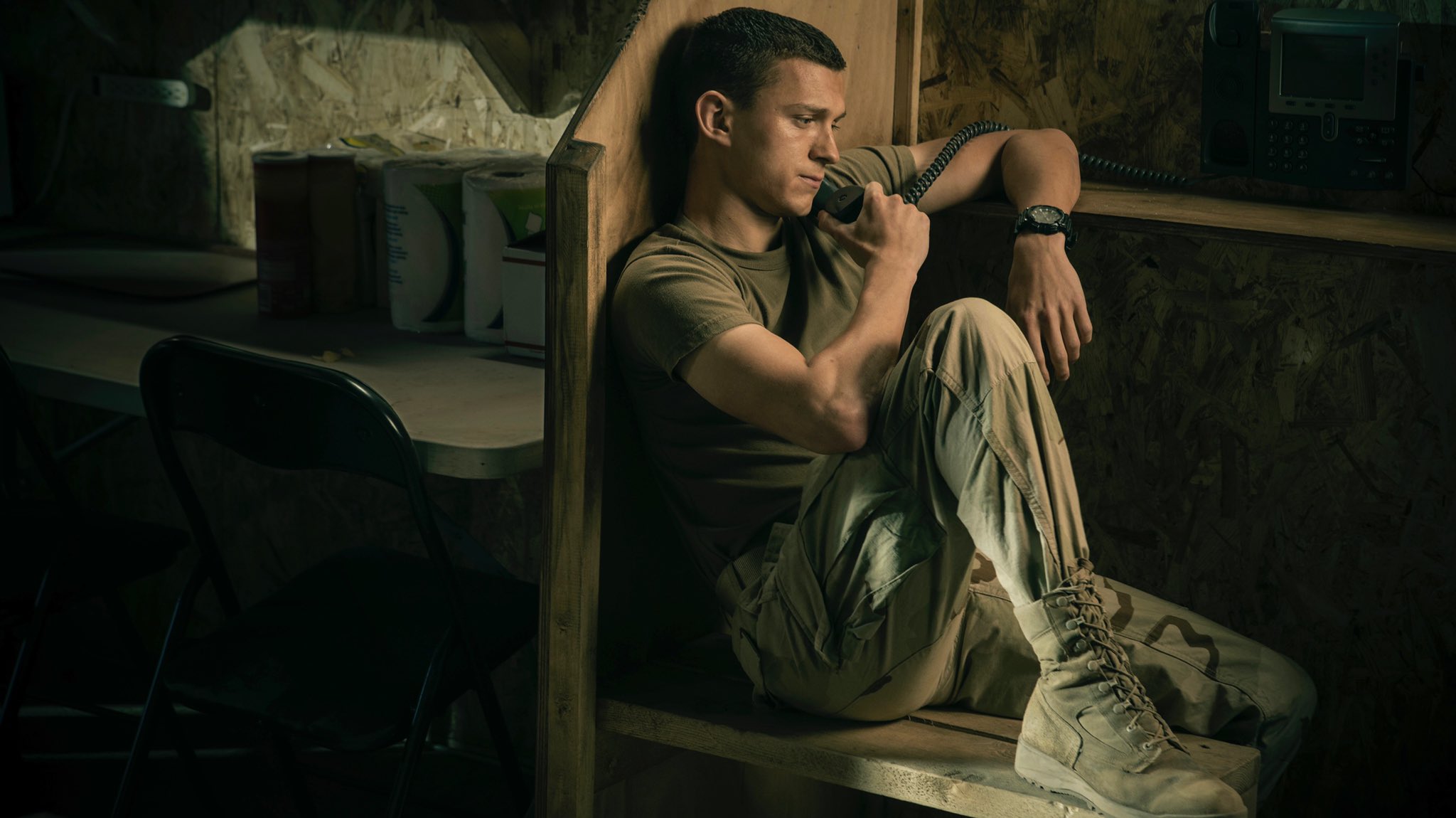
Baseado no romance de mesmo nome escrito por Nico Walker, o filme acompanha 5 anos na vida de um protagonista sem nome (Tom Holland), um ex-médico do exército que sofre de transtorno de estresse pós-traumático após retornar do Iraque. Enfrentando dificuldades para se livrar do choque e da angústia, ele encontra consolo nas drogas, recorrendo ao assalto de bancos para sustentar o seu vício e colocando sua relação com Emily (Ciara Bravo), sua esposa, em risco.

(Based on the novel of the same name written by Nico Walker, the film follows 5 years into the life of an unnamed protagonist (Tom Holland), a former Army medic who suffers from post-traumatic stress disorder after returning from his time in Iraq. Facing difficulties to get rid of the shock and the anguish, he finds solace in drugs, resorting to bank robberies to sustain his addiction and putting his relationship with Emily (Ciara Bravo), his wife, at risk.)


Posso dizer que estava com expectativas bem altas para assistir “Cherry”. A primeira razão do porquê era a direção dos irmãos Joe e Anthony Russo, responsáveis por dirigir alguns dos melhores filmes da Marvel, como “Capitão América: O Soldado Invernal”, “Capitão América: Guerra Civil” e os grandiosos “Vingadores: Guerra Infinita” e “Vingadores: Ultimato”. A segunda era o fato de “Cherry” ser uma história semi-autobiográfica do autor do livro que o inspirou, Nico Walker. O autor sempre ressalta que os personagens do livro não são reais, mas se compararmos a trajetória do protagonista com a história de fundo do autor, é basicamente igual. Então, pode-se dizer que o longa é semi-baseado em uma história real. E terceiro, o filme reunia os irmãos Russo com o Tom Holland, que se encontra cada vez mais perto de se desvencilhar de seu papel mais conhecido. Posso dizer que fiquei satisfeito com o resultado final de “Cherry”, mas parte de mim ficou imaginando se o formato narrativo e a visão dos diretores teria funcionado melhor se tivesse sido abordado de uma maneira um pouco diferente. Há vários pontos positivos no roteiro escrito por Angela Russo-Otstot e Jessica Goldberg, a começar pelo desenvolvimento dos dois personagens principais, que é crível, levemente surreal, mas ao mesmo tempo, fincado na realidade. É simplesmente fascinante ver como o comportamento deles vai mudando drasticamente com o passar do tempo, como se fosse uma evolução ao contrário. O filme começa como um conto de fadas perverso, já estabelecendo o relacionamento entre os dois protagonistas como o fio condutor da trama. Aí, as dificuldades e obstáculos vão lentamente aparecendo, levando o casal à direções sombrias, e permitindo que os atores Tom Holland e Ciara Bravo tenham mais liberdade em suas performances. Outro ponto positivo é a abordagem da narrativa a partir do ponto de vista do protagonista. As roteiristas conseguem nos inserir dentro da cabeça do personagem de Holland, de modo que vemos o desenrolar da trama inteiramente pelos olhos dele. Tal abordagem leva ao uso de vários recursos interessantes, que ajudam o espectador a realmente entender a história pela perspectiva dele. Primeiro, a história inteira é um enorme flashback narrado pelo protagonista, que frequentemente se comunica com o espectador através de quebras da quarta parede. Segundo, como tudo é uma retrospectiva de 5 anos de duração, é bem provável que o personagem de Holland não se lembre de cada detalhe da história, especialmente em respeito aos crimes que ele cometeu e às pessoas que ele conheceu, algo que acaba resultando em pérolas como a consulta com o “Dr. Sei-Lá-Quem” e o assalto ao “Banco que Ferra com a América”. Isso, ao mesmo tempo que estabelece um senso de humor nonsense para a narrativa, também pode ser um reflexo do efeito que as drogas causaram no protagonista. E em terceiro lugar (e isso é, simultaneamente, um ponto bom e um ponto ruim), o filme é dividido em capítulos, que indiretamente representam etapas do vício do personagem principal. O diferencial único dessa proposta é que cada capítulo tem uma distinta identidade visual e narrativa. Por um lado, eu gostei bastante dessa escolha, porque mesmo sendo um estilo completamente diferente do que viemos a nos acostumar dos irmãos Russo, eles ainda se mostram bastante ambiciosos, seja lá qual for o orçamento do filme. Mas, por outro lado, isso realmente dificulta o estabelecimento de um tom e passo uniformes para “Cherry”. Algumas porções, como as partes ambientadas no Iraque e os roubos de banco, são bem frenéticas; já outras, concentrando no relacionamento entre os personagens de Holland e Bravo, embora muito bem atuadas e desenvolvidas, são bem mais lentas. Nessa perspectiva, pessoalmente acho que teria sido melhor se o livro fosse adaptado em uma minissérie no estilo de “WandaVision”, investindo em estéticas diferentes para cada capítulo da história, do que em amontoar tudo isso em um filme de 2 horas e 20 minutos. Outro problema é que dá pra ver que os diretores têm certa dificuldade de se desvincularem do modelo Marvel de se fazer cinema. Conseguimos ver para onde eles querem apontar a história, que é uma mistura surreal entre “Trainspotting” e “Em Ritmo de Fuga”, mas eles falham em criar uma narrativa única, mais crua e parecida com um estudo de personagem, investindo em mais estilo do que substância. Parte de mim fica imaginando como outra dupla de diretores, os irmãos Safdie, que fizeram ótimos filmes independentes como “Bom Comportamento” e “Joias Brutas”, iriam abordar essa narrativa, que encaixa perfeitamente no estilo que eles estabeleceram como cineastas.

(I can say I had really high expectations to watch “Cherry”. The first reason why was the direction by brothers Joe and Anthony Russo, who were responsible for giving us some of Marvel's best films, such as “Captain America: The Winter Soldier”, “Captain America: Civil War” and the ambitious combo of “Avengers: Infinity War” and “Avengers: Endgame”. The second one was the fact that “Cherry” is a semi-autobiographical story of the author of the book that inspired it, Nico Walker. The author always reinforces that the characters in the book are a work of fiction, but if you take the protagonist's trajectory and compare it to Walker's backstory, it's an almost perfect match. So, you can say that it's semi-based on a true story. And third, it marked a reunion between the Russo brothers and Tom Holland, who finds himself closer and closer to untangling himself from the character he's best-known for. I can say I was satisfied with the final results of “Cherry”, but part of me kept wondering if its narrative format and the directors' vision would've been a better fit if it had been approached in a slightly different way. There are several positive points in the screenplay written by Angela Russo-Otstot and Jessica Goldberg, starting from the development of its two main characters, which is believable, slightly surreal, but at the same time, grounded in reality. It's simply fascinating to see how their behavior drastically changes as time goes by, like some kind of backwards evolution. The film starts off as a perverted fairy tale, already establishing the relationship between the two protagonists as the plot's main conductive force. Then, the difficulties and obstacles slowly come into light, leading the couple towards dark directions, and allowing actors Tom Holland and Ciara Bravo to have more creative freedom in their performances. Another positive point is the narrative's approach through the protagonist's point of view. The screenwriters manage to put us inside the mind of Holland's character, in a way we get to see the story's unraveling entirely through his eyes. Such an approach leads to the use of several interesting resources, that really help the viewer understand the story from his perspective. First, the whole story is an enormous flashback narrated in voice-over by the protagonist, who frequently communicates with the viewer through fourth-wall breaks. Second, as the entire thing is a retrospective that's 5 years long, it's highly likely that Holland's character doesn't remember every single detail in the story, especially when it comes to the crimes he committed or the people he met. This resource ends up resulting in pearls like the appointment with “Dr. Whomever” or the assault in the “Bank that Fucks America”. That, at the same time it establishes a nonsense sense of humor to the narrative, it could also be a reflex of the effect drugs caused on the protagonist. And third (and this is, simultaneously, a good point and a bad point), the film is divided in chapters, that indirectly represent the stages of the main character's addiction. What's unique in this proposition is that every chapter has its distinct visual and narrative identities. On one hand, I really liked this resource, because even though this is a completely different style to the one we're used to expect from the Russo brothers, they still show themselves as pretty ambitious filmmakers, regardless of their film's budget. But, on the other hand, that is a really difficult obstacle for them to overcome, in order to create an uniform tone and pace for “Cherry”. Some portions, like the ones set in Iraq and the bank robberies, are really fast-paced; but others, focusing on the relationship between Holland and Bravo's characters, although being very well-performed and developed, are significantly slower. Looking through that perspective, I personally think it would've been better if the source material had been adapted into a miniseries in the style of “WandaVision”, investing on different aesthetics for every chapter in the story, instead of cramming it all up into a 2-hour-and-20-minute film. Another problem with it is that you can see the directors having a certain amount of difficulties in untangling themselves from the Marvel way of filmmaking. We can see the direction to which they wish to point the story, which is a surreal mix between “Trainspotting” and “Baby Driver”, but they fail in creating a unique, more raw story, like a proper character study, investing in more style than its required substance. Part of me keeps wondering how another directing duo, the Safdie brothers, who made great independent films such as “Good Time” and “Uncut Gems”, would deal with this narrative, which is a perfect fit to the style they've established as filmmakers.)


Tanto a grande maioria do material promocional do filme quanto a campanha que a Apple TV+ fez para a presente temporada de premiações focava a atenção da crítica e do público na performance do Tom Holland. O porquê? Ele praticamente interpreta um anti-Peter Parker em “Cherry”, devido à liberdade que o roteiro, a direção e a classificação indicativa concederam a ele. Eu pessoalmente acho que ele é um tremendo ator, capaz de fazer muito mais do que só o Homem-Aranha, e o desempenho dele nesse filme é só mais uma prova disso. Sabem como a Zendaya cresceu fazendo programas infantis da Disney, depois participou do Homem-Aranha, e aí ela fez um papel muito arriscado na série da HBO “Euphoria”, e até venceu um Emmy por isso? Pois é, “Cherry” foi a “Euphoria-rização” do Tom Holland. Ele assume um papel surpreendentemente maduro aqui. Quando o ator aparece pela primeira vez em tela, você pensa: “Meu Deus, o Peter Parker tá destruído!”. E mais uma vez, reforço que é fascinante e, ao mesmo tempo, devastador ver para onde o desenrolar da história leva o personagem dele, e a atuação de Holland fisicamente expressa essa “evolução ao contrário” mencionada no parágrafo anterior. Ele consegue, ao mesmo tempo, exalar uma aura hostil e violenta e, em alguns momentos memoráveis, expor a vulnerabilidade e a angústia que seu personagem está passando. É, na verdade, algo bem triste de se ver. As narrações e as quebras da quarta parede que o personagem dele faz trazem uma necessária leveza e um senso de humor sarcástico para uma história essencialmente séria, e esse contraste combina perfeitamente com a proposta de “Cherry”. Eu, pessoalmente, não acho que seja material pra Oscar, mas é mais uma prova da versatilidade do ator, que, na minha opinião, deveria investir em papéis mais ousados e arriscados como este. É literalmente o melhor papel que ele assumiu desde sua revelação ao mundo em “O Impossível”. Outro destaque que me impressionou no elenco foi a Ciara Bravo, e até o lançamento desse filme, só conhecia a atriz pelo seu trabalho como a irmã de um dos membros da banda Big Time Rush, na série da Nickelodeon de mesmo nome. Fico muito feliz em dizer que ela tem um ótimo desempenho aqui. Eu realmente pensava que o arco narrativo da personagem dela iria tomar um rumo completamente diferente, mas a dinâmica dela com Holland me lembrou bastante de uma química no estilo “Bonnie e Clyde” ou “Pumpkin e Honey Bunny”, os dois ladrões no início de “Pulp Fiction”. É bem interessante ver como os dois protagonistas lidam com seus vícios de maneiras completamente distintas. Enquanto o personagem de Holland reprime suas emoções ao máximo, a personagem de Bravo deixa elas se transbordarem. São duas performances ousadas, maduras e que mostram o potencial que os atores têm de repetirem o feito em papéis futuros, o que realmente espero que aconteça. Não há papéis coadjuvantes memoráveis aqui, mas eu gostei bastante do senso de humor e de ameaça que o Jack Reynor, o Michael Gandolfini e o Forrest Goodluck trouxeram para a narrativa, fazendo um contraste ou até complementando as performances dos protagonistas.

(Both the great majority of its promotional material and the campaign that Apple TV+ did for the current award season directed the eyes of the critics and the audience towards Tom Holland's performance? The reason why? He basically portrays an anti-Peter Parker in “Cherry”, due to the freedom that the screenplay, the direction and the rating concede to him. I personally think he's a tremendous actor, who's capable of doing so much more than just playing Spider-Man, and his efforts in this film are a further proof of that. You know how Zendaya grew up doing kids' shows for Disney, then she appeared in Spider-Man, and then she played an extremely risky role in the HBO series “Euphoria”, and ended up winning an Emmy for it? Right, “Cherry” is Tom Holland's “Euphoria-risation”. He takes on a surprisingly mature role here. When he first appears onscreen, you think: “Oh, my God. Peter Parker is a total wreck!”. And once again, I reinforce that it is fascinating, and at the same time, devastating to see where the story leads him to be, and Holland's performance is a physical expression of the aforementioned “backwards evolution”. He manages to, at the same time, exhale a hostile and violent aura, and in a few memorable moments, expose the vulnerability and the anguish his character is going through. It's, actually, something really sad to see. His character's voice-over narrations and fourth-wall breaks bring a necessary lightness and a sarcastic sense of humor to an essentially serious story, and that contrast is a perfect fit with the film's proposal. I, personally, don't think it's Oscar material, but it's yet another proof of Tom Holland's versatility, and I honestly hope he invests in more bold, risky and edgy roles like this one. It's literally his best performance since he was revealed to the world in “The Impossible”. Another highlight that gave me a great impression was Ciara Bravo, and until the film's release, I only knew her work as the younger sister of one of the members of the band Big Time Rush, in the Nickelodeon show of the same name. I'm really glad to say she does a great job here. I really thought that her narrative arc would take a completely different path, but her dynamics with Holland reminded me a lot of a Bonnie and Clyde-type chemistry, or like Pumpkin and Honey Bunny, the burglars from the opening scene of “Pulp Fiction”. It's really interesting to see how the two main characters deal with their addictions in wholly different ways. While Holland's character represses his emotions to the max, Bravo's character lets her emotions overflow in her performance. These are two mature, bold performances that showcase the actors' potential of repeating their feat, which I really hope they do. There aren't any memorable supporting roles here, but I really enjoyed the sense of humor and threat that Jack Reynor, Michael Gandolfini and Forrest Goodluck brought to the narrative, serving as a contrast or even as a complement to the two protagonists' performances.)


Como dito anteriormente, os irmãos Russo investiram bastante no estilo visual de “Cherry”, o que indiretamente significa que os aspectos técnicos são absolutamente fantásticos. O primeiro destaque, de cara, vai para a direção de fotografia do Newton Thomas Sigel, que inclusive, foi indicada ao Prêmio da Sociedade Americana de Diretores de Fotografia como Melhor Cinematografia em Filme para Cinema. Eu simplesmente amei a identidade única que Sigel injetou em cada capítulo da narrativa. Seja pelo formato da tela, ou pela paleta das cores, ou pela maneira que a câmera se movimenta durante as cenas, cada capítulo ganha sua própria vibe, e grande parte do porquê disso acontecer é por causa do trabalho de Sigel. Eu adorei como as cenas de guerra e roubo de bancos foram desenvolvidas, especialmente pelo fato delas serem frenéticas e cheias de adrenalina. O trabalho de iluminação aqui é absolutamente extraordinário. Há duas cenas em particular onde o uso do contraste entre luz e sombra diz muito sobre a psique do protagonista, justamente porque vemos tudo através dos olhos dele. Se algum aspecto em “Cherry” merece reconhecimento nas premiações futuras, é a direção de fotografia. A direção de arte, englobando o design de cenários, figurino, maquiagem e penteado, faz um trabalho sensacional de representar visualmente o declínio físico, mental e emocional dos personagens. A montagem do Jeff Groth é bem operante. Ás vezes, o espectador pode notar que o passo do filme fica um pouco mais lento, com cenas mais prolongadas, mas como dito anteriormente, isso acontece mais por causa do roteiro do que da montagem em si. Eu gostei bastante do design de som das cenas onde o protagonista se encontra conversando no telefone com a esposa. É interessante porque, mesmo que a câmera mostre a personagem de Bravo falando, a voz dela chega aos nossos ouvidos como se estivéssemos ouvindo pelos ouvidos do personagem de Holland no telefone. Eu achei isso muito, muito legal. E, por fim, temos a trilha sonora original composta pelo Henry Jackman, que é surpreendentemente delicada para uma história essencialmente séria, e é incrível ver como essas duas vibes completamente opostas combinam perfeitamente em tela.

(As previously stated, the Russo brothers put a lot of effort into the visual style of “Cherry”, which indirectly means that the technical aspects are absolutely fantastic. The first spotlight, just like that, lands on Newton Thomas Sigel's cinematography, which by the way, was nominated to the American Society of Cinematographers Award for Outstanding Achievement in Cinematography in Theatrical Releases. I simply loved the unique identity that Sigel injected in each chapter of the narrative. Whether it's because of the screen format, or the color palette, or the way the camera moves during the scenes, each chapter gets its own vibe, and a great part of the reason why that happens is because of Sigel's work. I loved how the war and robbery scenes were developed, especially because they're so kinetic and adrenaline-fueled. The lighting work here is absolutely extraordinary. There are two particular scenes where the use of the light-and-shadow contrast says a lot about the protagonist's psyche, exactly because we see everything through his eyes. If any aspect in “Cherry” deserves recognition in future award ceremonies, it's the cinematography. The art direction, going through the set design, costumes, makeup and hairstyling, does a sensational job in visually representing the characters' physical, mental and emotional descent. Jeff Groth's editing is really operative. Sometimes, the viewer may notice that the film's pacing gets a little slower, with more prolonged scenes, but as previously stated, that happens more due to the screenplay than the editing itself. I really liked the sound design in the scenes where the main character finds himself talking to his wife on the phone. It's interesting because, even though the camera shows Bravo's character talking, her voice reaches our ears as if we're listening through the ears of Holland's character. I thought that was really, really cool. And, finally, we have the original score composed by Henry Jackman, which is surprisingly delicate for an essentially serious story, and it's amazing to see how these two completely opposite vibes are such a perfect match onscreen.)


Resumindo, “Cherry: Inocência Perdida” tem seus deslizes de tom e andamento, mas é mais um filme competente e super-estilizado de Joe e Anthony Russo. Contando com uma narrativa única e eclética, as melhores performances de sua dupla de protagonistas e aspectos técnicos que refletem o estilo e a ambição do roteiro, o filme marca uma guinada na carreira de Tom Holland, e mostra um pouco mais do que o ator é capaz de fazer.

Nota: 8,5 de 10!!

É isso, pessoal! Espero que tenham gostado! Até a próxima,

João Pedro

(In a nutshell, “Cherry” has its missteps when it comes to tone and pacing, but it is yet another competent, over-stylized film by Joe and Anthony Russo. Relying on an unique, eclectic narrative, the best performances from its duo of protagonists and technical aspects that reflect the screenplay's style and ambition, the film marks a turning point in Tom Holland's career, and shows a little bit more of what he's capable of doing.

I give it an 8,5 out of 10!!

That's it, guys! I hope you liked it! See you next time,

João Pedro)


segunda-feira, 8 de março de 2021

"Raya e o Último Dragão": uma animação narrativamente derivada, mas tecnicamente impecável (Bilíngue)

 E não se esqueçam de curtir e seguir o blog nas redes sociais:

(And don't forget to like and follow the blog in social medias:)

Facebook: https://www.facebook.com/NoCinemaComJoaoPedroBlog/

Twitter: @nocinemacomjp2

Instagram: @nocinemacomjp

Dedico essa resenha à todas as mulheres leitoras do blog. Que vocês possam ser tão poderosas e humanas quanto a protagonista desse filme! Feliz Dia Internacional das Mulheres! - JP

(I dedicate this review to all the women who read my blog. May you be as powerful and as human as this film's protagonist! Happy International Women's Day! - JP)

E aí, meus caros cinéfilos! Tudo bem com vocês? Estou de volta, para falar sobre a mais nova animação da Disney, disponível simultaneamente nos cinemas e no Disney+, por um custo adicional. Armado com uma construção de mundo fascinante, personagens carismáticos, uma narrativa com uma mensagem necessária e o visual mais refinado e realista em uma animação da Disney em memória recente, o filme em questão é uma prova que a fórmula pré-estabelecida do estúdio ainda tem gás, mesmo que a história não tenha a originalidade e o teor inventivo de obras de diferentes estúdios. Então, sem mais delongas, vamos falar sobre “Raya e o Último Dragão”. Vamos lá!

(What's up, my dear film buffs! How are you guys doing? I'm back, in order to talk about the most recent Disney animated film, which is simultaneously available in theaters and on Disney+, for an additional cost. Armed with fascinating world-building, very likeable characters, a narrative with a necessary message and the most refined visuals in a Disney film in recent memory, the film I'm about to analyze is proof that the studio's pre-established formula still works, even if the story doesn't have the originality and the inventive spark of works by different studios. So, without further ado, let's talk about “Raya and the Last Dragon”. Let's go!)


O filme é ambientado no país fictício de Kumandra, onde os humanos viviam em paz e harmonia com dragões, criaturas míticas que traziam vida e água à terra. Certo dia, entidades que transformavam seres humanos em pedra invadiram Kumandra, espalhando o caos por todo o país. Os dragões, em um ato supremo de sacrifício, forjaram uma joia combinando seus poderes para aniquilar tais entidades e trazer a harmonia de volta. A paz acaba durando pouco, e Kumandra se divide em 5 tribos que lutam pela posse da joia. 500 anos depois, o filme acompanha Raya (voz original de Kelly Marie Tran), uma jovem que, após uma traição que quebra a preciosa pedra e liberta o caos de outrora, parte em uma jornada para juntar as partes da joia e invocar Sisu (voz original de Awkwafina), o último dragão. Mas essa jornada irá exigir mais do que bravura e destreza, levando Raya a aprender a confiar e trabalhar em equipe com seus aliados.

(The film is set in the fictional country of Kumandra, where humans lived in peace and harmony with dragons, mythical creatures that brought life and water to the land. One day, entities that turned human beings into stone break into Kumandra, spreading chaos throughout the country. The dragons, in a supreme act of sacrifice, forge a gem combining their powers to annihilate these entities and bring harmony back. Peace ends up not lasting very long, and Kumandra divides itself in 5 tribes that fight for the gem's possession. 500 years later, the film follows Raya (voiced by Kelly Marie Tran), a young woman who, after a betrayal that breaks the precious stone apart and unleashes the chaos from the old days, sets off on a journey to put the gem's pieces together and summon Sisu (voiced by Awkwafina), the last dragon. But this journey will demand more than bravury and dexterity, leading Raya into learning to trust and work together with her allies.)


Eu gostei bastante do conceito de “Raya e o Último Dragão” quando os primeiros materiais promocionais tinham sido divulgados, ano passado. O toque oriental da produção, a presença de cenas de ação com artes marciais, a narrativa de fantasia mítica já característica da maioria das obras do estúdio e, principalmente, o visual da animação, que tem se encontrado em constante evolução com o passar do tempo, estreando detalhes novos a cada filme lançado. Também gostei dos pequenos ajustes que o estúdio fez na sua fórmula, em respeito à caracterização de sua protagonista. Desde 2009, a Disney vem inovando na representação de suas protagonistas femininas, apostando em algo mais contemporâneo ao invés de investir na velha fórmula em vigor desde “Branca de Neve e os Sete Anões”. Tivemos figuras marcantes através de protagonistas como a Princesa Tiana, retratada como uma mulher negra trabalhadora em Nova Orleans no filme “A Princesa e o Sapo”; a Princesa Merida, que despertou o senso de independência e empoderamento que perdura até o presente momento, em “Valente”; a Princesa Moana, que refinou a atitude estabelecida por sua antecessora, inovando ao adicionar um objetivo ambicioso para sua vida em “Moana”, e mais recentemente, as rainhas Anna e Elsa de “Frozen” e “Frozen II”, que já viraram ícones da cultura pop devido à capacidade delas de lidar com seus problemas por conta própria. Encontramos, em Raya, uma combinação de todas as atitudes estabelecidas por suas antecessoras, que ganha mais humanidade por estar sempre em dúvida em relação às circunstâncias. O roteiro, escrito por Qui Nguyen e Adele Lim, não é propriamente original, mas dá um senso de frescor à fórmula Disney de filmes, devido aos vários ajustes feitos nela. Começando com os pontos positivos, o roteiro faz um ótimo trabalho de ambientação. Os primeiros 5 minutos são dedicados à uma sequência que explica todo o pano de fundo que levaria ao conflito principal do enredo. As 5 diferentes tribos de Kumandra têm características específicas que dão muita personalidade aos cenários retratados. Eu, particularmente, gostei bastante da caracterização da Raya, que faz um equilíbrio perfeito entre carisma e desconfiança. O carisma se dá principalmente pela voz da Kelly Marie Tran, que é muito agradável de se ouvir e constantemente traz um sorriso ao rosto do espectador, sendo responsável por grande parte do senso de humor do filme; e a seriedade está presente devido às tragédias sofridas por ela e por toda Kumandra, tornando cada vez mais difícil a confiança em outras pessoas nesse mundo dividido. Isso leva Raya a viver uma vida no melhor estilo “Mad Max”: uma guerreira solitária em um mundo quase que completamente desolado, sempre atenta e vigilante às motivações do outro e pronta pra sair na porrada, se necessário. E também temos a mensagem que o filme carrega, que fala sobre união, confiança e trabalho em equipe, sendo algo que percorre a trama inteira, e encontra sua personificação física em uma das personagens-chave do roteiro, de uma maneira bem cativante e simbólica, em alguns momentos. Agora, enquanto o filme encontra seus pontos mais fortes na representação e caracterização de seus personagens e na mensagem necessária presente no enredo, o roteiro peca na falta de originalidade, no sentido de que desperta uma reflexão no espectador, fazendo-o pensar: “Eu já não vi isso antes?” A construção de mundo, por mais fascinante que tenha sido, é extremamente similar à de uma das maiores obras-primas da animação contemporânea, que é “Avatar: A Lenda de Aang”. Tribos diferentes e sempre discordantes que encontram paz e harmonia devido à uma entidade mítica personificada? É, já vimos isso antes. As diferentes ambientações me lembraram muito de “Zootopia”, cuja metrópole-título também é dividida em várias sub-cidades com características específicas que as diferenciam das demais. Certas partes do enredo em si me lembraram da jornada dos protagonistas-título de “Vingadores: Guerra Infinita” e “Vingadores: Ultimato”, e as cenas de ação e a abordagem oriental da produção são bastante similares às de “Kung Fu Panda”, da DreamWorks. Isso, para mim, é uma das maiores falhas da Disney, como um estúdio solo. Ao contrário de estúdios como a Laika e a própria Pixar, que sempre ultrapassam os limites de suas narrativas em termos de ambição, a cada filme lançado, a Walt Disney Animation Studios sempre aposta no seguro, impedindo que seus cineastas e animadores possam trazer suas próprias visões e estilos para as produções do estúdio. Só para vocês terem uma ideia, o último filme da Disney que venceu o Oscar de Melhor Filme de Animação foi “Zootopia”, 4 anos atrás. A razão? É uma história original que, através de sua superfície, transmite uma mensagem surpreendentemente tocante sobre preconceito e xenofobia. Os vencedores seguintes? “Viva: A Vida é uma Festa” (Pixar), “Homem-Aranha no Aranhaverso” (Sony), e “Toy Story 4” (Pixar). Estúdios diferentes que abordaram histórias originais com mensagens relevantes e tocantes, elevadas à novas alturas pela proeza técnica de suas animações. Uma dessas coisas a Disney já provou com “Raya”, agora quanto tempo irá durar para provar a outra? Só o tempo dirá.

(I really liked the concept of “Raya and the Last Dragon” when the first promotional materials were released, last year. The production's Eastern approach, the action scenes portrayed through martial arts, the mythical fantasy narrative that's become an almost essential characteristic in the studio's work, and mainly, the visuals of its animation, that has been found in constant evolution throughout its latest releases, unfolding new details in every new film produced. I also enjoyed the little adjustments the studio did to its formula, regarding its protagonist's characterization. Since 2009, Disney has been innovating in its portrayal of female protagonists, betting on something more contemporary instead of sticking to the same formula as “Snow White and the Seven Dwarfs”. We've had groundbreaking figures through protagonists like Princess Tiana, portrayed as a hard-working Black woman in New Orleans, in the film “The Princess and the Frog”; Princess Merida, who's awakened the sense of independence and empowering that endures to this day, in “Brave”; Princess Moana, who has refined her predecessor's attitude, innovating by adding an ambitious goal for her life in “Moana”; and more recently, Queens Anna and Elsa from “Frozen” and “Frozen II”, women who are true pop culture icons due to their capacity of handling things on their own. We find, in Raya, a combination of all these attitudes established by her predecessors, a mix that gains more humanity due to the fact that she is always doubtful regarding the circumstances. The screenplay, written by Qui Nguyen and Adele Lim, isn't properly original, but it gives a sense of freshness to the Disney formula of movies, due to the several adjustments made to it. Starting off with the bright side, it does a great job of setting the viewer inside the story. Its first 5 minutes are dedicated to a sequence that explains the whole background that'll lead to the plot's main conflict. Kumandra's 5 different tribes have specific characteristics about themselves, which end up giving them a big amount of personality. I, particularly, really liked Raya's characterization, which perfectly mixes charisma with suspicion. The charisma is there mainly because of Kelly Marie Tran's voice acting, her voice is extremely pleasant to hear and constantly brings a smile to the viewer's face, being responsible for a major part of the film's comic relief; and her seriousness is due to the horrible tragedies that she and all of Kumandra have suffered, making it harder for her to really trust someone else in this divided world. This leads Raya into living a life in a “Mad Max”-like way: a lone warrior roaming through an almost desolate world, always careful and vigilant towards the other's motivations and ready to kick some ass, if necessary. And we also have the message the film carries throughout its running time, which is about union, trust and teamwork, something that is omnipresent in the entire plot, and that finds its physical personification in one of the screenplay's key characters, in a really captivating and sometimes symbolic way. Now, while the film finds its strongest points in the representation and characterization of its characters and in its necessary message it carries in its plot, it strongly lacks in originality, in a way that it ignites a reflection in the viewer, making them think: “Haven't I seen this before?”. The world-building, as fascinating as it is, is extremely similar to that of one of the greatest masterpieces of contemporary animation, “Avatar: The Last Airbender”. Different and always disagreeing tribes that find peace and harmony due to the personification of a mythical entity? Yeah, seen that before. Its different settings reminded me a lot of “Zootopia”, in which its title-metropolis is also divided into minor cities that have specific characteristics which make them different from the others. Some parts in the plot itself reminded me of the title characters' journey in “Avengers: Infinity War” and “Avengers: Endgame”, and its action scenes and Eastern approach are quite similar to those of DreamWorks's “Kung Fu Panda”. That, to me, is one of Disney's biggest flaws, as a solo studio. Unlike companies like Pixar and Laika, who always push their boundaries when it comes to their narratives' ambitions, in every film they release, Walt Disney Animation Studios always bets on the safe option, preventing their filmmakers and animators from showcasing their own visions and styles to their productions. Just so you could get the idea, the last Disney film that won the Oscar for Best Animated Feature was “Zootopia”, 4 years ago. The reason why? It dealt with an original story, that beneath its furry surface, carried an ever-relevant, touching message on prejudice and xenophobia. The following winners? “Coco” (Pixar), “Spider-Man: Into the Spider-Verse” (Sony) and “Toy Story 4” (Pixar). Different studios that dealt with original stories with relevant and touching messages, elevated to greater heights due to their animations' technical prowess. Disney has already proven one of these things with “Raya”, but how long will it take for them to prove the other? Only time will tell.)


O desenvolvimento dos personagens é previsível, mas muito divertido de se ver. Como dito anteriormente, eu amei a caracterização da Raya, que, pra mim, é a princesa mais destemida que a Disney apresentou até o momento. Diferentemente das suas antecessoras, que realmente fazem parte de uma realeza, Raya é mais similar à uma guerreira do que uma princesa, propriamente. E é isso que faz ela ser tão corajosa. Ela é treinada em artes marciais desde a infância para cumprir suas funções em sua tribo e, inicialmente, transborda carisma. A partir de um ponto em particular, ela fica bastante séria, sempre duvidando e suspeitando das motivações das outras pessoas, especialmente daquelas de diferentes tribos, fazendo dela cada vez menos estereotipada e mais autêntica, por assim dizer. Essa mistura de atitudes é expressada de forma muito convincente, natural e agradável pela Kelly Marie Tran. Fazendo uma comparação meio tosca, ela é uma mistura entre a Moana, a Merida e a Mulan. (Olha só, 3 princesas com M! Risos) O fio condutor da trama é a dinâmica entre ela e a Sisu, o “último dragão” titular, e a química das duas funciona por uma ser o completo oposto da outra. Enquanto a Raya mostra desconfiança e suspeita em relação ao outro, a Sisu inocentemente e cegamente confia em todos que ela encontra, resultando em boas risadas. Acho que não tinha nenhuma atriz mais perfeita para interpretar esse papel do que a Awkwafina. Os outros personagens-chave da trama, intencionalmente ou não, fazem parte de cada uma das outras tribos de Kumandra, e ao mesmo tempo que todos rendem um bom alívio cômico, servindo de contraste para a atmosfera séria da história, eles compartilham dos mesmos sentimentos de luto e perda da protagonista, o que permite que eles aprendam a trabalhar em equipe. Raya encontra uma inimiga formidável na forma de Namaari, uma guerreira de uma das tribos rivais que, diferente de alguns vilões surpresa de filmes anteriores do estúdio, já é estabelecida como antagonista desde o início do filme.

(The character development is predictable, but really enjoyable to see. As previously stated, I loved Raya's characterization, which makes her, to me, the most fearless princess Disney introduced to this point. Unlike her predecessors, who are really part of some sort of royalty, Raya is more similar to a warrior than properly a princess. And that's why she's so brave. She's been trained in martial arts since her childhood to fulfill her duties in her tribe and, initially, overflows with charisma. From a particular point, she gets really serious, always doubting and suspecting the motivations of other people, especially those from different tribes, making her less stereotyped and more authentic, so to speak. This mixture of attitudes is expressed in a very convincing, natural and pleasant way by Kelly Marie Tran. Making a sort-of cheesy comparison, she's a mix between Moana, Merida and Mulan. (Holy cow, 3 princesses with an M! LOL) The conductive force of the plot is the dynamics between her and Sisu, the titular “last dragon”, and their chemistry works because one is the complete opposite of the other. While Raya shows mistrust and suspicion regarding the other, Sisu innocently and blindly trusts everyone she meets, resulting in really good laughs. I think that there wasn't anyone more perfect to portray this role than Awkwafina. The plot's other key-characters, intentionally or not, are part of every other tribe in Kumandra, and at the same time everyone provides a big amount of comic relief, serving as a contrast to the story's serious atmosphere, they share the protagonist's same feelings of grief and loss, which allows them to learn how to work together. Raya meets a formidable foe in Namaari, a warrior from one of the rival tribes who, unlike some of the surprise villains in the studio's previous work, is already established as the antagonist since the beginning of the film.)


Quando os primeiros materiais promocionais saíram, uma coisa me chamou mais a atenção, mais do que a história, mais do que os personagens, mais do que o trabalho de voz: a animação. Co-dirigido pelo Don Hall, responsável por comandar “Operação Big Hero” e “Moana”, o visual de “Raya e o Último Dragão” é capaz de ultrapassar os detalhes mostrados em “Frozen II”, que já eram visualmente impressionantes e mais avançados do que os do primeiro filme. Eu fiquei boquiaberto quando o primeiro pôster, que mostrava um perfil da protagonista em um cenário chuvoso, foi lançado, porque a chuva parecia incrivelmente realista. Assim como em “Moana”, a água é um personagem tão importante quanto a Raya ou a Sisu. Ela tem textura, realismo, e tem um papel importante a cumprir na trama. Há uma parte aqui que é tão bem animada que dá pra ver o efeito de uma respiração contra uma porção de água, tornando visível a reação em cadeia causada pelo impacto do fenômeno. Eu gostei bastante do design dos personagens e dos cenários, que está ficando cada vez menos cartunesco e mais próximo da realidade. A montagem foi muito bem feita. Há alguns momentos que são propositalmente prolongados para que o espectador aprecie a beleza visual da obra. As cenas de luta foram fantasticamente bem desenhadas. São criativas, frenéticas e me lembraram bastante de obras infantis envolvendo artes marciais, como “Kung Fu Panda” e “As Tartarugas Ninja”. Para finalizar, temos a trilha sonora original do James Newton Howard, conhecido pelo seu trabalho nas sagas “Jogos Vorazes” e “Animais Fantásticos”, que consegue evocar perfeitamente a aura ao mesmo tempo pacífica e frenética de filmes ocidentais sobre artes marciais orientais.

(When the first promotional materials were released, one thing really caught my attention, more than the plot, more than the characters, more than the voice work: the animation. Co-directed by Don Hall, who headlined films like “Big Hero 6” and “Moana”, the visuals of “Raya and the Last Dragon” are able to surpass the details showcased in “Frozen II”, which were already visually impressive and more advanced than those from the first film. My jaw literally dropped when the first poster, which depicted the protagonist in a rainy scenario, was released, because the rain looked incredibly realistic. Just like in “Moana”, water is a character that's just as important as Raya and Sisu. It has texture, realism, and an important role to play in the plot. There's a sequence here that's so well-animated that you're able to see the effect of breathing against a portion of water, making the chain reaction caused by the phenomenon's effect visible. I really appreciated the characters and set design, which is getting less cartoonish and closer to reality, which is good. The editing was really well done. There are some moments that are purposefully prolonged so that the viewer can appreciate the film's visual beauty. The fight scenes were fantastically well-designed. They're creative, fast-paced and they reminded me a lot of martial arts entertainment aimed towards children, like “Kung Fu Panda” and the Teenage Mutant Ninja Turtles. To cap it off, we have the original score by James Newton Howard, known for his work in the “Hunger Games” and “Fantastic Beasts” sagas, who manages to perfectly evoke the peaceful yet fast-paced aura of Western films on Eastern martial arts.)


Resumindo, “Raya e o Último Dragão” é mais uma animação incrível da Disney. Mesmo sendo narrativamente derivado de obras mais originais, o filme encontra seus pontos mais fortes na caracterização de sua destemida protagonista, na mensagem necessária contida dentro de sua trama e na proeza técnica de sua animação, a qual está ficando cada vez mais realista.

Nota: 9,0 de 10!!

É isso, pessoal! Espero que tenham gostado! Até a próxima,

João Pedro

(In a nutshell, “Raya and the Last Dragon” is yet another incredible Disney animated film. Even though it's narratively derivative from more original animated films and TV shows, the movie finds its strongest forces in the characterization of its fearless protagonist, in the necessary message contained in its plot and in its animation's technical prowess, which keeps on getting more and more realistic.

I give it a 9,0 out of 10!!

That's it, guys! I hope you liked it! See you next time,

João Pedro)


sábado, 6 de março de 2021

"WandaVision": o projeto mais ambicioso, original e inventivo da Marvel até agora (Bilíngue)

 E não se esqueçam de curtir e seguir o blog nas redes sociais:

(And don't forget to like and follow the blog in social medias:)

Facebook: https://www.facebook.com/NoCinemaComJoaoPedroBlog/

Twitter: @nocinemacomjp2

Instagram: @nocinemacomjp


E aí, meus caros cinéfilos! Tudo bem com vocês? Estou de volta, para falar sobre a série mais comentada do momento! A primeira produção televisiva do Universo Cinematográfico da Marvel (feita exclusivamente para o Disney+) e o ponto de partida para a próxima leva de filmes pós-Saga do Infinito, a série em questão é o projeto mais ambicioso, arriscado, original e inventivo da Marvel nesses 13 anos de universo cinematográfico, e oferece uma análise psicológica perfeita de uma das personagens mais poderosas do estúdio. Então, sem mais delongas, vamos falar sobre “WandaVision”. Vamos lá!

(What's up, my dear film buffs! How are you guys doing? I'm back, in order to talk about the most discussed TV show right now! The first television production in the Marvel Cinematic Universe (made exclusively for Disney+) and the starting point for the next batch of post-Infinity Saga films, the show I'm about to analyze is the most ambitious, risky, original and inventive project Marvel has ever done in these 13 years of cinematic universe, and offers a perfect psychological analysis of one of the studio's most powerful characters. So, without further ado, let's talk about “WandaVision”. Let's go!)


Ambientado 3 semanas após os eventos de “Vingadores: Ultimato”, a minissérie acompanha Wanda Maximoff (Elizabeth Olsen) e Visão (Paul Bettany), um casal de super-heróis que se muda para a pacata cidade de Westview, no estado de Nova Jersey, em uma tentativa de ocultarem suas verdadeiras identidades e habilidades. Com a passagem do tempo, Wanda e Visão se deparam com eventos inesperados, que ameaçam perturbar a paz desejada pelo casal.

(Set three weeks after the events of “Avengers: Endgame”, the miniseries follows Wanda Maximoff (Elizabeth Olsen) and the Vision (Paul Bettany), a newlywed couple of superheroes who move to the quiet city of Westview, in the state of New Jersey, in an attempt of hiding their true identities and abilities. As time goes by, Wanda and Vision begin facing unexpected events, which threaten to disturb the couple's desired peace.)


[Atenção: essa seção em particular contém spoilers de “Capitão América 2: O Soldado Invernal”; “Vingadores: Era de Ultron”; “Capitão América: Guerra Civil” e “Vingadores: Guerra Infinita”.]

Eu, assim como muitos, fui tomado pela curiosidade ao descobrir que a Feiticeira Escarlate e o Visão ganhariam uma série derivada de comédia, que seria ambientada no Universo Cinematográfico da Marvel. Várias perguntas foram levantadas na minha cabeça, particularmente devido aos eventos trágicos de “Vingadores: Guerra Infinita”, onde vemos claramente o Visão morrer. Duas vezes! Depois, vieram as primeiras artes conceituais, que mostravam os dois protagonistas em um cenário de sitcom dos anos 1950, e o negócio ficou cada vez mais esquisito. Aí, no início de 2020, durante o Super Bowl, veio o comercial que iria aumentar as minhas expectativas para “WandaVision” drasticamente. Misturado com partes já filmadas das vindouras séries “O Falcão e o Soldado Invernal” e “Loki”, as porções divulgadas da minissérie em questão foram o verdadeiro destaque, para mim. Especialmente pela razão de ser completamente diferente do que estamos acostumados a ver, em relação ao restante das obras da Marvel. Parecia original, ambicioso, inventivo, e esquisito (no bom sentido), me lembrando muito da vibe de “Legion”, série criada por Noah Hawley (criador de “Fargo”), que conta a história de um mutante com transtornos de dissociação de identidade. Minhas expectativas só foram aumentando quando mais materiais promocionais foram divulgados ao público, e quando o produtor Kevin Feige anunciou que o enredo da minissérie teria conexões narrativas com as tramas de “Doutor Estranho no Multiverso da Loucura” e do vindouro terceiro filme do Homem-Aranha, intitulado “No Way Home”, eu falei pra mim mesmo: “Pronto. Tá aí a coisa que eu tô mais esperando nesse universo cinematográfico da Marvel.”. Fico muito feliz em dizer que eu não me decepcionei com a minissérie, nem um pouco. Supervisionado pela roteirista Jac Schaeffer (que também é autora do roteiro do vindouro “Viúva Negra”), “WandaVision” faz um trabalho primoroso em estabelecimento de tom. Já digo com antecedência: em seus primeiros episódios, a série não tem aquelas cenas de ação que o espectador comum de filmes da Marvel geralmente espera. Em vez disso, somos presenteados com uma aura sufocante de mistério que gera várias perguntas ao final de cada episódio e que, ao decorrer da trama, são respectivamente respondidas. Feige e Schaeffer não poderiam ter escolhido um gênero melhor para explorar essas mudanças de tom do que a sitcom (comédia situacional), especialmente as dos anos 1950 e 1960, onde tudo é bem estereotipado, não tem nenhuma reviravolta narrativa e até as próprias falas parecem telegrafadas. Ou seja, é um cenário “perfeito”, o que transforma as surpresas do roteiro de “WandaVision” em algo totalmente inesperado e até sinistro, às vezes, despertando no espectador o senso de que há alguma coisa muito errada com a ambientação da história. Não é algo que, à primeira vista, agradará todos os espectadores acostumados com a ação e a computação gráfica presente nas outras obras do estúdio, mas altamente recomendo que assistam à série com paciência, porque serão ricamente recompensados ao longo da trama, que conta com episódios primordialmente explicativos entre os episódios mais “surreais”. Outro destaque do roteiro de “WandaVision” é a possibilidade do enredo trazer novos espectadores e fãs iniciantes para a mitologia desse universo. Se você, que está lendo essa resenha, nunca viu um filme da Marvel, “WandaVision” é um possível ponto de partida para começar a se envolver com esses personagens. A série faz um trabalho excepcional de introdução dos protagonistas, mesmo que eles já tenham sido introduzidos em obras anteriores da Marvel, e oferece uma série de flashbacks que ambientarão o espectador perfeitamente nas histórias de fundo da Wanda e do Visão. (Minha mãe, que nunca viu um filme da Marvel na vida inteira dela, assistiu à série e adorou!) Mas o real presente que o enredo de “WandaVision” oferece é a mudança de abordagem da fórmula pré-estabelecida do estúdio, transformando a série no mais próximo que a Marvel estará de fazer um estudo de personagem. E não há personagem melhor para dedicar tal estudo do que a Feiticeira Escarlate, que viveu uma vida extremamente problemática e traumatizante ao longo de seu arco narrativo no UCM. Introduzida na cena pós-créditos de “Capitão América 2: O Soldado Invernal”, Wanda Maximoff perdeu os pais na infância, como consequência de um bombardeio em Sokovia que usou mísseis das Indústrias Stark; sofreu como cobaia de experimentos feitos por uma organização neo-nazista; perdeu a única família que lhe restou na forma de Pietro, seu irmão, em “Vingadores: Era de Ultron”; acidentalmente destruiu um hospital de refugiados em Lagos, tirando inúmeras vidas e traumatizando-a profundamente em “Capitão América: Guerra Civil”, e perdeu o amor de sua vida (duas vezes) em “Vingadores: Guerra Infinita”. Só esse pano de fundo dá a Schaeffer e sua equipe de roteiristas uma enorme quantidade de temas para abordar, mais especialmente o luto, a perda e o trauma. A série faz um equilíbrio perfeito entre momentos engraçados e outros um pouco mais sérios, que nos permitem ver através da superfície da estrutura de sitcoms e realmente compreender a protagonista, tornando-a cada vez mais humana. Isso provavelmente é o maior trunfo de “WandaVision”: a minissérie dedica a trama para aprofundar no desenvolvimento de seus dois protagonistas, que não receberam o destaque necessário nos filmes, o que, por consequência, os torna mais humanos, ao ponto que nós não os vemos como somente seres com super-poderes, mas passamos à vê-los como pessoas não tão diferentes assim de nós mesmos. Pessoas que passam pelas mesmas coisas que cada um de nós passou ou ainda vai passar, por mais poderosos e sobrenaturais que possam ser, essencialmente. Eu, particularmente, gostei bastante do final. Não fiz teoria nenhuma e, por consequência, achei o final propriamente adequado, fechando o arco narrativo da protagonista e, ao mesmo tempo, abrindo novas portas para o futuro, que me parece bastante promissor.

([Attention: this particular section contains spoilers from “Captain America: The Winter Soldier”, “Avengers: Age of Ultron”, “Captain America: Civil War”, and “Avengers: Infinity War”.]

I, just like many, was taken by curiosity when finding out that Scarlet Witch and the Vision would be starring in a spin-off comedy series, which would be set inside the Marvel Cinematic Universe. Several questions were coming up in my head, particularly due to the tragic events of “Avengers: Infinity War”, where we clearly saw Vision die. Twice! Then, came the first conceptual art pieces, which showed the two main characters in a 1950s sitcom setting, and everything got a little weirder. Then, in early 2020, during the Super Bowl, the trailer that would put my expectations for “WandaVision” on a drastically high level arrived. Mixed with already-filmed parts of the upcoming shows “The Falcon and the Winter Soldier” and “Loki”, the shown footage of the show analyzed in this review stood out as a highlight, for me. Especially because it seemed so different from what we would expect to see, in comparison with Marvel Studios's previous work. It seemed original, ambitious, inventive, and weird (in a good way), reminding me a lot of the vibe in “Legion”, a show created by Noah Hawley (creator of “Fargo”), which tells the story of a mutant with dissociative identity disorder. My expectations were only getting higher due to the promotional material that got released since then, and when producer Kevin Feige had announced that the plot of the minisseries would be narratively connected to those of “Doctor Strange in the Multiverse of Madness” and the third Spider-Man film, now titled “No Way Home”, I said to myself: “That's it. That's the thing I'm most excited to see in this Marvel cinematic universe.”. I am really glad to say that I wasn't disappointed with the show, in any way. Supervised by head writer Jac Schaeffer (who also penned the screenplay for the upcoming “Black Widow”), “WandaVision” does a spectacular job in establishing tone. I'll already say this upfront: in its first episodes, it doesn't have that show-stopping action we've come to expect from something Marvel-related. Instead, we are gifted with a suffocating aura of mystery and suspense that triggers several questions at the end of each episode, and that, throughout the plot, are respectively answered. Feige and Schaeffer could not have chosen a better genre to explore these tonal shifts than the sitcom, especially the ones from the 1950s and 1960s, where everything is stereotyped, there aren't any narrative twists, and even the dialogue cues seem perfectly timed. Meaning, it's a “perfect” scenario, which transforms the surprises in the plot of “WandaVision” all the more unexpected and even ominous sometimes, sparking up a feeling in the viewer that there is something really wrong with the show's story. It's not something that, at first, will please the viewers used to the ever-present action and CGI in the studio's previous work, but I highly recommend that you watch it patiently, as you will be richly rewarded throughout the plot, which relies on primarily self-explaining episodes inbetween the more “surreal” ones. Another highlight in the scripts of “WandaVision” is the possibility of introducing new viewers and beginner fans to the mythology in this universe. If you, who's reading this review right now, have never seen a Marvel film, “WandaVision” is a possible starting point for you to begin your involvement with these characters. The show does an exceptional job in introducing its protagonists, even though they've already been introduced in Marvel's previous work, and offers a series of flashbacks that will keep the viewer up to date on Wanda and Vision's backstories. (My mom, that had never seen a Marvel movie in her entire life, watched the show and loved it!) But the real gift offered in the plot of “WandaVision” is the change of approach to the studio's pre-established formula, transforming the show in the closest thing Marvel will get in making a character study. And there isn't a better character for them to dedicate such study than the Scarlet Witch, who has lived a particularly troubled and traumatizing life throughout her narrative arc in the MCU. Introduced in the post-credit scene of “Captain America: The Winter Soldier”, Wanda Maximoff had lost her parents during her childhood, due to a bombing in Sokovia which used Stark Industries missiles; suffered as a lab rat for experiments by a neo-Nazi organization; lost the only family she had left in the form of Pietro, her brother, in “Avengers: Age of Ultron”; accidentally destroyed a refugee hospital in Lagos, taking out several lives and deeply traumatizing her in the process in “Captain America: Civil War”, and lost the love of her life (twice) in “Avengers: Infinity War”. That backstory alone gives Schaeffer and her team a huge amount of themes to deal with, especially those of grief, loss and trauma. The show perfectly balances funny moments with some more serious ones, that allow us to see beneath the surface of the sitcom structure and really understand the protagonist, making her more and more human. That is probably the greatest quality of “WandaVision”: it dedicates its plot to take the two protagonists's development on a deeper level, as they didn't get their deserved recognition in the films, which consequently makes them more human, to the point where we no longer see them as only super-powered beings, but begin to see them as people not that different from us. People that go through the same things we went or will go through in our lives, as powerful and supernatural as they may seem, essentially. I, particularly, really enjoyed the ending. I didn't make any theory, and consequently, I thought it was properly adequate, bringing the protagonist's narrative arc to a close and, at the same time, opening new doors to the future, which looks very promising to me.)


O elenco é composto por vários atores que já apareceram em filmes anteriores do Universo Cinematográfico da Marvel, assim como novos nomes que terão um futuro bem promissor no decorrer dessa nova fase do estúdio. Ao contrário do desempenho dos protagonistas em suas aparições nos longas-metragens da Marvel, as performances da Elizabeth Olsen e do Paul Bettany são o verdadeiro destaque aqui. Pra mim, a Elizabeth Olsen deveria ser indicada a vários prêmios pela atuação dela como a Wanda em “WandaVision”. Como os filmes concentraram em outras subtramas, nós não conseguimos ver a Wanda explicitamente lidando com as perdas sofridas ao longo de seu arco narrativo. Já aqui, a atriz consegue ter um timing cômico excelente e, ao mesmo tempo, expandir os limites emocionais de sua personagem, lidando com momentos mais reflexivos e contemplativos com muita sensibilidade e delicadeza, assumindo uma seriedade formidável que raramente vi nas aparições da Wanda em obras do estúdio. Outro destaque é o Paul Bettany, que encontra aqui a melhor “versão” de seu personagem. Se, em filmes anteriores, o Visão parecia insosso e meio robótico (piada não-intencional), somos apresentados à uma versão extremamente mais carismática do herói na minissérie. Ele é mais engraçado e surpreendente mais humano, e querendo ou não, nós acabamos vendo o desenrolar da série pelos olhos dele. A dinâmica entre os dois protagonistas é, inegavelmente, o fio condutor de “WandaVision”. Olsen e Bettany demonstram uma química explosiva quando estão juntos em tela. Os dois atores são extremamente convincentes e parecem estar se divertindo bastante nessa série. Eles protagonizam momentos hilários, assim como alguns mais sérios, e essa mistura torna o relacionamento dos dois cada vez mais cativante e envolvente. Em seguida, temos uma performance maravilhosamente excêntrica da Kathryn Hahn. Tomando muito cuidado para não revelar nada de importante sobre a personagem dela, vou apenas resumir dizendo que eu quero MUITO ver mais dela nas obras futuras do Universo Cinematográfico da Marvel. Ela simplesmente rouba a cena em toda parte que ela aparece. Eu esperava ver muito mais da Teyonah Parris, mas parece que eles apenas a introduziram aqui para ela ter um papel mais predominante em “Capitã Marvel 2”. A personagem dela é bastante promissora, e a atriz faz o melhor com o que lhe é oferecido, mas no final, ela não chega completamente a cumprir com as expectativas construídas ao decorrer da trama. Temos ótimos alívios cômicos na forma do Randall Park, reprisando seu papel de “Homem-Formiga e a Vespa”, e da Kat Dennings, reprisando seu papel nos dois primeiros filmes do Thor (meu Deus, como eu senti falta da Darcy!!). Como personagens mais secundários, temos performances competentes de Debra Jo Rupp, Emma Caulfield Ford, Josh Stamberg, Julian Hilliard e Jett Klyne.

(The cast is composed by several actors who already appeared in previous Marvel Cinematic Universe films, along with new names that will have a very promising future throughout this new phase in the studio's work. Unlike the development of its main characters in their appearances in previous Marvel films, Elizabeth Olsen and Paul Bettany's performances are the true highlight here. To me, Elizabeth Olsen should be nominated for several awards for her performance as Wanda in “WandaVision”. As the films focused on other subplots, we never got to see Wanda explicitly dealing with the losses she suffered throughout her narrative arc. In here, the actress is able to reach an excellent comic timing and, at the same time, expand her character's emotional boundaries, dealing with more thought-provoking and contemplative moments with sensibility and delicateness, showcasing a formidable seriousness I rarely saw in Wanda's appearances in the studio's work. Another highlight stays with Paul Bettany, who finds here the best “version” of his character. If, in previous films, Vision seemed a little tasteless and robotic (pun not intended), we are introduced to an extremely more charismatic version of the character in the miniseries. He is funnier and surprisingly more human, and whether we want it or not, we end up watching the story unravel through his eyes. The dynamics between the two main characters is, undeniably, the main conductive force of “WandaVision”. Olsen and Bettany showcase an explosive chemistry when together onscreen. The two actors are extremely convincing and seem to be having a lot of fun in this show. They star in hilarious moments, as well as more serious ones, and this mix makes their relationship more and more captivating and engaging. Up next, we have a wonderfully quirky performance by Kathryn Hahn. Being extremely careful to not reveal any main plot points on her character, I'll just say I REALLY want to see more of her in future MCU installments. She literally steals every scene she's in. I expected to see much more of Teyonah Parris, but it seems like they only introduced her here, so that she can have a more important role in “Captain Marvel 2”. Her character is really promising, and the actress does her best with what the screenplay offers her, but she doesn't fully correspond to the expectations built throughout the plot. We have great comic reliefs in the form of Randall Park, reprising his role in “Ant-Man And the Wasp”, and Kat Dennings, reprising her role from the first two Thor films (God, I missed Darcy!). As more secondary characters, we have competent performances by Debra Jo Rupp, Emma Caufield Ford, Josh Stamberg, Julian Hilliard and Jett Klyne.)


Eu fiquei extremamente impressionado com o compromisso que a equipe técnica de “WandaVision” mostrou para com a proposta da série. Ao contrário das séries anteriores produzidas pela Marvel, “WandaVision” tem um orçamento estratosférico de US$250 milhões (o mesmo orçamento de “Guerra Civil”) à seu serviço, dando a minissérie um ar muito mais cinematográfico, tornando a linha entre produção televisiva e de cinema cada vez mais tênue. É simplesmente fascinante ver os aspectos técnicos evoluindo com o passar dos episódios. Homenageando as sitcoms dos anos 1950 e 1960, os primeiros capítulos não têm sequências tão visualmente dinâmicas, é tudo propositalmente um pouco mais primitivo. Aí, as décadas homenageadas vão passando, e o formato de tela vai mudando, o passo das cenas vai dando uma acelerada. Essencialmente e simbolicamente, a estética de “WandaVision” é uma verdadeira ode à evolução de como se fazer televisão. A direção de arte faz um trabalho primoroso de replicar os visuais das séries homenageadas. O visual dos primeiros episódios nos lembram bastante de séries como “A Feiticeira” e “Jeannie é um Gênio”, e de acordo com as outras décadas homenageadas, surgem novas influências em “A Família Brady”, “Três é Demais”, “Caras e Caretas”, “Malcolm in the Middle”, “The Office” e “Modern Family”. As técnicas de direção de fotografia, montagem, maquiagem e penteado de cada um desses episódios são simplesmente impecáveis. A Marvel foi sábia em contratar o casal Robert e Kristen Anderson-Lopez para compor várias músicas-tema para a série, de acordo com as décadas homenageadas. Cada uma dessas músicas é extremamente grudenta (o que era de se esperar, vindo dos compositores de “Let it Go”) e escondem mensagens subliminares sobre o enredo nas letras de maneira sutil e inteligente. Algo similar acontece com os comerciais falsos na maioria dos episódios, no sentido de possuir mensagens escondidas relacionadas ao passado da protagonista. Eu adorei a escolha do estúdio de liberar um episódio por semana, o que, por consequência, acaba remetendo às épocas homenageadas, marcadas pelos lançamentos semanais de episódios, ao contrário da predominante “maratona” nos serviços de streaming. A escolha consegue manter o espectador na expectativa para o próximo episódio e previne que o final seja revelado cedo demais nas redes sociais, o que, pra mim, foi maravilhoso. Eu gostei bastante do equilíbrio entre o prático e o ambicioso que a equipe de efeitos especiais conseguiu demonstrar. Minha única ressalva fica com o último episódio, que ficou muito artificial, se comparado com o limitado uso de CGI no restante da minissérie, mas isso não manchou minha experiência incrível com “WandaVision”, nem um pouco.

(I was extremely impressed with the commitment the technical crew of “WandaVision” demonstrated with the show's proposal. Unlike previous shows produced by Marvel, “WandaVision” has a stratospheric budget of US$250 million (the same budget as “Civil War”) to its service, giving the miniseries a much more cinematic vibe, and making the line between movies and TV a little more blurry. It's simply fascinating to see the technical aspects evolving throughout the episodes. In an homage to the 1950s and 1960s sitcoms, the first chapters don't have much visually dynamic sequences, it's all purposefully more primitive. Then, the decades homaged go by, and the screen format grows, the pacing accelerates. Essentially and symbolically, the aesthetics of “WandaVision” are a true ode to the evolution of television-making. The art direction does a stellar job in recreating the visuals of the shows that influenced it. The look of the first couple of episodes remind us a lot of shows like “Bewitched” and “I Dream of Jeannie”, and according to the following decades, it finds new influences in shows like “The Brady Bunch”, “Full House”, “Family Ties”, “Malcolm in the Middle”, “The Office” and “Modern Family”. The techniques in cinematography, editing, makeup and hairstyling in each one of these episodes are simply flawless. Marvel was wise in hiring songwriters Robert and Kristen Anderson-Lopez to compose several theme songs to the show, according to the decades they're paying an homage to. Each one of these songs is an absolute earworm (which shouldn't be news to no one, coming from the people who wrote “Let it Go”) and hide subliminar messages on the plot in their lyrics in a subtle and clever way. Something similar happens with fake commercials in most episodes, in the sense of hiding messages related to the protagonist's past. I loved the studio's choice of a weekly release of episodes, which, consequently, is a callback to the times it's influenced by, which were marked by weekly episodes, rather than the predominant “binge-watching” in the streaming services. That choice manages to keep the viewer excited for the next episode and prevents the ending from being revealed too soon on social networks, so, to me, that was wonderful. I really appreciated the balance between the practical and the ambitious that the special effects team demonstrated here. My only complaint stays with the final episode, which seemed too artificial, if compared to the rest of the miniseries, but it didn't stain my wonderful experience with “WandaVision” at all.)


Resumindo, “WandaVision” é o melhor projeto do Universo Cinematográfico da Marvel até o presente momento, para mim. Armado com uma narrativa original, inventiva, ambiciosa e emocionalmente carregada, a primeira série da Marvel para o Disney+ entrega as melhores versões de seus personagens-título, interpretados de forma brilhante por Elizabeth Olsen e Paul Bettany, e abre novas portas para o futuro dessa nova fase do estúdio. Uma verdadeira homenagem à evolução da televisão, “WandaVision” faz um uso inventivo e extraordinário de seus aspectos técnicos, tornando a linha entre cinema e televisão cada vez mais tênue.

Nota: 10 de 10!!

É isso, pessoal! Espero que tenham gostado! Até a próxima,

João Pedro

(In a nutshell, “WandaVision” is the best project in the Marvel Cinematic Universe so far, for me. Armed with an original, inventive, ambitious and emotionally charged narrative, Marvel's first show for Disney+ delivers the best versions of its title characters, portrayed brilliantly by Elizabeth Olsen and Paul Bettany, and opens new doors for the future of this new phase in the studio. A true homage to the evolution of television, “WandaVision” makes an inventive and extraordinary use of its technical aspects, making the line between cinema and television a little more blurry.

I give it a 10 out of 10!!

That's it, guys! I hope you liked it! See you next time,

João Pedro)