Translate

sábado, 12 de dezembro de 2020

Animações Diferentes - "Wolfwalkers": a animação tradicional, mais viva do que nunca (Bilíngue)

 E não se esqueçam de curtir e seguir o blog nas redes sociais:

(And don't forget to like and follow the blog in social medias:)

Facebook: https://www.facebook.com/NoCinemaComJoaoPedroBlog/

Twitter: @nocinemacomjp2

Instagram: @nocinemacomjp


E aí, meus caros cinéfilos! Tudo bem com vocês? Estou de volta, para dar continuidade à nossa postagem especial sobre obras de animação diferentes! O lançamento mais recente no catálogo original de um dos serviços de streaming menos conhecidos (Apple TV+), o filme em questão é uma carta de amor extraordinária aos métodos tradicionais de animação, que se encontram mais vivos do que nunca em um dos principais concorrentes ao Oscar de Melhor Filme de Animação do ano que vem! Então, sem mais delongas, vamos falar sobre “Wolfwalkers”. Vamos lá!

(What's up, my dear film buffs! How are you guys doing? I'm back, in order to continue with our special post on different works of animation. The most recent release in the original catalog of one of the lesser known streaming services (Apple TV+), the film I'm about to analyze is an extraordinary love letter to traditional methods of animation, which are found at their fullest, most gorgeous life in one of the main contenders to next year's Oscar for Best Animated Feature! So, without further ado, let's talk about “Wolfwalkers”. Let's go!)


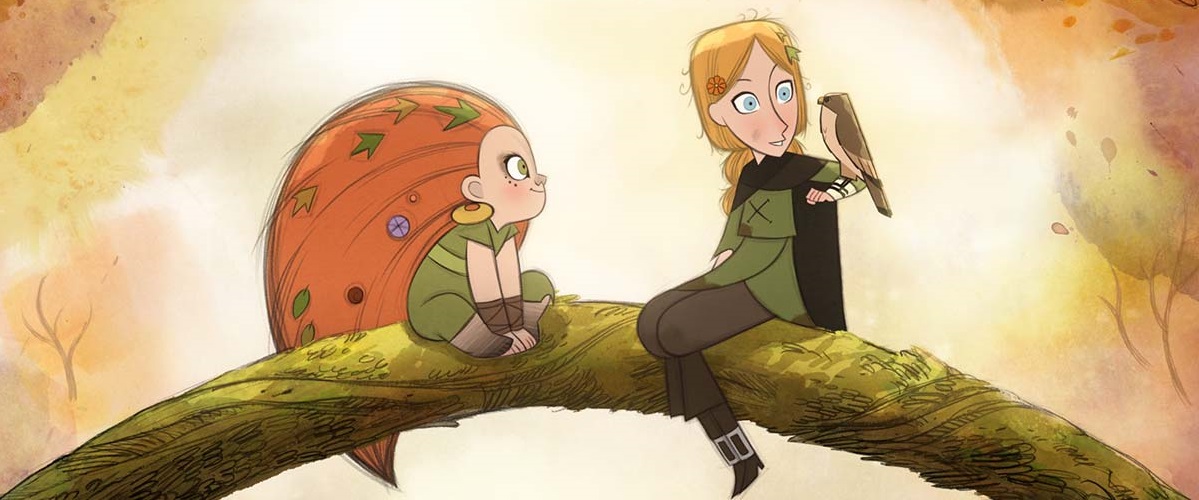
Irlanda, 1650. A trama acompanha Robyn (voz original de Honor Kneafsey), uma rebelde garota inglesa cujo pai (voz original de Sean Bean) é recrutado pelo general Oliver Cromwell (voz original de Simon McBurney) para livrar a cidadezinha de Kilkenny da ameaça de lobos, os quais habitam em uma floresta próxima. Certo dia, Robyn entra escondida na floresta procurando o pai e é acidentalmente mordida por Mebh (voz original de Eva Whittaker), uma garota “wolfwalker”, capaz de se transformar em lobo ao adormecer. Com a mordida, Robyn também consegue se transformar em lobo ao dormir, e com suas novas habilidades, a garota ajuda Mebh a tentar desvendar o mistério do desaparecimento de sua mãe.

(Ireland, 1650. The plot follows Robyn (originally voiced by Honor Kneafsey), a rebellious English girl whose father (originally voiced by Sean Bean) is recruited by General Oliver Cromwell (originally voiced by Simon McBurney) to rid the town of Kilkenny from the threat of wolves, which inhabit a nearby forest. One day, Robyn sneaks into the woods looking for her father and is accidentally bitten by Mebh (originally voiced by Eva Whittaker), a “wolfwalker” girl, who's able to turn into a wolf while asleep. Due to the bite, Robyn can also manage to turn into a wolf when she's asleep, and with her new abilities, the girl helps Mebh in a journey to try and solve the mystery of her mother's disappearance.)


Minhas expectativas para esse filme foram subindo gradualmente, de acordo com o lançamento dos materiais promocionais, que destacavam um visual colorido de tirar o fôlego complementado por uma história de fantasia cativante. Mas antes de falar do roteiro, vou dedicar algumas linhas para falar do estúdio por trás de “Wolfwalkers”. O filme é co-dirigido pelo Tomm Moore, cineasta irlandês e co-fundador do estúdio Cartoon Saloon, responsável por três animações indicadas ao Oscar de Melhor Filme de Animação: “Uma Viagem ao Mundo das Fábulas”, “A Canção do Oceano” e “A Ganha-Pão”. O diretor considera “Wolfwalkers” como o capítulo final de uma trilogia temática sobre o folclore irlandês, também composta pelos dois primeiros filmes do estúdio (“Uma Viagem...” e “A Canção do Oceano”, ambos excelentes, inclusive irei trazer as resenhas deles aqui em breve). E parece que Tomm Moore encontra a maior chance de seu estúdio ganhar o tão desejado Oscar em sua obra mais recente. O roteiro é escrito pelo Will Collins, baseado numa ideia original elaborada pelos dois diretores do filme. Um dos melhores aspectos sobre a história de “Wolfwalkers” é justamente a sua originalidade, construindo uma mitologia contida e absolutamente fascinante. Fazendo um excelente uso de seu tempo de duração conciso e enxuto de 1 hora e 43 minutos, Collins consegue criar uma trama perfeitamente compassada, sendo ao mesmo tempo contemplativa e alegórica para os adultos, e frenética e divertida para os pequenos. Os personagens são instantaneamente cativantes, atraindo a atenção do espectador na primeira cena em que eles aparecem. O desenvolvimento deles ocorre de forma bem gradual, andando de mãos dadas com o passo do roteiro. Os aspectos de fantasia não são usados exageradamente. Para minha surpresa, é um filme bem mais humano do que completamente “viajado”, e eu amei isso. Conta uma história cativante sobre identidade, amizades improváveis, aceitação, liberdade, e a tentativa de superar preconceitos, consequentemente carregando uma grande carga emocional. E quem me conhece sabe que eu simplesmente adoro animações que tratam de temas difíceis de serem explicados para os pequenos de uma forma acessível e leve. Para as crianças, “Wolfwalkers” será um excelente divertimento, que levará à boas risadas e algumas lágrimas aqui e ali. Mas uma das melhores sacadas de Moore e companhia é o número de alegorias e críticas presentes aqui, onde a maioria passará despercebida por um público mais jovem. Numa esfera sociopolítica, o filme explora muito bem a relação frequentemente turbulenta entre a Irlanda e o Reino Unido, com a trama constantemente colocando as duas nacionalidades como rivais. Lidando com questões mais ambientais, o roteiro faz uma afiada crítica ao desmatamento e à caça de animais selvagens, estabelecendo os lobos como os “protetores” da floresta. E ainda há a crítica à distorção de preceitos religiosos para servir à intenções pessoais, tema recentemente explorado no ótimo “O Diabo de Cada Dia”, da Netflix (cuja resenha você pode ler aqui: http://nocinemacomjoaopedro.blogspot.com/2020/09/o-diabo-de-cada-dia-um-dos-melhores.html), e representado aqui pelo principal antagonista da trama. Pra terminar, gostaria de constatar que “Wolfwalkers” consegue combinar perfeitamente o que faz de raras animações atraentes para tanto crianças quanto adultos, fazendo uso de uma história que será cativante e divertida para um público mais jovem, enquanto também sendo alegórica e reflexiva para os mais crescidos.

(My expectations for this film were gradually rising, according to the release of its promotional material, which highlighted a breathtaking colorful look complemented by a captivating fantasy story. But before I talk about the script, I want to dedicate some lines to talk about the studio behind “Wolfwalkers”. The film is co-directed by Tomm Moore, an Irish filmmaker and co-founder of the animation studio Cartoon Saloon, which gave us three Oscar-nominated animated feature films: “The Secret of Kells”, “Song of the Sea”, and “The Breadwinner”. The director considers “Wolfwalkers” as the final chapter in a thematic trilogy on Irish folklore, which is also composed by the studio's first two films (“The Secret of Kells” and “Song of the Sea”, both of them are excellent, and I'll bring their reviews to the blog soon). And it looks like Tomm Moore finds his studio's biggest shot in winning their more-than-deserved Oscar in his most recent work. The screenplay is written by Will Collins, based on an original idea elaborated by its two directors. One of the best aspects in the story of “Wolfwalkers” is, indeed, its originality, being able to build a contained, and absolutely fascinating mythology. Making an excellent use of its concise and precisely calculated running time of 1 hour and 43 minutes, Collins manages to create a perfectly paced plot, being at the same time contemplative and allegorical for adults, and engaging and fun for the little ones. The characters are instantly captivating, catching the viewer's attention from their very first moment onscreen. Their development occurs gradually, walking hand in hand with the screenplay's pace. The fantasy aspects are not used in an exaggerated way. For my surprise, it is a much more human film than a completely trippy one, and I loved it. It tells a captivating story about identity, unlikely friendships, acceptance, freedom, and trying to overcome one's prejudices, consequently carrying an enormous emotional weight. And who knows me knows that I simply adore animated films that deal with themes that are hard to be explained to children in an accessible and light way. For the kids, “Wolfwalkers” will be a whole lot of fun, which will provide a good number of laughs and one or two tears shed along the way. But one of Moore and co.'s smartest moves is the number of allegories and criticism in its plot, where most of them will go over the head of a younger audience. In a sociopolitical sphere, it brilliantly explores the frequently turbulent relationship between Ireland and the United Kingdom, with the plot constantly placing the two nationalities as rivals. Dealing with more environmental questions, it makes sharp criticism towards deforestation and hunting for wild animals, establishing the wolves as the “protectors” of the forest. And there's also criticism towards the distortion of religious concepts to achieve personal intentions, a theme recently explored in Netflix's great “The Devil All the Time” (you can read my review on it here: http://nocinemacomjoaopedro.blogspot.com/2020/09/o-diabo-de-cada-dia-um-dos-melhores.html), and represented here by the plot's main antagonist. To cap it off, I'd like to affirm that “Wolfwalkers” manages to perfectly combine what makes rare animated films entertaining to both children and adults, making use of a story that'll be captivating and fun for a younger audience, while also being allegorical and thought-provoking to those already grown-up.)


Ao mesmo tempo que o roteiro de “Wolfwalkers” consegue construir uma mitologia envolvente e cativante, também consegue desenvolver os seus personagens de forma extremamente satisfatória. Eu amei a protagonista, Robyn. Em questões de personalidade, ela seria uma mistura entre a Princesa Merida, de “Valente”, e o Soluço, de “Como Treinar o seu Dragão”, no sentido de equilibrar muito bem sua coragem e sua sensibilidade. E o fio condutor da história é a dinâmica que ela compartilha com a Mebh, a “wolfwalker”, que é justamente o contrário de Robyn. Enquanto esta é bem-arrumada e cuidadosa, aquela é selvagem e desenfreada, capaz de fazer de tudo para cumprir seus objetivos. E essa bipolaridade entre a personalidade das duas personagens é o que faz a dinâmica delas funcionar tão bem, com alguns aspectos da Robyn complementando a personalidade da Mebh, e vice-versa. Os adultos, em geral, são os “antagonistas” da história. O desenvolvimento gradual do pai da Robyn em respeito ao progresso da trama é evidente e cativante. Há um fazendeiro presente na primeira cena do filme que, ao mesmo tempo, serve como alívio cômico e como um farol de esperança para a protagonista. Os roteiristas foram bem ousados ao fazer do vilão principal do filme uma figura da vida real, sendo a figura em questão o general Oliver Cromwell, cujo nome nunca é mencionado, sendo apenas conhecido como “Lorde Protetor”. Mas comparando as características do personagem com as de Cromwell, é bem evidente que os dois são a mesma pessoa. Ele é ameaçador, e sua personalidade é bem similar ao Juiz Claude Frollo, vilão de “O Corcunda de Notre Dame”.

(At the same time the script of “Wolfwalkers” manages to build an engaging and captivating mythology, it also manages to develop its characters in an extremely satisfying way. I absolutely loved the main character, Robyn. When it's about personality, she would be a mix between Princess Merida, from “Brave”, and Hiccup, from “How to Train Your Dragon”, in the way of balancing her courage and sensibility really well. And the guiding force of the story is the dynamic she shares with Mebh, the “wolfwalker”, who is the exact opposite of Robyn. While the latter is tidied up and careful, the former is wild and unstoppable, capable of doing anything to achieve her goals. And this bipolarity between the two characters' personalities is what makes their dynamic work so well, with some aspects of Robyn complementing Mebh's personality and vice versa. The adults, generally, are the story's “antagonists”. The gradual development of Robyn's father regarding the plot's progress is evident and captivating. There is a farmer who's in the film's first scene who, at the same time, is a comic relief and a beacon of hope for the main character. The screenwriters were really bold in turning a real-life figure into the film's main villain, the figure in question being General Oliver Cromwell, whose name is never mentioned, being only referred to as “Lord Protector”. But when comparing the character's traits with Cromwell's, it's quite evident that they're one and the same. He's threatening, and his personality is quite similar to that of Judge Claude Frollo, the antagonist of “The Hunchback of Notre Dame”.)


Eu acho que não consigo descrever em palavras o quão maravilhado eu fiquei ao ver o primeiro teaser desse filme. Assim como os filmes anteriores do estúdio, “Wolfwalkers” é animado de forma tradicional. E é tão bom ver um filme tradicionalmente bem animado em um cenário quase dominado pelas imagens geradas por computadores (ou CGI, que é o termo mais popular). Pode-se dizer que o Cartoon Saloon faz pela animação tradicional a mesma coisa que estúdios como a Laika e a Aardman fazem pelo stop-motion, no sentido de trazer cada vez mais vida à um método considerado “ultrapassado”. E o visual de “Wolfwalkers” é uma verdadeira obra de arte. A direção de arte faz um trabalho sensacional em diferenciar as duas ambientações principais do filme: enquanto a cidadezinha de Kilkenny é simétrica, geométrica, e friamente calculada, como se cada humano fosse um clone, com movimentos cronometrados; a floresta é desenhada de forma quase surreal, com cores vibrantes, atraentes e formas imprevisíveis. Eu gostei bastante do tom mais rústico que a animação tradicional deu ao filme, com sombreamentos extraordinários, e mínimos detalhes expostos em um milésimo de segundo que colocarão um sorriso de admiração no rosto do espectador. Sinceramente, me deu vontade de pausar o filme em cada quadro, só pra pegar cada detalhe em cada centímetro da tela. Como dito anteriormente, é um filme extraordinariamente bem montado, não desperdiçando uma cena sequer. Todo momento, por mais pequeno que pareça ser, é de suma importância. A trilha sonora do Bruno Coulais casa muito bem com a ambientação do filme, usando sons e instrumentos medievais para dar um ar folclórico à história. Tem uma cena em particular onde a música “Running with the Wolves”, da norueguesa Aurora, é tocada que quase me fez chorar. Só faço uma recomendação: assistam à “Wolfwalkers” na melhor qualidade possível, porque vale a pena.

(I don't think I can put into words how marveled I was when I watched the first teaser for this film. As it happened with the studio's previous work, “Wolfwalkers” is traditionally animated. And it feels so good to see a traditionally well-animated film in a scenario that's almost dominated by computer-generated imagery (or CGI, for short). It can be said that Cartoon Saloon does the exact same thing for traditional animation as studios like Laika and Aardman do for stop-motion, in a way that they bring more life into a method considered to be “old-fashioned”. And the visuals of “Wolfwalkers” are a true work of art. The art direction does a sensational job in telling the film's two main settings apart: while the town of Kilkenny is symmetrical, geometrical, and coldly calculated, as if every human was a clone, with perfectly timed movements; the woods are drawn in an almost dream-like way, with vibrant, attractive colors and unpredictable shapes. I really appreciated the more rustic tone that traditional animation injected into the film, with extraordinary shading, and tiny details exposed in a hundredth of a second that'll put a smile of admiration on the viewer's face. Honestly, I wanted to pause the film in each frame, just so I could catch every single detail in every corner of the screen. As previously stated, it's an extraordinarily well-edited film, not wasting one single scene. Every moment, as small as it may seem, is really important. Bruno Coulais's score is a perfect match to the film's setting, using medieval sounds and instruments to inject a folk-ish feel to the story. There's one particular scene where the song “Running with the Wolves”, performed by Norwegian singer Aurora, is played that almost made me cry. I just want to make one recommendation: watch “Wolfwalkers” in the best quality you can get, because it's worth it.)


Resumindo, “Wolfwalkers” é uma verdadeira obra-prima, e o melhor filme do ano! Munido de uma história atraente para todas as idades, personagens muito bem desenvolvidos, e aspectos técnicos irretocáveis, Tomm Moore cria uma carta de amor aos métodos tradicionais de animação, e chega o mais perto possível de ganhar um Oscar para o Cartoon Saloon. Pixar, cuidado para não cantar vitória muito cedo, porque a concorrência estará acirrada em 2021... (Risos)

Nota: 10 de 10!!

É isso, pessoal! Espero que tenham gostado! Até a próxima,

João Pedro

(In a nutshell, “Wolfwalkers” is a true masterpiece, and the best film of the year! Armed with a story that's appealing to all ages, very well-developed characters, and flawless technical aspects, Tomm Moore creates a love letter to the traditional methods of animation, and gets as close as he can to winning an Oscar for Cartoon Saloon. Pixar, be careful not to call it a win too soon, because competition will be tough next year... (LOL)

I give it a 10 out of 10!!

That's it, guys! I hope you liked it! See you next time,

João Pedro)


sábado, 5 de dezembro de 2020

"Mank": uma viagem fascinante pela mente de um roteirista (Bilíngue)

 E não se esqueçam de curtir e seguir o blog nas redes sociais:

(And don't forget to like and follow the blog in social medias:)

Facebook: https://www.facebook.com/NoCinemaComJoaoPedroBlog/

Twitter: @nocinemacomjp2

Instagram: @nocinemacomjp


E aí, meus caros cinéfilos! Tudo bem com vocês? Estou de volta, para falar sobre um dos lançamentos mais recentes no catálogo original da Netflix. Cotado como um dos principais concorrentes ao Oscar do ano que vem, o filme em questão faz uma brilhante analogia sobre como os eventos da vida real podem inspirar um roteirista a fazer o seu melhor trabalho. Então, sem mais delongas, vamos falar sobre “Mank”. Vamos lá!

(What's up, my dear film buffs! How are you guys doing? I'm back, in order to talk about one of the most recent releases in Netflix's original catalog. Labeled as one of the main contenders for next year's Oscars, the film I'm about to analyze makes a brilliant analogy on how real-life events may inspire a screenwriter to write his finest work. So, without further ado, let's talk about “Mank”. Let's go!)


O filme é ambientado na Hollywood dos anos 1930, que é vista pelos olhos de Herman J. Mankiewicz (Gary Oldman), um roteirista que, devido à um acidente, é forçado a se isolar em um rancho. Movido por devaneios causados pelo alcoolismo, Mankiewicz revive momentos do passado, os quais acabam o inspirando a escrever sua obra mais ambiciosa até o momento: o roteiro para o que iria se tornar o clássico “Cidadão Kane”.

(The film is set in 1930s Hollywood, which is seen through the eyes of Herman J. Mankiewicz (Gary Oldman), a screenwriter who, due to an accident, is forced to isolate himself in a ranch. Moved by daydreams caused by his alcoholism, Mankiewicz relives moments from the past, which end up inspiring him to write his most ambitious work yet: the screenplay for what would become the all-time classic “Citizen Kane”.)


Ok, há 3 principais razões para que as minhas expectativas para “Mank” estivessem altas: 1) é o primeiro filme dirigido pelo David Fincher (diretor de “Clube da Luta”, “A Rede Social” e “Se7en”) em 6 anos; 2) ele conta a história dos bastidores de um dos maiores clássicos da história do cinema, “Cidadão Kane” (se você ainda não leu a minha resenha sobre o filme, pode lê-la aqui:); e 3) é um filme sobre a arte de se fazer cinema. E quem me conhece sabe que eu amo filmes sobre cinema. Sejam eles filmes que prestam homenagem ao cinema (“Os Sonhadores”, “Cinema Paradiso”, “La La Land”, “Era uma Vez em Hollywood”) ou filmes contando a história da produção de outros filmes (“Ed Wood”, “O Artista do Desastre”). Com essas expectativas, “Mank”, aos meus olhos, seria um dos melhores filmes de 2020. E realmente é. Um fato interessante sobre o roteiro é que ele foi escrito pelo pai do diretor, Jack Fincher, antes de falecer em 2003. Eu não sei se ele sofreu alguma mudança desde então, mas se o filho conseguiu manter o roteiro de seu pai intacto, eu fico bastante impressionado. Um aspecto em que “Mank” consegue se diferenciar dos filmes citados acima que contam a história da produção de outras obras é que ele concentra em um campo não tão bem explorado nesses filmes, que é a pré-produção. Nos casos de “Ed Wood” e “Artista do Desastre”, as obras se concentram em mostrar os processos de filmagem de “Glen ou Glenda”, “A Noiva do Monstro”, “Plano 9 do Espaço Sideral” e “The Room”, respectivamente, deixando de lado o que vem antes e depois do primeiro “Ação!” e do último “Corta!”. A narrativa de “Mank” é composta inteiramente pelo processo de escrita do roteiro de “Cidadão Kane”, o que, aos olhos de muitos, pode parecer algo entediante e maçante. Mas para aqueles que conhecem todos os passos de produção de um longa-metragem, “Mank” é uma viagem fascinante pelo raciocínio de uma das figuras-chave no mercado cinematográfico. Eu recomendaria que o espectador assistisse à “Cidadão Kane” antes de assistir ao novo filme de Fincher, porque desta maneira, ele será capaz de assimilar vários eventos ocorridos em “Mank” com a narrativa do clássico filme de Orson Welles. O filme tem uma duração sucinta de 2 horas e 11 minutos, e faz uso de uma narrativa não-linear para explorar a mente e o raciocínio de seu protagonista ao escrever o roteiro do filme de Welles. E Fincher faz um trabalho excelente em estabelecer a linha temporal da narrativa, colocando cabeçalhos de cenas de um roteiro (ex.: Int. Castelo Hearst em San Simeon – Noite – 1937 [Flashback]) na tela em cada cena nova, para que o espectador não se perca. Com esse auxílio do roteirista, o espectador consegue assimilar a situação retratada na cena com o ano em que ela é ambientada, sem nenhuma dificuldade. E são nos flashbacks que se encontram as maiores inspirações de Mankiewicz para “Cidadão Kane”. Pessoas da vida real, eventos dos quais o protagonista participou, discussões sobre política e a estrutura de Hollywood que ele compartilhou com outros personagens. São esses pequenos momentos que, no presente da narrativa, o impulsionam a escrever novas cenas e criar novos personagens. E isso, pelo menos para mim, foi absolutamente fascinante. E a melhor coisa sobre o roteiro é que ele direciona o holofote para uma pessoa que passou quase despercebida quando o assunto é “Cidadão Kane”. O filme fora promovido nos anos 1940 como um veículo para Orson Welles, que, de acordo com os anúncios da época, “dirigiu, protagonizou e escreveu o roteiro” por conta própria. Mas Welles mal participa do processo de escrita do roteiro, tomando o filme de Fincher como base. Desde então, vários estudos foram feitos sobre a autoria do roteiro do filme de 1941, mais notavelmente o ensaio “Raising Kane”, escrito por Pauline Kael nos anos 1970, que causou bastante controvérsia ao rebaixar as contrbuições de Welles para o roteiro de Mankiewicz. Resumindo, pode-se dizer que o roteiro de “Mank” faz justiça ao gênio que originou uma das histórias mais icônicas da sétima arte, e ilumina um holofote em um dos processos mais importantes na produção de um filme.

(Ok, there were 3 main reasons for my expectations for “Mank” to be high: 1) it is the first film directed by David Fincher (who directed “Fight Club”, “The Social Network” and “Se7en”) in 6 years; 2) it tells the backstage story on one of the greatest classics in the history of cinema, “Citizen Kane” (if you haven't read my review on it, you can check it out here:); and 3) it's a film about the art of making movies. And those who know me know that I love films about cinema. Whether they're films that make a homage to cinema (“The Dreamers”, “Cinema Paradiso”, “La La Land”, “Once Upon a Time in Hollywood”) or films that tell the story of how other films were produced (“Ed Wood”, “The Disaster Artist”). With those expectations, “Mank”, in my point of view, would be one of the best films of 2020. And it really is. An interesting fact about the script is that it was written by the director's father, Jack Fincher, before he passed away in 2003. I don't know if it suffered any changes since then, but if the son managed to keep his father's screenplay intact through all this time, I congratulate him. An aspect in which “Mank” differs itself from the aforementioned films that chronicle the production of other films is that it focuses on a process not that well-explored in these films, which is the pre-production. In the cases of “Ed Wood” and “The Disaster Artist”, they focus on showing the filming processes of “Glen or Glenda”, “Bride of the Monster”, “Plan 9 from Outer Space” and “The Room”, respectively, putting aside what happens before and after the first “Action!” and the last “Cut!”. The narrative of “Mank” is composed entirely by the writing process for the “Citizen Kane” screenplay, which, in the eyes of many people, might seem something thoroughly boring. But to those who are familiar with every step in the production of a motion picture, “Mank” is a fascinating journey through the mind of one of the key figures in the movie business. I'd recommend that the viewer watches “Citizen Kane” before watching Fincher's new film, because in that way, they'll be able to assimilate several events depicted in “Mank” with the narrative of Orson Welles's classic. It has a succint running time of 2 hours and 11 minutes, and it makes use of a non-linear narrative to explore the mind and train of thought of its protagonist while writing the screenplay for Welles's film. And Fincher does an excellent job in establishing the narrative's timeline, by putting screenplay scene headers (example: Int. Hearst Castle in San Simeon – Night – 1937 [Flashback]) onscreen in every new scene, so that the viewer doesn't get lost. With this help by the screenwriter, the viewer is able to assimilate the situation depicted in the scene with the year it is set in, without any difficulty. And it's in the flashbacks that we find Mankiewicz's biggest inspirations for “Citizen Kane”. Real-life people, events of which he participated, discussions over politics and Hollywood's structure that he shared with other characters. It's those little moments that, in the narrative's present time, propel him to write new scenes and create new characters. And that, at least for me, was absolutely fascinating. And the best thing about the screenplay is that it shines a light on a person that went nearly unnoticed when it comes to “Citizen Kane”. It was promoted in the 1940s as a vehicle for Orson Welles, who, according to its promotional material, “directed, acted, and wrote” the film all by himself. Yet, Welles barely participated in the screenplay writing process, according to Fincher's film. Since then, several studies have been made and published on the authorship of the screenplay for the 1941 film, most notably the essay “Raising Kane”, written by Pauline Kael in the 1970s, which caused a lot of controversy for denigrating Welles's contributions to Mankiewicz's screenplay. To sum it up, it can be said that “Mank” does justice to the genius that originated one of cinema's most iconic stories, and shines a light on one of the most important aspects of making a film.)


O elenco de “Mank” foi muito bem escalado, especialmente quando se diz respeito à similaridade da aparência dos atores com as figuras da vida real interpretadas por eles. E é bem possível relacionar alguns personagens do filme com os personagens de “Cidadão Kane”. Começando com o Gary Oldman, que faz seu melhor trabalho aqui desde sua performance vencedora do Oscar por “O Destino de uma Nação”. Nós, como espectadores, vemos tudo pelos olhos dele, e é absolutamente fascinante como uma pessoa consegue assimilar tantos eventos da vida real para elaborar um roteiro, e Oldman consegue traduzir a sagacidade de Mankiewicz para a tela muito bem. Tem uma cena em particular onde ele expõe o enredo inteiro de “Cidadão Kane” bêbado numa festa com executivos de Hollywood, e as alfinetadas que ele dá nas figuras que inspiraram os personagens (as quais estão presentes na festa) são ácidas e espertas. Definitivamente, é uma atuação digna de Oscar. Oldman possui dinâmicas bem cativantes com as personagens da Amanda Seyfried e da Lily Collins, que também estão ótimas aqui, em especial Seyfried. Várias figuras de Hollywood da vida real são interpretadas de forma estupenda aqui: Arliss Howard consegue transmitir a personalidade egocêntrica de Louis B. Mayer muito bem; o Tom Pelphrey entrega uma boa performance como o irmão de Mankiewicz, sempre o alertando dos perigos de escrever um roteiro baseado em pessoas reais; a Tuppence Middleton propositalmente não possui química com Oldman, e o motivo para isso acontecer é brilhante; o Tom Burke conseguiu herdar o papel central de Orson Welles com primor, incluindo a raiva e dominação do diretor sobre sua obra; e por fim, temos o Charles Dance, cujo personagem é responsável pela elaboração do protagonista de “Cidadão Kane”, entregando um dos diálogos mais memoráveis do filme.

(The cast of “Mank” was really well cast, especially when it comes to the similarity of the actors' appearances with the real life figures they portray. And it's quite possible to connect some of the film's characters with the characters in “Citizen Kane”. Starting off with Gary Oldman, who delivers his finest work here since his Oscar-winning performance in “Darkest Hour”. We, as viewers, see everything through his eyes, and it's absolutely fascinating how a person manages to assimilate a large number of real-life events to put together a screenplay, and Oldman manages to translate Mankiewicz's wit to the screen really well. There's a scene in particular where he exposes the entire plot of “Citizen Kane” drunk at a party with Hollywood bigwigs, and the things he says about the figures that inspired the characters (which are also at the party) are acid and clever. It's definitely an Oscar-worthy performance. Oldman has really captivating dynamics with the characters portrayed by Amanda Seyfried and Lily Collins, who are also great here, especially Seyfried. Several real-life Hollywood figures are portrayed brilliantly here: Arliss Howard manages to transmit Louis B. Mayer's egocentric personality really well; Tom Pelphrey delivers a good performance as Mankiewicz's brother, always alerting him on the dangers of writing a script based on real people; Tuppence Middleton purposedly doesn't have any chemistry with Oldman, and the reason why that happens is brilliant; Tom Burke managed to inherit Orson Welles's central role wonderfully, including his rage and domination over his work; and, at last, we have Charles Dance, and the character he portrays is one of the main inspirations behind the protagonist of “Citizen Kane”, and he delivers one of the most memorable sequences of dialogue in the film.)


Eu fiquei impressionado com o nível de realismo e autenticidade que os aspectos técnicos de “Mank” atingiram com respeito à época retratada. A direção de fotografia do Erik Messerschmidt em preto-e-branco é uma verdadeira homenagem ao cinema dos anos 1930 e 1940. Há várias cenas onde aparecem aqueles granulados na tela, que acabam por dar ao filme uma vibe mais vintage, assim como aquelas “queimaduras de cigarro” que aparecem no canto superior direito da tela. A montagem do Kirk Baxter é exatamente idêntica à montagem dos filmes da época. Ao invés de um corte abrupto, a cena dissolve lentamente, concentrando em um ponto da tela, o qual se apaga por último. Isso é arte, meus amigos. A direção de arte, a maquiagem e o figurino, em conjunto, fazem um trabalho fenomenal de recriação da Hollywood dos anos 1930. O design de som é executado de forma perfeita e, principalmente, fiel à época retratada. E, como a cereja no topo desse bolo sofisticado, temos a trilha sonora instrumental do Trent Reznor e do Atticus Ross, e os compositores fazem um trabalho primoroso aqui. Usando instrumentos autênticos à década de 1930, a colaboração deles para esse incrível trabalho técnico nos faz acreditar constantemente que estamos vendo um filme que foi feito na época ambientada. Marquem minhas palavras: “Mank” vai varrer tudo quanto é prêmio técnico no Oscar ano que vem.

(I was impressed on the level of realism and authenticity that the technical aspects of “Mank” were able to reach regarding its setting. Erik Messerschmidt's cinematography in black-and-white is a true homage to 1930s and 1940s cinema. There are several scenes that seem grainy, which end up giving it a more vintage vibe, as do those “cigarette burns” which appear at the top right corner of the screen. Kirk Baxter's editing is absolutely identical to how films were edited at the time. Instead of an abrupt cut, the scene slowly dissolves, focusing on one point of the screen, which is put out lastly. This is art, my friends. The art direction, the makeup and the costume design, in tandem, do a phenomenal job in recreating 1930s Hollywood. The sound design is executed perfectly and, mainly, faithfully to the time in which the film's set. And, as the cherry on the top of this sophisticated cake, we have Trent Reznor and Atticus Ross's score, and the composers do a wonderful job here. Using authentic 1930s instruments, their collaboration to this amazing technical work make us constantly believe we're watching a film that was made in the time it is set in. Mark my words: “Mank” will sweep every single technical award in next year's Oscars.)


Resumindo, “Mank” marca a volta triunfal de David Fincher ao cinema, depois de 6 anos. Com o auxílio de um roteiro afiado, um elenco extremamente talentoso, e aspectos técnicos que homenageiam a época retratada, Fincher dá destaque à uma figura há muito tempo oculta nos bastidores de um clássico, e ilumina um holofote em um dos processos mais importantes na produção de um filme.

Nota: 9,5 de 10!!

É isso, pessoal! Espero que tenham gostado! Até a próxima,

João Pedro

(In a nutshell, “Mank” marks David Fincher's triumphant return to cinema, after 6 years. With the aid of a razor-sharp screenplay, an extremely talented cast, and technical aspects that pay homage to the time it is set in, Fincher gives the mic to a figure that was hidden for a long time in the production of a classic, and shines a light on one of the most important processes in the making of a motion picture.

I give it a 9,5 out of 10!!

That's it, guys! I hope you liked it! See you next time,

João Pedro)


terça-feira, 1 de dezembro de 2020

Animações Diferentes - Não Só de Longas-Metragens Viverá o Cinema Animado (Bilíngue)

E não se esqueçam de curtir e seguir o blog nas redes sociais:

(And don't forget to like and follow the blog in social medias:)

Facebook: https://www.facebook.com/NoCinemaComJoaoPedroBlog/

Twitter: @nocinemacomjp2

Instagram: @nocinemacomjp


E aí, meus caros cinéfilos! Estou de volta, para trazer a próxima parte da nossa postagem especial sobre animações diferentes. Na postagem de hoje, irei fazer algumas recomendações de curtas-metragens de animação que vocês podem encontrar em serviços de streaming ou até no YouTube! Alguns desses curtas apostam em tramas convencionais com métodos de animação tradicionais, já outros tentam ousar mais, quando se diz respeito à profundidade dos temas abordados no enredo e à criatividade na animação. Então, sem mais delongas, vamos lá!

(What's up, my dear film buffs! I'm back, in order to bring the next part in our special post on different works of animation. In today's post, I'll make some recommendations of animated short films you can find on streaming services or even on YouTube! Some of these short films make their bet on conventional plots with traditional animation methods, while others try to be a little bolder, when it comes to thematic depth in the story and creativity in the animation. So, without further ado, let's go!)

  • SE ALGO ACONTECER...TE AMO” (2020), dirigido por Will McCormack e Michael Govier – Disponível na Netflix

    (“IF ANYTHING HAPPENS...I LOVE YOU” (2020), directed by Will McCormack and Michael Govier – Available on Netflix)

Esse curta, lançado exclusivamente para a Netflix, pode muito bem ser uma das melhores coisas que eu vi em 2020. Contando a história de um casal que enfrenta desafios ao lidar com a perda da filha em um tiroteio escolar, os diretores Will McCormack (co-roteirista de “Toy Story 4”) e Michael Govier criam aqui um fantástico estudo sobre o luto e o poder das lembranças. A animação em si tem um tom bastante rústico e esfumaçado, o qual eu adorei, porque me deu a impressão que o curta tinha sido inteiramente desenhado à mão (como se fosse um daqueles flipbooks onde as imagens estáticas desenhadas se mexem com o movimento das folhas). Eu gostei muito da decisão dos diretores de não mostrar o tiroteio em si. Teria sido muito chocante, e iria apostar muito em um teor sensacionalista, que é a última coisa que um curta como esses deveria fazer, especialmente em um ano tão carregado de tragédias como 2020. O enredo se move de maneira orgânica, fazendo uso de elementos fantasiosos para simbolizar os temas abordados. A atmosfera é construída com um tom melancólico sempre presente, que não chega a ficar deprimente. E para a minha total surpresa, o final é agridoce, e a maneira com que esse final é construído é absolutamente brilhante. Temos aqui um fortíssimo concorrente na categoria de Melhor Curta-Metragem de Animação no Oscar do ano que vem.

(This short film, exclusively released on Netflix, might as well be one of the best things I've seen in 2020. Telling the story of a couple who faces challenges by dealing with their daughter's loss in a school shooting, directors Will McCormack (co-writer of “Toy Story 4”) and Michael Govier create a fantastic study on grief and the power of memories here. The animation itself has a really rustic and smoky tone, which I loved, as it gave me the impression it had been entirely hand-drawn (like it was one of those flipbooks where static drawn images would move with the papersheets' movement). I really appreciated the directors' decision to not show the shooting itself. It would've been way too shocking, and it would bet on a sensationalist vibe, which is the last thing a short film like this should do, especially in a year as full of tragedy as 2020. The plot moves in an organic way, making use of fantasy elements to symbolize the approached themes. The atmosphere is built with an ever-present melancholic tone, which doesn't get depressing. And for my total surprise, it has a bittersweet ending, and the way that ending is built is absolutely brilliant. We have here a very strong contender in the Best Animated Short Film category at next year's Oscars.)


  • O X DO NATAL” (2020), dirigido por Stephen Chiodo – Disponível na Netflix

    (“ALIEN XMAS” (2020), directed by Stephen Chiodo – Available on Netflix)

Se o curta anterior te deixou com o astral baixo, e você estiver procurando algo para subir esse astral, dê uma chance a esse curta natalino, também lançado recentemente na Netflix. Sua duração de 42 minutos pode parecer longa demais para um curta-metragem, mas é uma história tão frenética e cheia de ação que o espectador nem vê o tempo passar. A obra conta a história de X, um alienígena contratado pela sua raça para roubar tudo que ele conseguir da Terra, mas acaba encontrando um conflito em sua identidade quando é entregue por acidente de presente para uma garotinha elfa solitária. Vou falar a verdade, não pode ter um enredo mais convencional do que este. Mas o que faz de “O X do Natal” algo diferente das obras que seguem o mesmo rumo é a animação em stop-motion, que faz uma homenagem aos especiais de Natal produzidos pela empresa Rankin-Bass nos anos 1960. É um visual vibrante, colorido e super nostálgico. Sem contar que a mensagem é também muito bonita. Tem um trabalho de voz muito talentoso, a história tem um passo bem gostoso de assistir, e é adequado para toda a família. Recomendo fortemente!

(If the short film above left you with a sad feeling, and you're looking for something to wash that sadness away, look no further than this Christmas short film, also recently released on Netflix. Its 42-minute running time might seem overlong for a short film, but it's such a fast-paced, action-packed story that the viewer doesn't even notice the passage of time. It tells the story of X, an alien who is hired by his race to steal everything he can from Planet Earth, but he ends up in conflict with his own identity when he's accidentally delivered as a gift to a lonely little Elf girl. I'll tell you the truth: you can't get more conventional than this. But what makes “Alien Xmas” stand out among similar titles is the stop-motion animation, which makes a homage to the Christmas specials produced by Rankin-Bass in the 1960s. It's a vibrant, colorful, and super nostalgic little flick. And also, the message it carries is also really beautiful. It has a really talented voice cast, the story has a pleasant pace, and it's suitable for the entire family. Strongly recommend!)


  • PURL” (2019), dirigido por Kristen Lester – Disponível no Disney+

    (“PURL” (2019), directed by Kristen Lester – Available on Disney+)

“Purl” foi o primeiro curta em um dos melhores projetos da Pixar nos dias de hoje: o conjunto Pixar SparkShorts. Esse projeto consiste em curtas produzidos por animadores da Pixar em um período de 6 meses e com orçamentos limitados. E se a Pixar é capaz de fazer algo no estilo de “Purl” com essas limitações, imaginem as possibilidades se os limites fossem retirados. O curta conta a história de um novelo de lã chamada Purl, que é contratada para trabalhar em uma empresa completamente masculina. Em seu emprego, Purl não parece se adaptar ao estilo de vida exigido pela empresa, forçando-a a mudar radicalmente a sua identidade. Eu adorei a ousadia desse curta. Pra quem não sabe, essa é a primeira animação da Pixar a ter um palavrão, por mais leve que ele possa acabar sendo. E a diretora consegue lidar com temas como preconceito, identidade, e aceitação de uma maneira leve, hilária e acessível para o seu público-alvo. Curtas como esse seriam uma ótima opção para a Disney colocar antes dos filmes da Pixar nas sessões de cinema. Todos os SparkShorts na plataforma do Disney+ são fantásticos e inovadores, mas “Purl” ocupa um lugar especial no meu coração.

(“Purl” was the first short film in one of Pixar's best projects in recent days: the Pixar SparkShorts series. This project consists on short films produced by Pixar animators in a period of 6 months and with limited budgets. And if Pixar is able to do something like “Purl” with these limitations, imagine the possibilities if those limits were to be taken off. The short film tells the story of a ball of yarn called Purl, who is hired to work in an entirely male company. In her job, Purl doesn't seem to fit into the lifestyle the company demands, forcing her to radically change her identity. I just loved the boldness in this short film. For those who don't know, this is the first Pixar animated work to contain a curse word, as light as that word may end up being. And the director manages to deal with themes such as prejudice, identity, and acceptance in a light, hilarious, and accessible way to its target audience. Short films like this would be a great option for Disney to play before Pixar films in movie theater screenings. Every single one of the SparkShorts in the Disney+ platform is fantastic and innovative, but “Purl” occupies a special place in my heart.)


  • FITAS” (2020), dirigido por Erica Milsom – Disponível no Disney+

    (“LOOP” (2020), directed by Erica Milsom – Available on Disney+)

Esse curta foi algo bem especial. Também sendo parte do programa SparkShorts, o curta de Erica Milsom explora a turbulenta relação entre um garoto tagarela e uma garota autista não-verbal, que precisam superar suas diferenças para conseguirem enxergar o mundo pelos olhos do outro. “Fitas” tem um conceito inovador e uma execução impecável. O aspecto do autismo não-verbal (“Fitas” é a primeira obra da Pixar a ter uma protagonista não-verbal) não é tratado de um modo desrespeitoso, pelo contrário, sua abordagem injeta um caráter bem humano à trama. A animação em CGI nesse curta é uma das mais avançadas que eu já vi em qualquer trabalho da Pixar. O enredo tem um passo propositalmente mais lento, que é preenchido com interações que aproximam (e afastam) os dois protagonistas. O teor emocional característico em alguns curtas da Pixar está bem forte em “Fitas”, entregando uma mensagem cativante sobre aceitação de diferenças, amizade, e compreensão do outro. Eu fico bem feliz que a Pixar tenha abordado um tema tão sensível como o autismo, que não é tão presente no mercado da animação dos dias de hoje, de uma maneira bem realista e humana. Espero que “Fitas” seja a inspiração para que outras obras possam seguir o mesmo rumo, de uma maneira tão eficiente quanto é aqui.

(This short film was something really special. Also part of the SparkShorts program, Erica Milsom's short film explores the turbulent relationship between a chatty boy and a non-verbal autistic girl, who need to overcome their differences in order to see the world through each other's eyes. “Loop” has an innovative concept and a flawless execution. The aspect of non-verbal autism (“Loop” is the first work by Pixar to feature a non-verbal protagonist) isn't treated with disrespect, on the contrary, its approach injects the plot with a very human feeling. The CGI animation used in this short film is one of the most advanced I've ever seen in any work by Pixar. The plot has a purposefully slower pace, which is filled with interactions that bring the two protagonists closer (or pull them apart). The characteristic emotional tone in some Pixar shorts is really strong in “Loop”, delivering a captivating message on acceptance of differences, friendship, and the understanding of one another. I'm really glad that Pixar dealt with a theme as sensitive as autism, which isn't that present in today's animation market, in a pretty realistic and human way. I hope that “Loop” will be an inspiration for other works to follow the same path, in a way that's just as effective as it is here.)


  • O AVIÃO DE PAPEL” (2012), dirigido por John Kahrs – Disponível no Disney+

    (“PAPERMAN” (2012), directed by John Kahrs – Available on Disney+)

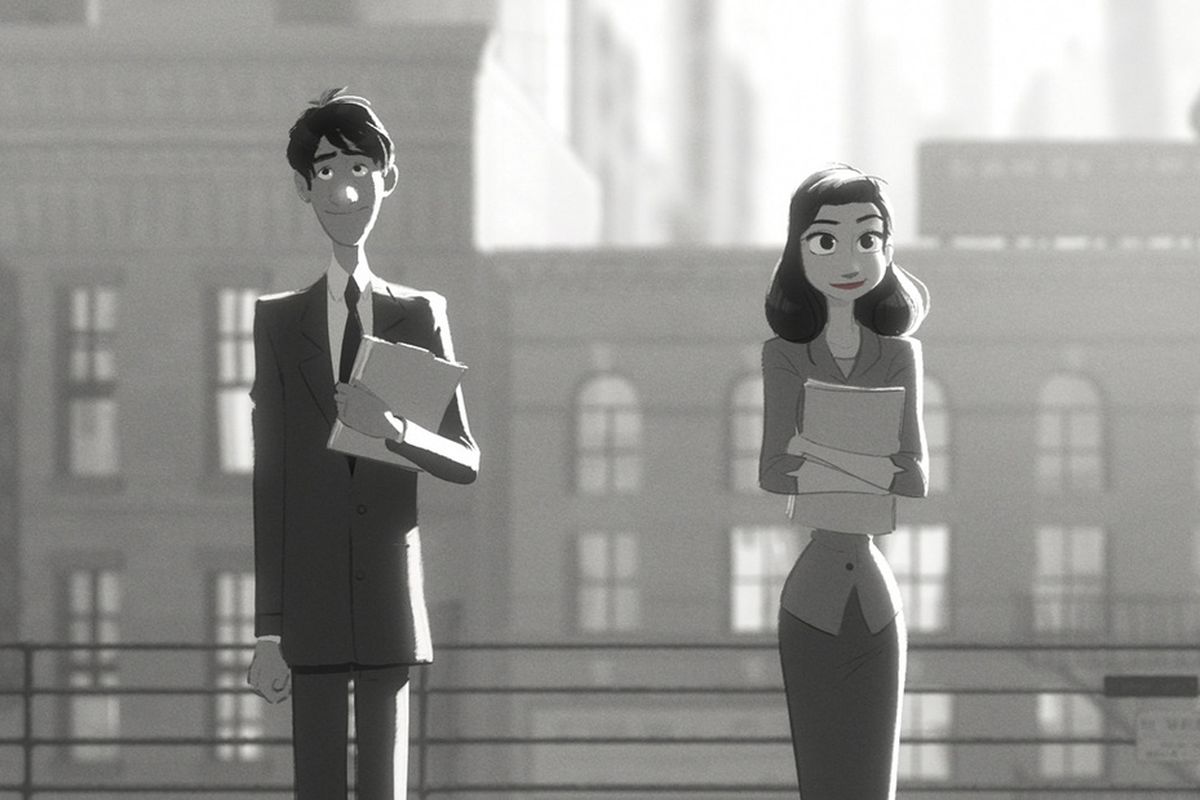
Em uma coisa vocês precisam concordar comigo: uma das razões pelas quais vemos filmes da Disney no cinema é para ver os curtas exibidos antes dos filmes em questão. E esse é o caso do vencedor do Oscar de Melhor Curta-Metragem de Animação “O Avião de Papel”, exibido nas sessões de “Detona Ralph” em 2012. Eu digo, sem medo de ser feliz, que esse é o meu curta favorito da Disney. DE TODOS OS TEMPOS. Lembro da primeira vez em que fui assistir “Detona Ralph” no cinema e, quando saí da sala, estava morrendo de vontade de ver “O Avião de Papel” de novo. Aí, eu fui assistir “Detona Ralph” mais 2 vezes, e em todas essas vezes, eu ficava fascinado com esse curta. Ele conta a história de um jovem contador que se apaixona por uma moça na cidade de Nova York. Ele tenta conversar com ela, mas devido ao cronograma da moça, a única coisa que ele conseguiu dela foi uma marca de batom em uma de suas folhas de papel. Ao chegar ao seu trabalho, ele nota que a moça está dando uma entrevista de trabalho no prédio ao lado do qual ele trabalha. Ele, então, decide jogar aviões de papel para chamar a atenção dela. É um curta sem diálogos, resultando em uma compreensão facílima por parte do espectador. É romântico, cativante, engraçado, nostálgico. A animação faz uma mistura imperceptível e maravilhosa entre animação tradicional e CGI em preto-e-branco, com a direção de arte trabalhando muito bem o contraste entre o preto-e-branco e o vermelho, que se destaca bastante no visual do curta. A trilha sonora é um verdadeiro deleite de se escutar (eu, inclusive, tinha ela no meu celular e eu escutava toda hora, de tão linda que era). É uma das minhas obras favoritas da Disney em geral, e eu ainda sonho em fazer uma adaptação live-action no futuro. Disney, estarei esperando o contrato.

(You have got to agree with me on one thing: one of the main reasons why we watch Disney films in movie theaters is to watch the short films played before these films. And that is the case of the Oscar winner for Best Animated Short Film “Paperman”, shown in the “Wreck-it Ralph” movie theater screenings in 2012. I say that, without a doubt, this is my favorite Disney short film. OF ALL TIME. I remember the first time I watched “Wreck-it Ralph” in theaters and, when I left the screening, I was dying to see “Paperman” again. Then, I watched “Wreck-it Ralph” two more times, and in all of these screenings, I was always fascinated by this short film. It tells the story of a young accountant who falls in love with a young woman in New York City. He tries to talk to her, but due to the woman's busy schedule, the only thing he got from her was a lipstick mark in one of his paper sheets. When he arrives at his job, he notices the young woman is doing a job interview in a nearby building. He, then, decides to throw paper airplanes to get her attention. The short film doesn't have any dialogue, resulting in a very easy comprehension by the viewer. It's romantic, captivating, funny, nostalgic. The animation makes an unnoticeable and wonderful mix between hand-drawn and CGI animation in black-and-white, with the art direction working really well with the contrast between black-and-white and red, which really stands out in the short film's visuals. The score is a true delight to your eardrums (I even had it on my cellphone and listened to it all the time, because it's gorgeously composed). It's one of my favorite works of animation by Disney in general, and I still dream in making a live-action adaptation of it in the future. Disney, I'll be waiting for my contract.)


  • BÔNUS:

    (BONUS):

  • FRESH GUACAMOLE” (2012), dirigido por PES – Disponível no YouTube

    (“FRESH GUACAMOLE” (2012), directed by PES – Available on YouTube)

“Fresh Guacamole” é a prova de que filmes não precisam seguir uma linha de raciocínio lógico para serem cheios de creatividade. Este curta indicado ao Oscar de menos de 2 minutos de duração segue uma receita de guacamole (aquela pasta de abacate característica da culinária mexicana) feita com os mais variados itens: uma luzinha de Natal, uma granada, uma bola de beisebol, peças de Monopoly, e por aí vai. Esse é um daqueles casos onde é preciso ver para crer, e você pode ver “Fresh Guacamole” aqui: https://www.youtube.com/watch?v=dNJdJIwCF_Y

(“Fresh Guacamole” is proof that films don't need to follow a logical train of thought in order to be filled with creativity. This Oscar-nominated short film, which is under 2 minutes long, follows a recipe of guacamole made with a variety of items: Christmas lights, grenades, baseballs, Monopoly pieces, and it gets weirder. This is one of those cases where you have to see it to believe it, and you can watch “Fresh Guacamole” here: https://www.youtube.com/watch?v=dNJdJIwCF_Y)


  • HEAD OVER HEELS” (2013), dirigido por Timothy Reckart – Disponível no YouTube

    (“HEAD OVER HEELS” (2013), directed by Timothy Reckart – Available on YouTube)

Este curta em stop-motion indicado ao Oscar é absolutamente fascinante. Acompanha um casal de idosos que leva uma vida peculiar: ele vive no chão, e ela vive no teto. E o enredo segue uma linha de raciocínio onde um dos dois terá que se adaptar ao modo de vida do outro para que eles não se afastem como um casal. É lindo, cativante e romântico, e você pode assistir “Head Over Heels” aqui: https://www.youtube.com/watch?v=96D-bRx5KuU

(This Oscar-nominated stop-motion short film is absolutely fascinating. It follows an elderly couple who lives a peculiar life: he lives on the ground, and she lives on the ceiling. And the plot follows a train of thought where one of them will have to adapt to the other's lifestyle in order for them not to grow apart as a couple. It's beautiful, captivating, and romantic, and you can watch “Head Over Heels” here: https://www.youtube.com/watch?v=96D-bRx5KuU)


É isso, pessoal! Espero que vocês tenham gostado! Até a próxima,

João Pedro

(That's it, guys! I hope you liked it! See you next time,

João Pedro)

sábado, 28 de novembro de 2020

"Cidadão Kane": um clássico atemporal e inovador na história do cinema (Bilíngue)

 E não se esqueçam de curtir e seguir o blog nas redes sociais:

(And don't forget to like and follow the blog in social medias:)

Facebook: https://www.facebook.com/NoCinemaComJoaoPedroBlog/

Twitter: @nocinemacomjp2

Instagram: @nocinemacomjp


E aí, meus caros cinéfilos! Tudo bem com vocês? Estou de volta, para falar sobre um dos maiores clássicos da história do cinema. Em preparação para “Mank”, o novo filme de David Fincher para a Netflix, que vai ser lançado no dia 04 de dezembro, acho que seria mais do que adequado que eu trouxesse a resenha do longa de 1941, cuja produção servirá como pano de fundo para a nova obra de Fincher. Então, sem mais delongas, vamos falar sobre “Cidadão Kane”. Vamos lá!

(What's up, my dear film buffs! How are you guys doing? I'm back, in order to talk about one of the greatest classics in the history of cinema. In preparation for “Mank”, David Fincher's new film for Netflix, which will be released on December 4th, I think it would be more than adequate that I finally bring in my review for the 1941 film, as its production will serve as a background for Fincher's new work. So, without further ado, let's talk about “Citizen Kane”. Let's go!)


O filme segue um jornalista, Jerry Thompson (William Alland), o qual parte para fazer várias entrevistas com pessoas que marcaram a ascensão e a queda do magnata da imprensa Charles Foster Kane (Orson Welles), já falecido. Através das entrevistas, Thompson tenta descobrir cada aspecto da vida de Kane que possa levar ao significado de sua última palavra, dita em seu leito de morte: Rosebud.

(The film follows a journalist, Jerry Thompson (William Alland), who sets off to make multiple interviews with people that marked both the rise and fall of press tycoon Charles Foster Kane (Orson Welles), who's already passed. Through the interviews, Thompson tries to find out every aspect of Kane's life that can lead to the meaning of his last word, uttered on his deathbed: Rosebud.)


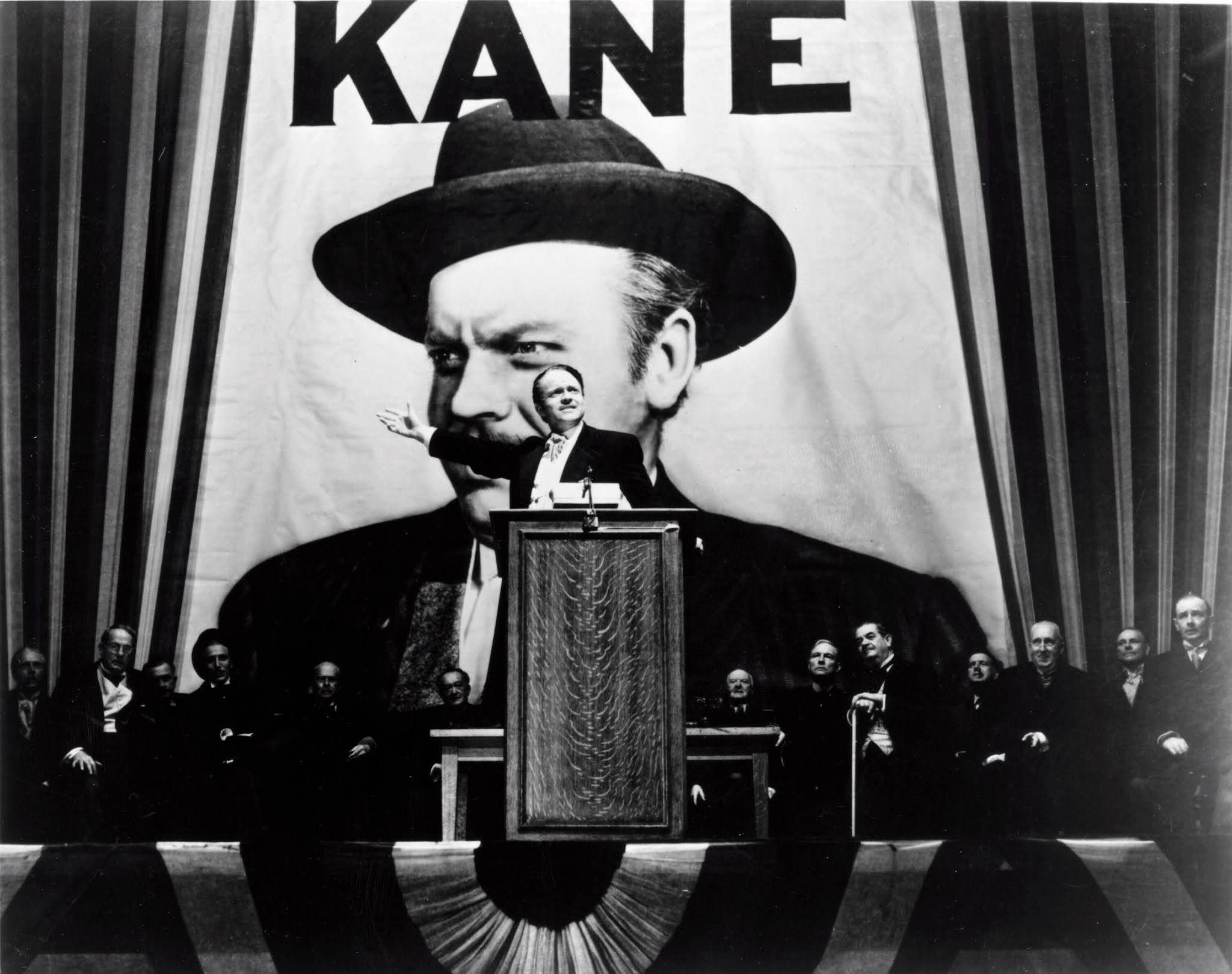
Eu já tinha visto “Cidadão Kane” uma vez durante a pandemia do COVID-19, mas estava esperando o momento certo para lançar uma resenha especialmente a respeito desse filme. E agora, com o iminente lançamento de “Mank” na Netflix, eu não poderia ter escolhido uma hora melhor. Para quem ainda não sabe, “Mank” contará a história de Herman J. Mankiewicz, co-roteirista de “Cidadão Kane”, que enfrenta vários conflitos com o diretor e protagonista, Orson Welles, durante a produção do filme, no final dos anos 1930 e início dos anos 1940. Então, para me preparar para o lançamento de “Mank”, que já está sendo aclamado como um dos melhores filmes de 2020, acho que revisitar o longa de 1941 será algo bem proveitoso, tanto para mim (que finalmente trarei a resenha da obra-prima de Welles para o blog) quanto para vocês (com o objetivo de vocês não ficarem perdidos ao assistirem o novo filme de David Fincher na Netflix). Então, com isso dito, vamos falar sobre o roteiro. Escrito por Herman J. Mankiewicz e Orson Welles, a estrutura narrativa de “Cidadão Kane” poderia encaixar-se facilmente em uma estrutura de documentário, já que a própria trama gira em torno de entrevistas à respeito do personagem-título. Mas, provavelmente pelo fato de Charles Foster Kane ser um personagem fictício, o diretor Orson Welles faz a sábia escolha de interpretar essas entrevistas por meio de flashbacks. E são nesses flashbacks que se encontra aquilo que faz de “Cidadão Kane” um estudo de personagem absolutamente brilhante: cada um dos entrevistados apresenta um ponto de vista completamente diferente sobre o sujeito da entrevista. E isso se torna evidente quando os roteiristas decidem fazer um contraste entre um programa de notícias produzido logo após a morte de Kane, onde foram destacados os maiores feitos da vida do magnata, colocando-o num pedestal absurdamente alto; e as entrevistas, que oferecem uma quase total desconstrução da personalidade de Kane, explorando tanto os seus momentos de triunfo quanto os seus fracassos. E esse aspecto narrativo de apresentar várias perspectivas sobre algo ou alguém foi verdadeiramente revolucionário para a época, já que na maioria dos filmes de Hollywood nas décadas de 1930 e 1940, os cineastas apostavam mais na simplicidade de entregar tudo o que os espectadores precisam saber para entender a trama sob um único ponto de vista. Em “Cidadão Kane”, Mankiewicz e Welles fazem a brilhante escolha de fazer de seu protagonista um enigma, a qual deixa os espectadores sempre refletindo nas seguintes perguntas e afirmações: “Mas será que tal coisa é verdade?” e “Ué, mas essa parte aqui não estava no programa de notícias no início do filme!”. E esse senso de mistério ao redor da persona de Kane faz do filme de 1941 um exemplo pioneiro do gênero film noir, caracterizado por tramas de detetive bem elaboradas, com um visual inspirado na direção de fotografia do expressionismo alemão. Ele é frequentemente desconstruído, mas sua trajetória ainda consegue causar fascínio no espectador. Pode-se dizer que “Cidadão Kane” foi marcado pelo mistério da última palavra de seu protagonista, e os roteiristas fazem um excelente trabalho em revelar tudo que possa levar à revelação do significado dessa palavra de uma forma bem gradativa e lenta, o que acaba por prender o espectador à trama e ao desenrolar da vida pessoal de Kane, exposta pelos entrevistados. E acho que nem é preciso dizer que o filme de Orson Welles foi uma das maiores influências para os cineastas dos dias de hoje, inclusive para o próprio David Fincher, diretor do vindouro “Mank”, que recebeu comparações com “Cidadão Kane” por explorar a vida de um magnata da mídia através de entrevistas e flashbacks em “A Rede Social”, que conta a história da fundação do Facebook. E o fato de Fincher ter quase que literalmente criado um Charles Foster Kane para o século XXI por meio da sua interpretação de Mark Zuckerberg no filme de 2010 faz dele o diretor perfeito para contar a história dos bastidores desse clássico atemporal.

(I had already watched “Citizen Kane” during the COVID-19 pandemic, but I was waiting for the right moment to write a review especially about this film. And now, with the imminent release of “Mank” on Netflix, I couldn't have chosen a better time. For those who still don't know, “Mank” will tell the story of Herman J. Mankiewicz, co-screenwriter of “Citizen Kane”, who faces several conflicts with director and protagonist Orson Welles during the production of the film, in the late 1930s and early 1940s. So, in preparation for the release of “Mank”, which is already being acclaimed as one of the best films of 2020, I think revisiting the 1941 film would be something really beneficial, for me (as I will finally bring the review of Welles's masterpiece to the blog) and for you (in order for you not to feel lost when watching David Fincher's new film on Netflix). So, with that said, let's talk about the screenplay. Written by Herman J. Mankiewicz and Orson Welles, the narrative structure of “Citizen Kane” could've easily fit into a documentary structure, as the plot itself revolves around interviews regarding the title character. But, probably because of the fact that Charles Foster Kane is a fictional character, director Orson Welles makes the wise choice of portraying said interviews through flashbacks. And it's in those flashbacks that we find out what makes “Citizen Kane” a brilliant character study: each one of the interviewees presents a completely different point of view on the subject of the interview. And that becomes evident when the screenwriters decide to make a contrast between a newsreel produced right after Kane's death, which highlighted the biggest feats of the tycoon's life, putting him on an absurdly high pedestal; and the interviews, which offer an almost complete deconstruction of Kane's personality, exploring his moments of triumph as well as his failures. And this particular narrative aspect of presenting several perspectives on something or someone was truly revolutionary for its time, as in most of Hollywood's films in the 1930s and 40s, filmmakers made their bet on the simplicity of giving up everything the viewer needed to understand the story under one single point of view. In “Citizen Kane”, Mankiewicz and Welles make the brilliant choice of turning its main character into a real puzzle, which will end up leading the viewer thinking about the following questions and affirmations: “But is that thing actually true?” and “What? But this wasn't in that newsreel in the beginning of the movie!”. And this sense of mystery regarding Kane's persona makes the 1941 film an early example of the film noir genre, known by its well-elaborate detective stories, with visuals inspired by German Expressionism cinematography. He is frequently deconstructed, but his trajectory still manages to leave the viewers wonderstruck. It can be said that “Citizen Kane” was marked by the mystery regarding its protagonist's last spoken word, and the screenwriters do an excellent job in slowly and gradually revealing everything that may lead to the meaning of that word, which ends up keeping the viewer engaged in the story and in the unraveling of Kane's personal life, exposed by the interviewees. And I think it goes without saying that Orson Welles's film was highly influential for today's filmmakers, including David Fincher himself, the director of the upcoming “Mank”, who received comparisons with “Citizen Kane” by exploring the life of a media mogul through interviews and flashbacks in “The Social Network”, which tells the story of the foundation of Facebook. And the fact that Fincher actually created a Charles Foster Kane for the 21st century through his portrayal of Mark Zuckerberg in the 2010 film makes him the perfect director to tell the making-of story of this timeless classic.)


Um fato interessante sobre o elenco é que a grande maioria dos atores era estreante no mercado cinematográfico, inclusive o próprio Orson Welles, que também fez sua estreia na direção com “Cidadão Kane”. E todos fazem um excelente trabalho aqui. Welles consegue capturar a essência de ser um magnata que possui influência sobre as pessoas com perfeição. Nas partes onde o protagonista faz algum discurso ou está ao redor de uma multidão de pessoas, ele tem bastante carisma e imponência. Mas são nas cenas onde Kane se encontra sozinho com alguém que as suas vulnerabilidades são expostas ao público. A inveja, a raiva, a ignorância, a incapacidade de verdadeiramente amar alguém. É uma tremenda performance que serviu de influência para vários protagonistas com o mesmo estilo nos filmes dos dias de hoje, como Jordan Belfort, em “O Lobo de Wall Street”. Os entrevistados também entregam ótimas performances: a Dorothy Comingore foi a que mais me convenceu ao mostrar que sua personagem foi realmente afetada pelo relacionamento com o protagonista; o Joseph Cotten expressa muito bem a inveja e a total desconsideração que seu personagem tem com Kane; e o Everett Sloane consegue mostrar o afeto e a consideração entre seu personagem e o protagonista através de uma boa química com Welles. Como coadjuvantes, temos performances competentes de Ray Collins, que é ameaçador; do Erskine Sanford, que é engraçado; e do William Alland, que é o fio condutor entre cada uma das entrevistas.

(An interesting fact about the cast is that the great majority of the actors were making their debut performance in the cinema market, including Orson Welles himself, who also made his directorial debut with “Citizen Kane”. And all of them do an excellent job here. Welles succeeds in perfectly capturing the essence of being someone big who has an influence over people. In the parts where the main character makes a speech or is around a crowd of people, he shows a lot of charisma and grandiosity. But it's in the scenes where Kane finds himself alone with someone that his vulnerabilities are exposed to the audience. Envy, rage, ignorance, the inability of truly loving someone. It's a knockout performance that served as an influence to several protagonists in that same style in today's films, such as Jordan Belfort, in “The Wolf of Wall Street”. The interviewees also deliver great performances: Dorothy Comingore was the one who convinced me the most that her character's life was truly affected by her relationship with the main character; Joseph Cotten expresses the envy and total disconsideration his character has towards Kane very well; and Everett Sloane manages to show the affection and consideration between his character and the protagonist through a good dynamic with Welles. As supporting actors, we have competent performances by Ray Collins, who is threatening; Erskine Sanford, who is funny; and William Alland, who is the conductor for each of the interviews.)


Além das inovações narrativas que “Cidadão Kane” trouxe para o cinema, houveram vários detalhes nos aspectos técnicos que foram considerados à frente de seu tempo. A direção de fotografia do Gregg Toland acentua bastante o tom sombrio e misterioso que um bom film noir precisa ter. Os jogos e dinâmicas feitos com a iluminação, especialmente com respeito à relação entre luz e sombra; com as tomadas mais longas e com a perspectiva de profundidade da câmera foram inovadores para a época, e acabaram por influenciar o visual do gênero. Inclusive, Toland foi considerado um dos maiores revolucionários para a direção de fotografia no cinema em 1941. A montagem do Robert Wise (que, depois, iria ganhar 4 Oscars por seu trabalho na direção e produção de “Amor, Sublime Amor” e “A Noviça Rebelde”) é perfeita, em todos os sentidos. A dissolução ao transitar entre uma entrevista e um flashback é orgânica e serviu de influência para vários filmes posteriores. A percepção de passagem do tempo é estabelecida de forma impecável pela montagem de Wise. A trilha sonora original do Bernard Herrmann (que, posteriormente, iria compor a icônica melodia de “Psicose”, de Alfred Hitchcock) consegue capturar muito bem o tom sombrio da história, ditando a condução de cada uma das entrevistas, fazendo uso de instrumentos mais graves para representar os pontos baixos da vida do protagonista.

(Besides the narrative innovations that “Citizen Kane” brought to cinema, there were several details in the technical aspects that were considered ahead of their time. Gregg Toland's cinematography heavily enhances the ominous, mysterious tone a good film noir needs to have. The tricks and dynamics made with the lighting, especially regarding the relationship between light and shadow; with the longer takes and with the perspective of depth to the camera were innovative for its time, and ended up influencing the visuals for the genre. By the way, Toland was considered one of the biggest revolutionaries for cinematography in 1941. The editing by Robert Wise (who, later, would win 4 Oscars for his work in directing and producing “West Side Story” and “The Sound of Music”) is perfect, in every sense of the word. The dissolution when transitioning between an interview and a flashback is organic and served as influence for several later films. The perception of the passage of time is flawlessly established by Wise's editing. The original score by Bernard Herrmann (who would later compose the iconic melody in Alfred Hitchcock's “Psycho”) manages to capture the story's dark tone very well, dictating the conduction of each interview, making use of lower, bass-like instruments to represent the low points in the protagonist's life.)


Resumindo, “Cidadão Kane” é uma obra-prima. Contando com inovações narrativas e técnicas, e um elenco majoritariamente estreante, o filme de Orson Welles consegue firmar cada vez mais seu lugar como um dos maiores clássicos atemporais da história do cinema, com o passar do tempo. Um filme essencial para os amantes da sétima arte e do jornalismo, e uma das maiores injustiças da história do Oscar.

Nota: 10 de 10!!

É isso, pessoal! Espero que tenham gostado! Até a próxima,

João Pedro

(In a nutshell, “Citizen Kane” is a masterpiece. Relying on narrative and technical innovations, and a mostly debuting cast, Orson Welles's film manages to reaffirm its place more and more as one of the greatest timeless classics in the history of cinema, as time goes by. An essential viewing for those who love cinema and journalism, and one of the greatest injustices in Oscar history.

I give it a 10 out of 10!!

That's it, guys! I hope you liked it! See you next time,

João Pedro)